One
of America's most cherished renewable resources.
The French explorers called them Le
Dindon sauvage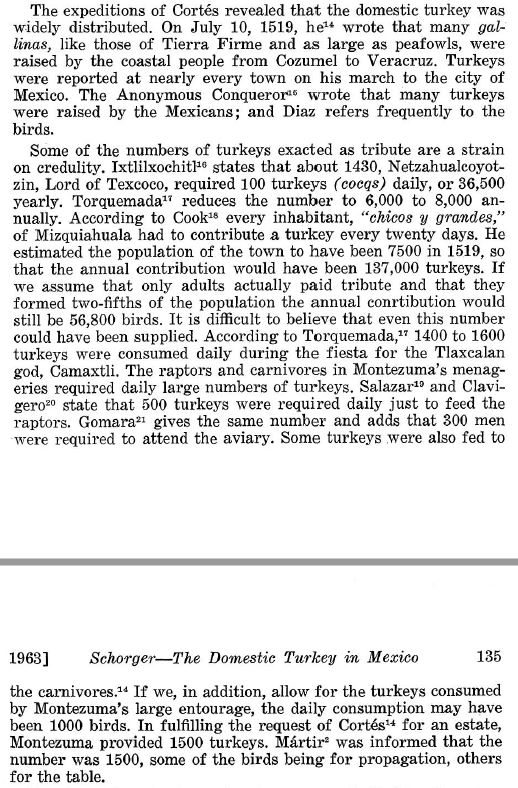 The
Aztecs and Mayans domesticated the south Mexican wild turkey (Meleagris
gallopavo gallopavo) beginning in 800 BC. The Mexican turkey is the
ancestor of all domestic turkeys consumed in the world today (the wild
turkey was domesticated by the ancient Maya more than 1,000 years earlier than
previously believed). The
Aztecs and Mayans domesticated the south Mexican wild turkey (Meleagris
gallopavo gallopavo) beginning in 800 BC. The Mexican turkey is the
ancestor of all domestic turkeys consumed in the world today (the wild
turkey was domesticated by the ancient Maya more than 1,000 years earlier than
previously believed).Natives in the Mexican state of Chihuahua (the Rarámuri, or Tarahumara), "literally run the birds to death, in what is referred to as persistence hunting. Forced into a rapid series of takeoffs, without sufficient rest periods between, the heavy-bodied bird does not have the strength to fly or run away from the Tarahumara hunter." Ring-necked pheasants are known nest parasites of wild turkeys. There are six subspecies of Meleagris gallopavo. The south Mexican wild turkey (Meleagris gallopavo gallopavo) is one of the smallest subspecies and is best known in Spanish from its Aztec-derived name, guajolote. The south Mexican wild turkey is considered the nominate subspecies and is thought to be critically endangered, as of 2010. The World Bird Database tells us the Mexican wild turkeys geographic range is from Jalisco to Veracruz and south to Guerrero. |
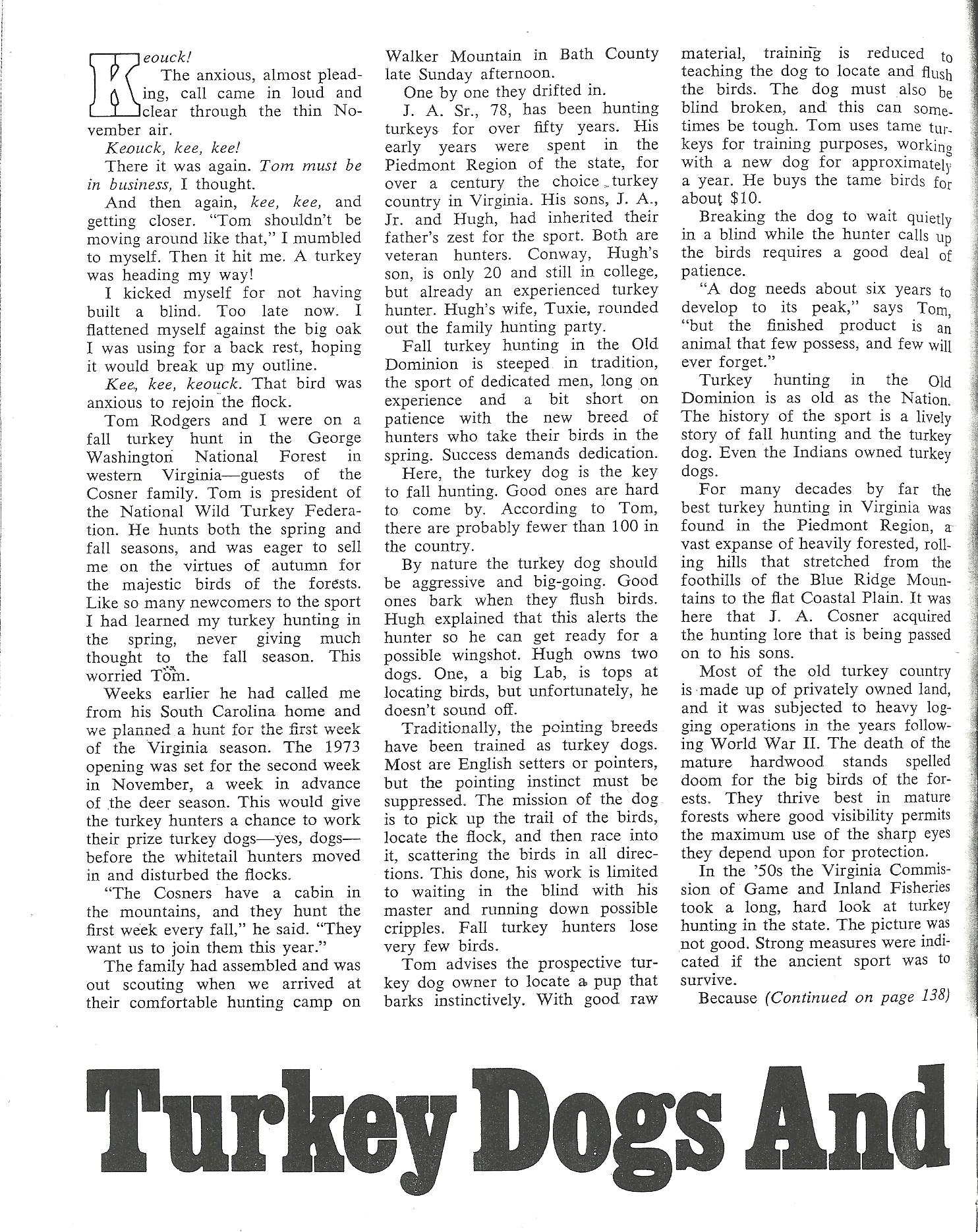 "Fall
turkey hunting
in the Old Dominion is steeped in tradition, the sport of dedicated
men, long on experience and a bit short on patience with the new breed
of hunters who take their birds in the spring. Success demands
dedication." - Bob Gooch, of his 1973 hunt with the Cosner family
(Spotsylvania), on Walker Mountain in Bath County. Page one of six
shown, see last column: "Even the Indians owned turkey dogs."
Members can read all six here. "Fall
turkey hunting
in the Old Dominion is steeped in tradition, the sport of dedicated
men, long on experience and a bit short on patience with the new breed
of hunters who take their birds in the spring. Success demands
dedication." - Bob Gooch, of his 1973 hunt with the Cosner family
(Spotsylvania), on Walker Mountain in Bath County. Page one of six
shown, see last column: "Even the Indians owned turkey dogs."
Members can read all six here. |
| They brought him two wild turkeys and a domestic one. The wild turkeys surely weighed 40 pounds each. |
 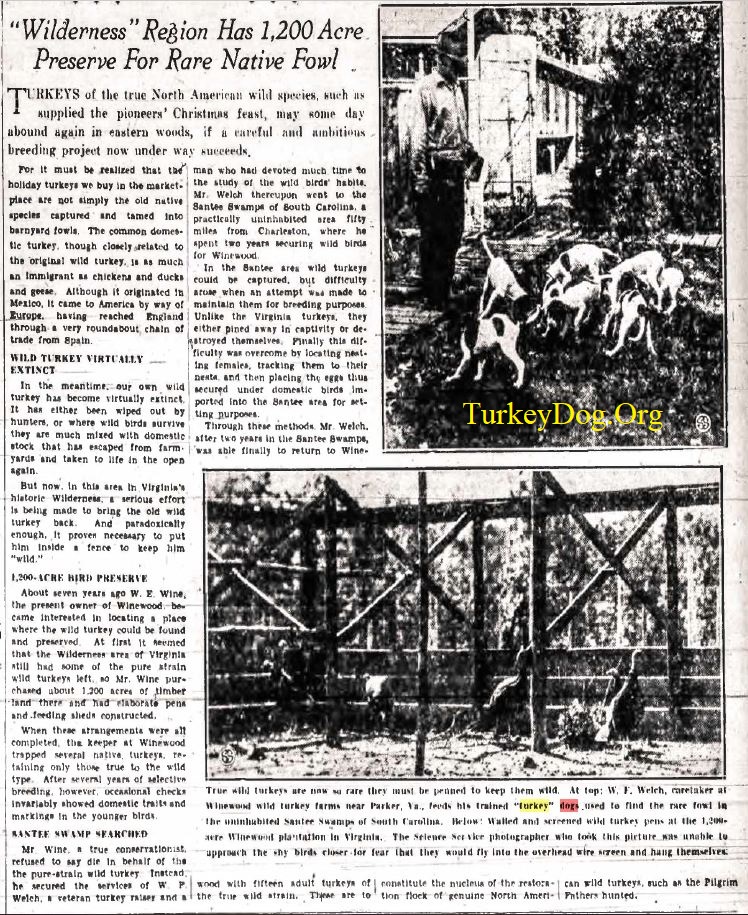 "I
was raised in Parker VA, within walking distance of that farm
(Winewood). I started turkey hunting on that same land my dad and
grandfather did (they knew W. E. Wine). People called them moss head
turkeys, because they had feathers like peach fuzz on the back of their
heads. They didn't talk much, very hard to call in.
In the 1960's a New York company bought it, put in roads, developed it, it took off big time. I lost 3,000 acres to hunt on when they closed it. Later Joe Gibbs, the head coach of the Washington Redskins bought it. Today it has a golf course, filled with million dollar homes, renamed Fawn Lake, now a gated community." Eddie W. 2/14/21 |
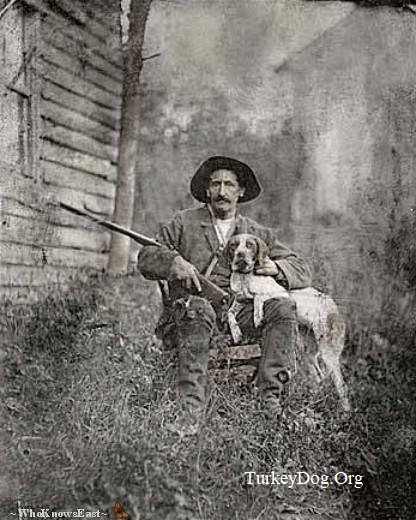 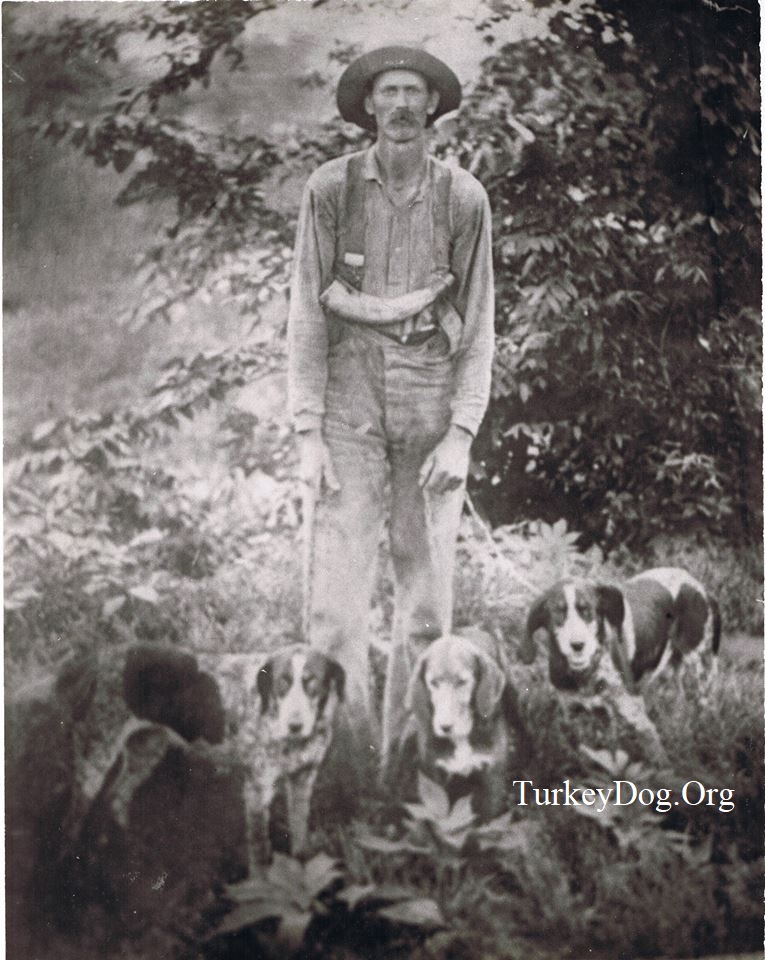 "My
grandfather was
from Charlton county at the southern border of Georgia. He grew up back
in the woods which bordered the Okefenokee Swamp. He told me that his father had a dog (treeing
walker as I recall) that they would send in to a Tom that was gobbling
in the tree in the morning. The dog would go in and sit
under the tree and the
Tom would not fly down with the dog present,
which would allow the hunter to slip in from the rear and shoot the Tom
while the Tom's focus was on the dog. This would have been circa 1920s.
I am not sure of the legality of this practice at that time but this
was done for food purposes in those days." Joe Dobbins 1/16/22 (Joe plays my kind of music - click
Play All). "My
grandfather was
from Charlton county at the southern border of Georgia. He grew up back
in the woods which bordered the Okefenokee Swamp. He told me that his father had a dog (treeing
walker as I recall) that they would send in to a Tom that was gobbling
in the tree in the morning. The dog would go in and sit
under the tree and the
Tom would not fly down with the dog present,
which would allow the hunter to slip in from the rear and shoot the Tom
while the Tom's focus was on the dog. This would have been circa 1920s.
I am not sure of the legality of this practice at that time but this
was done for food purposes in those days." Joe Dobbins 1/16/22 (Joe plays my kind of music - click
Play All). |
Today
most turkey hunters think Spring is the time to hunt wild turkeys, but
Fall is the traditional time (see
explanation in the 2nd
Green Row down). Our earliest stories of spring
turkey hunting in the United States come from: Rutledge 1907,
Jordan/McIlhenny 1914, Turpin 1924, Everitt 1928, Mosby and Handley
1943, Davis 1949.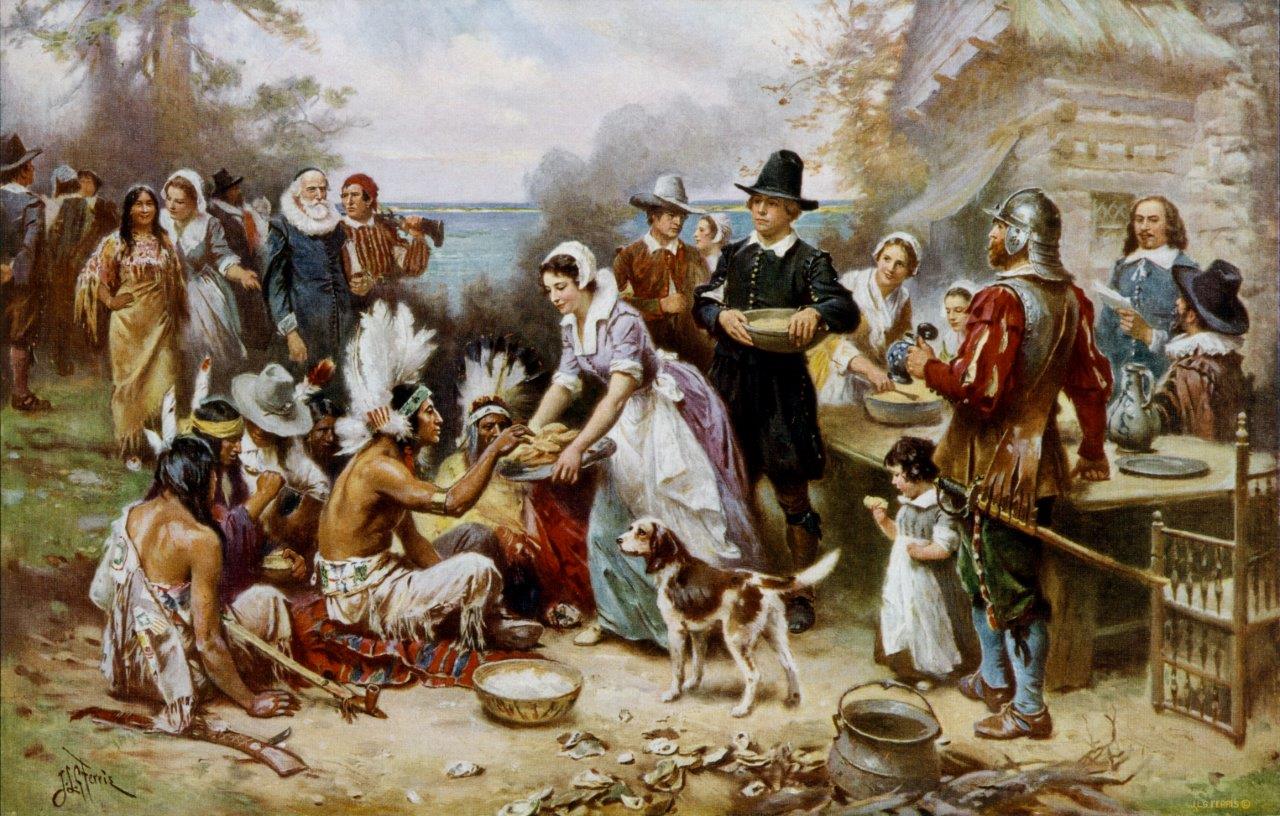 But, Americans were hunting wild
turkey with dogs in the fall since 1621 in
Plymouth, Massachusettsa (see the dog in the middle of the painting
- The First Thanksgiving by Jean
Leon Gerome Ferris). Historically,
only the first born sons were granted lands in Britain. The second
and third born sons (and on), were sent to the new world, bequethed
thousands of acres by the king. These British Aristocrats were the
landed gentry, they came
here expecting to live in the style they did at home, with servants to
do the work, while they lived like gentlemen. That included bringing
their beloved quail dogs with them. But they weren't
prepared for the
hardships and were soon dependent on the natives for necessities like
food. Since wild turkeys But, Americans were hunting wild
turkey with dogs in the fall since 1621 in
Plymouth, Massachusettsa (see the dog in the middle of the painting
- The First Thanksgiving by Jean
Leon Gerome Ferris). Historically,
only the first born sons were granted lands in Britain. The second
and third born sons (and on), were sent to the new world, bequethed
thousands of acres by the king. These British Aristocrats were the
landed gentry, they came
here expecting to live in the style they did at home, with servants to
do the work, while they lived like gentlemen. That included bringing
their beloved quail dogs with them. But they weren't
prepared for the
hardships and were soon dependent on the natives for necessities like
food. Since wild turkeys 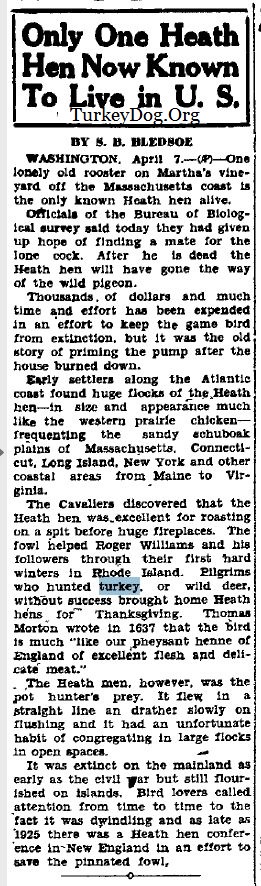 sustained
them better than quail, out of
necessity (and by the native's example), their quail dogs became turkey
dogs. Over the years, the
Virginians did something very American - they
improved their strains of bird dogs, crossing their
pointers
and setters (creating the dropper), making that fast, wide ranging dog
needed to find and get the big running birds off the ground. For
hundreds of years, they continued to improve the turkey dog, sometimes
mixing in a little hound, primarily for their cold-trailing
ability and their inclination to bark when they find game.
These became the Virginia
turkey dogs. sustained
them better than quail, out of
necessity (and by the native's example), their quail dogs became turkey
dogs. Over the years, the
Virginians did something very American - they
improved their strains of bird dogs, crossing their
pointers
and setters (creating the dropper), making that fast, wide ranging dog
needed to find and get the big running birds off the ground. For
hundreds of years, they continued to improve the turkey dog, sometimes
mixing in a little hound, primarily for their cold-trailing
ability and their inclination to bark when they find game.
These became the Virginia
turkey dogs.What was turkey hunting with a dog like for the last 400+ years? The breeding and hunting of fine turkey dogs originated in Virginia, still the #1 state for turkey dogs today. These special dogs were bred and hunted in the Tidewater and Piedmont areas of Virginia. Historically, they weren't used in the mountains (Blue Ridge and Appalachians). The British quail dogs became the Virginia turkey dogs. 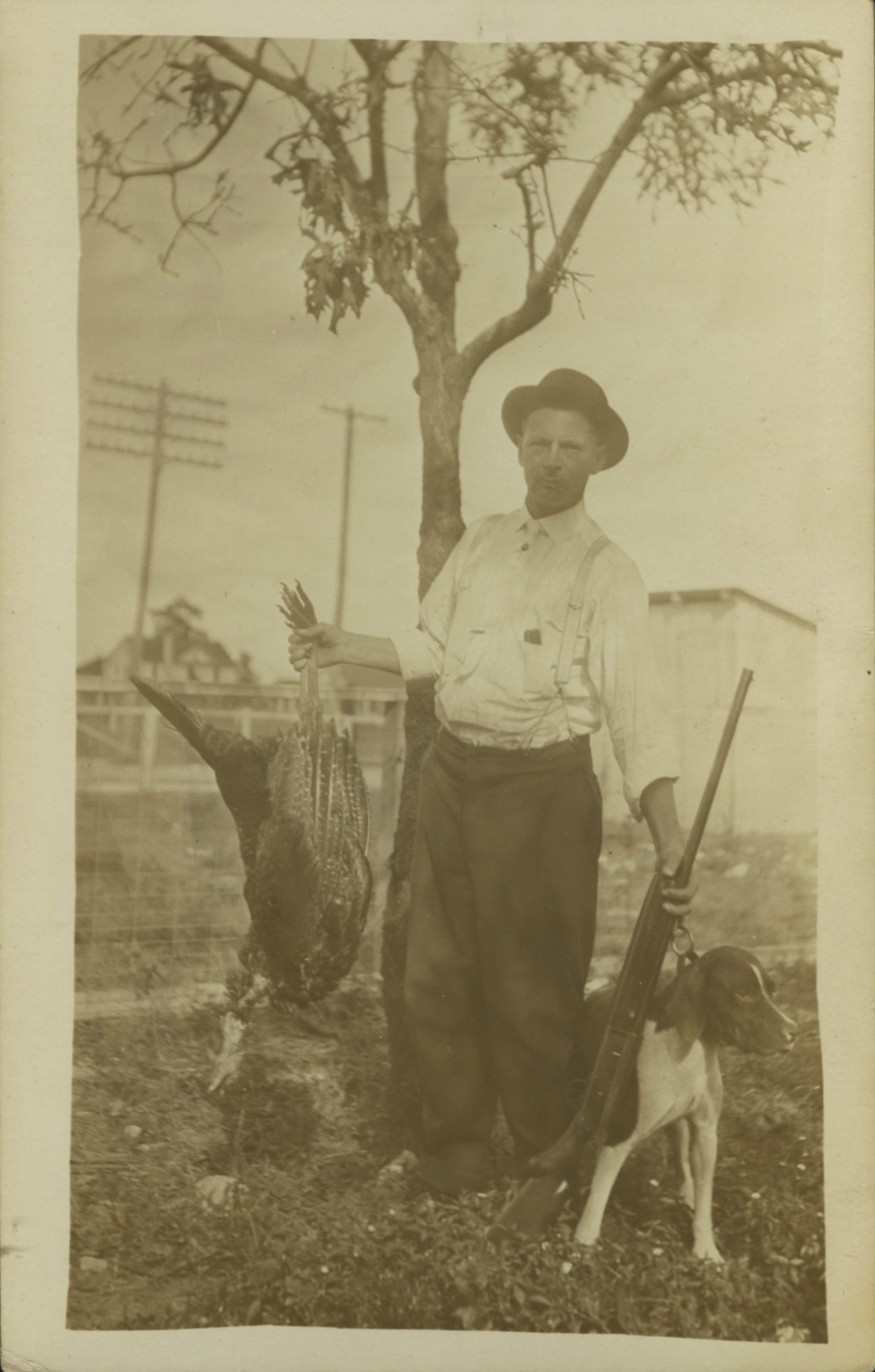 There
were dogs
in the New World, long before the arrival of Europeans;
archaeologists have found more than 100 dog skeletons where woodland
Indians lived during the centuries before Jamestown's founding. There
were dogs
in the New World, long before the arrival of Europeans;
archaeologists have found more than 100 dog skeletons where woodland
Indians lived during the centuries before Jamestown's founding. Now recent archaeological and anthropological studies show it was a longstanding tradition of many native Americans to hunt turkeys in the spring, for the last several thousands of years. Did the immigrants learn spring turkey hunting from the natives? Is that part of the reason the turkey population was decimated (they were hunted year round, but they're most susceptible in the spring), in addition to the introduced European diseases that the turkey had no resistance to? Quoting the recent studies: “Passenger pigeons' diet centered on mast, the collective name for acorns, beechnuts, hazelnuts, chestnuts, and the like; they also really liked maize. All were important foods to the Indians of eastern North America. Thus passenger pigeons and Native Americans were ecological competitors. 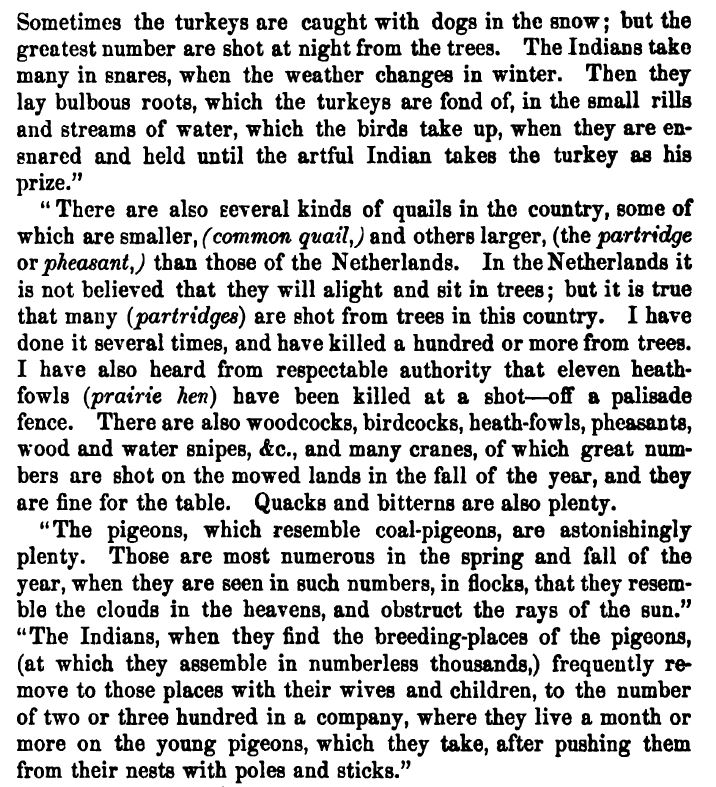 A consulting archeologist in Atlanta... noted that Indians had also vied for mast and maize with deer, raccoons, squirrels and turkeys. Unsurprisingly, they hunted all of them with enthusiasm, as documented by the bones found in archaeological sites. Indeed, Indians actually sought out nursing or pregnant does... They hunted wild turkey in spring, just before they laid eggs (if they had waited until the eggs hatched, the poults could of survived, because they will follow any hen). The effect was to remove competition for tree nuts. The pattern was so consistent, that Indians must have been purposely reducing the number of deer, raccoons and turkeys.” Reference: 1491: New Revelations of the Americas Before Columbus ***
  In
precolonial times (before Columbus), the
natives
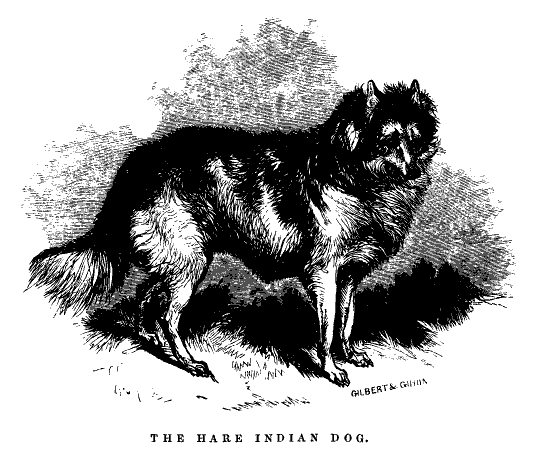
in Virginia used knee-high, 20 pound dogs for hunting wild
turkey (before they
interbred with the large English hunting dogs).
The colonists learned various spring turkey hunting
methods from the Indians, as well as hunting turkeys with a dog (the
Powhatans used their dogs only in hunting land fowl such as wild
turkey).
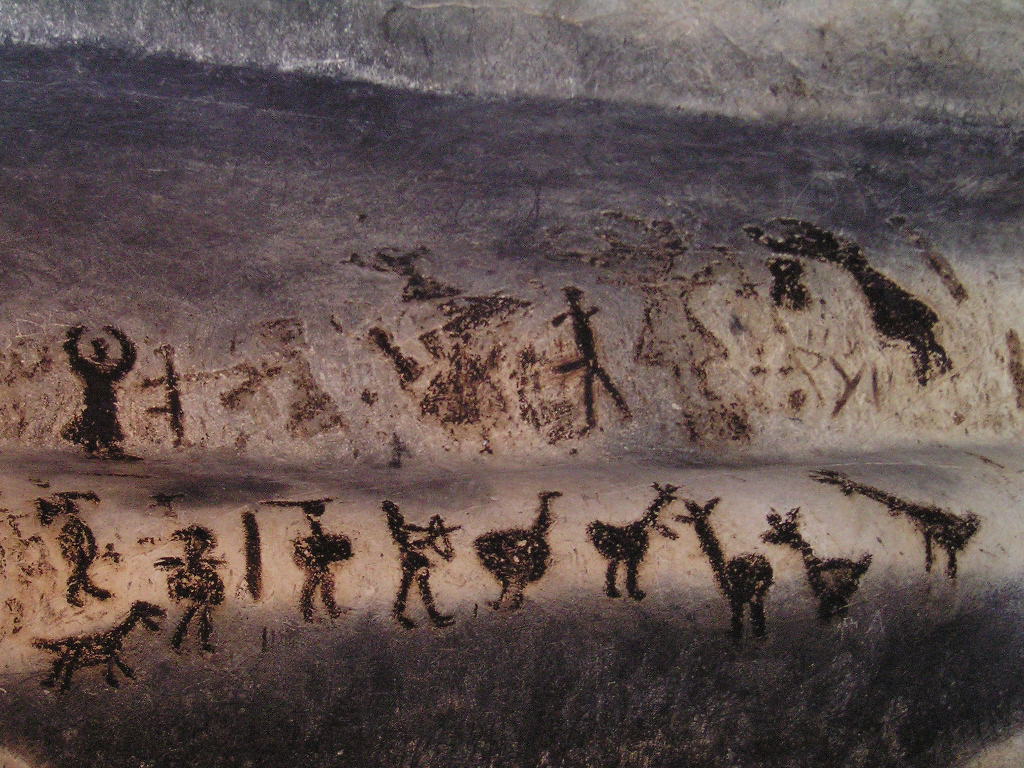
Many tribes kept numerous dogs, these Indians had at least two
dogs a piece (members only). In later years, the mix of
hunting dogs in the country would change: "We know from the historical
record that Native Americans had dogs, but previous population surveys
in the Americas turned up only dogs with European heritage" (National
Geographic). "Genetic evidence suggests that Native Americans
and Europeans domesticated dogs independently, and that North American
pre-contact dogs were almost comple In
precolonial times (before Columbus), the
natives
in Virginia used knee-high, 20 pound dogs for hunting wild
turkey (before they
interbred with the large English hunting dogs).
The colonists learned various spring turkey hunting
methods from the Indians, as well as hunting turkeys with a dog (the
Powhatans used their dogs only in hunting land fowl such as wild
turkey).
Many tribes kept numerous dogs, these Indians had at least two
dogs a piece (members only). In later years, the mix of
hunting dogs in the country would change: "We know from the historical
record that Native Americans had dogs, but previous population surveys
in the Americas turned up only dogs with European heritage" (National
Geographic). "Genetic evidence suggests that Native Americans
and Europeans domesticated dogs independently, and that North American
pre-contact dogs were almost comple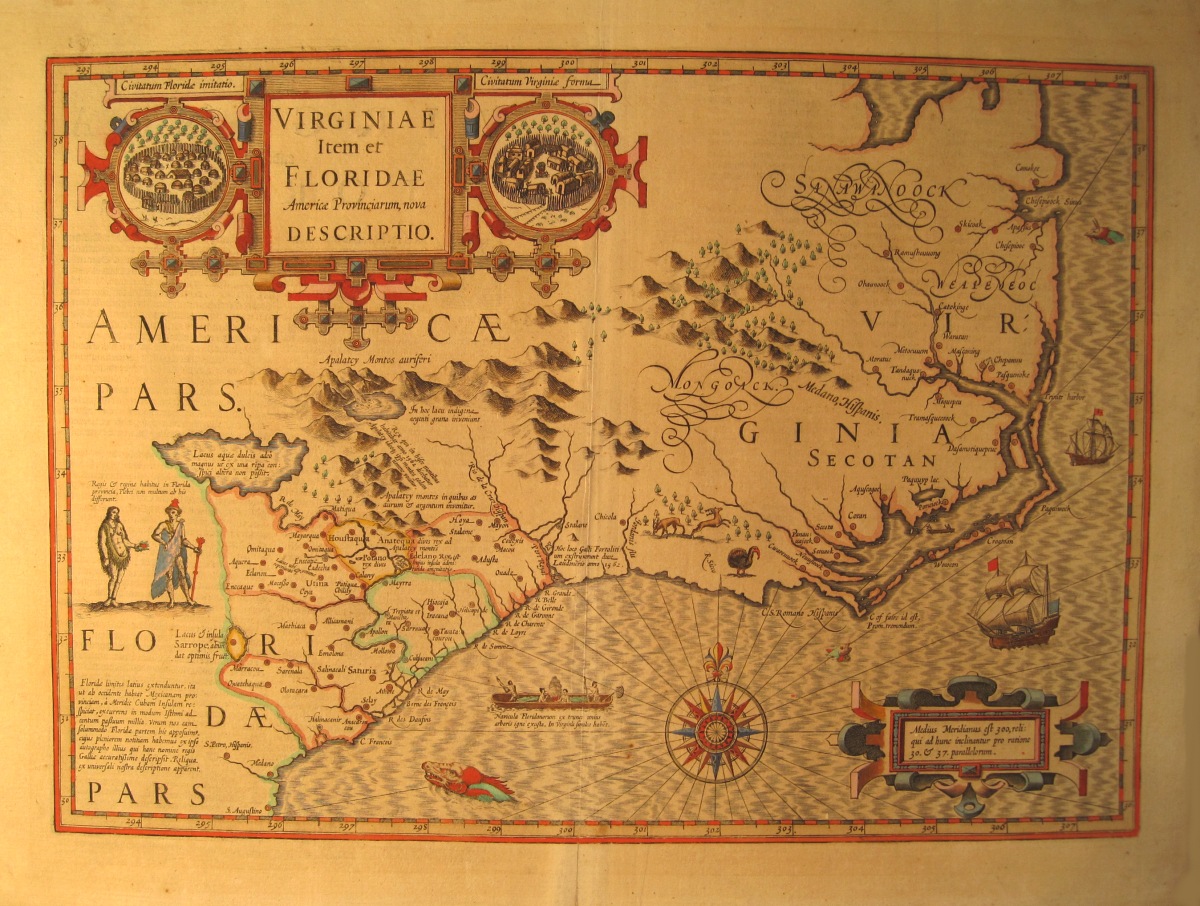 tely
replaced by
dogs that came over on European ships" (Canadian
Museum of Nature). "What we know about dogs in
Native American societies is limited. But we do know that the
dogs brought by the Spanish were much different in character and
breeding from those already present" A
History of Dogs in the Early Americas tely
replaced by
dogs that came over on European ships" (Canadian
Museum of Nature). "What we know about dogs in
Native American societies is limited. But we do know that the
dogs brought by the Spanish were much different in character and
breeding from those already present" A
History of Dogs in the Early Americas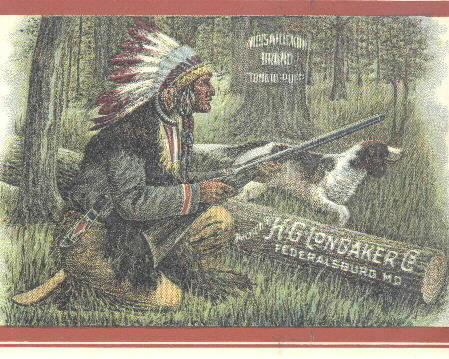 In
Connecticut, it
was forbidden for Indians to have European dogs: 'It
is ordered by this Courte and Authority thereof, that no man within
this Jurisdiction shall... sell, barter or give to any Indian...
any dog or dogs, small or great; upon pain of ten pounds fine
for every offense...' Connecticut Code of Laws 1650 In
Connecticut, it
was forbidden for Indians to have European dogs: 'It
is ordered by this Courte and Authority thereof, that no man within
this Jurisdiction shall... sell, barter or give to any Indian...
any dog or dogs, small or great; upon pain of ten pounds fine
for every offense...' Connecticut Code of Laws 1650******************************************************************************************
  Same
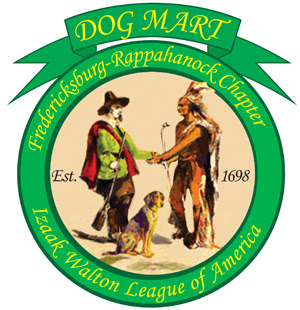
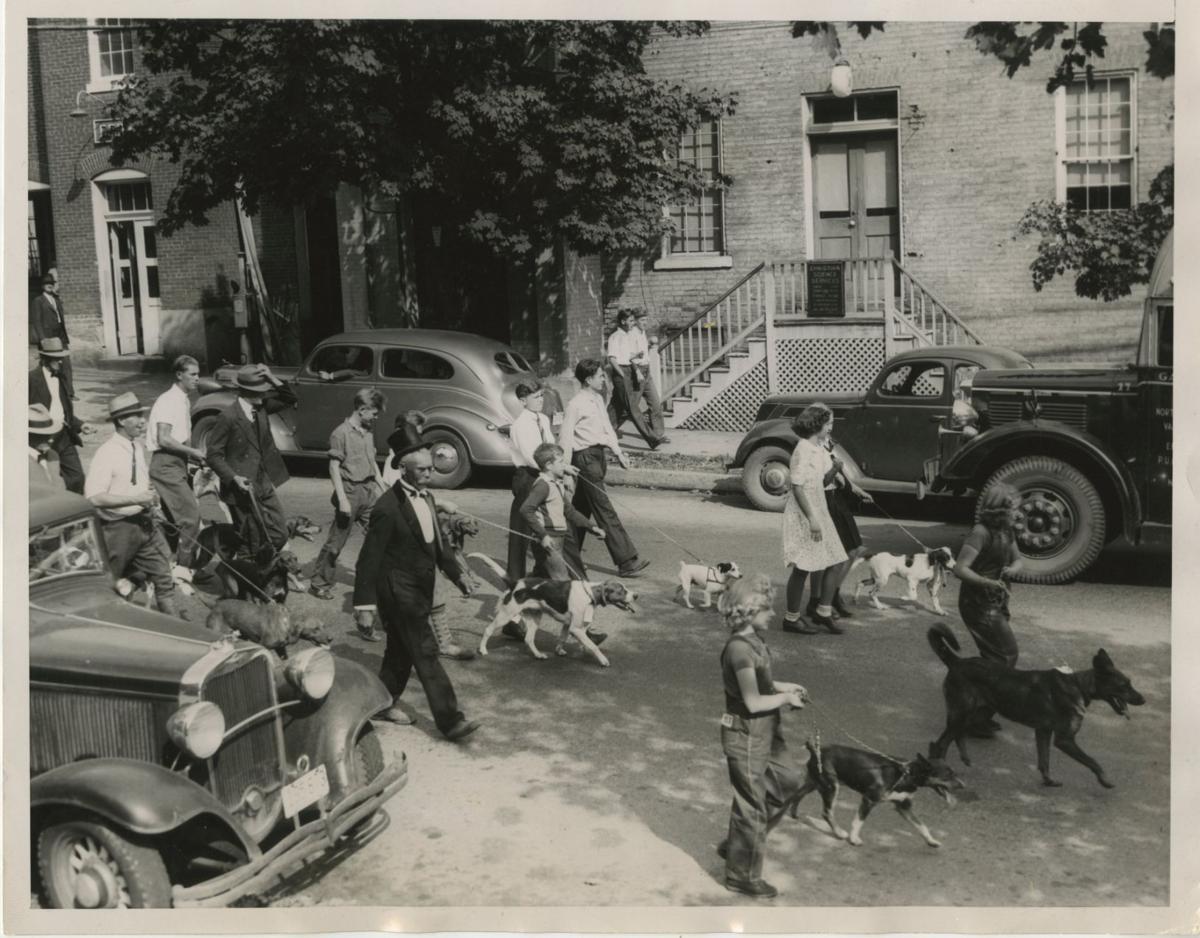
for Virginia in 1617, until 1677. But since 1698, at the Fredericksburg, Virginia Dog Mart
Indians bartered for European hunting dogs.
Fredericksburg became the
site of an annual dog-trading tradition between Europeans and Indians
that would last until the Revolutionary War. Then again from 1927 until
1941,
then it stopped for WWII, then resumed in 1948 until the present. In 1980, the dog mart was held
without dogs, because of a canine parvo epidemic. In 2020, it's cancelled
because of the human pandemic. Same
for Virginia in 1617, until 1677. But since 1698, at the Fredericksburg, Virginia Dog Mart
Indians bartered for European hunting dogs.
Fredericksburg became the
site of an annual dog-trading tradition between Europeans and Indians
that would last until the Revolutionary War. Then again from 1927 until
1941,
then it stopped for WWII, then resumed in 1948 until the present. In 1980, the dog mart was held
without dogs, because of a canine parvo epidemic. In 2020, it's cancelled
because of the human pandemic.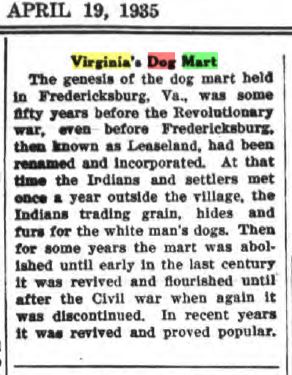 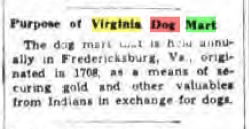 There is no charge for buying or selling a dog; the only rule is that a dog can be placed on the auction block only once. Some dogs go free to the children who first appear at the block to claim them. ******************************************************************************************
 The
epidemic
diseases introduced by the Europeans into the Americas killed
most of the Indians, with the same
effect on their dogs (they had no immunity). The Europeans
brought their dogs with them and the Indians still alive liked them
better than their own. By then, the majority of the native
dogs were extinct - Dogs
of the American Indians The
epidemic
diseases introduced by the Europeans into the Americas killed
most of the Indians, with the same
effect on their dogs (they had no immunity). The Europeans
brought their dogs with them and the Indians still alive liked them
better than their own. By then, the majority of the native
dogs were extinct - Dogs
of the American Indians"Interestingly, there are over four hundred dog breeds today, and most of them were developed in just the last 150 years." "The data also confirm the idea that dogs moved with humans from Asia into the New World and were not domesticated from scratch with wolves in North America. The large majority of breeds, however, likely have recent, European origins, according to the authors." 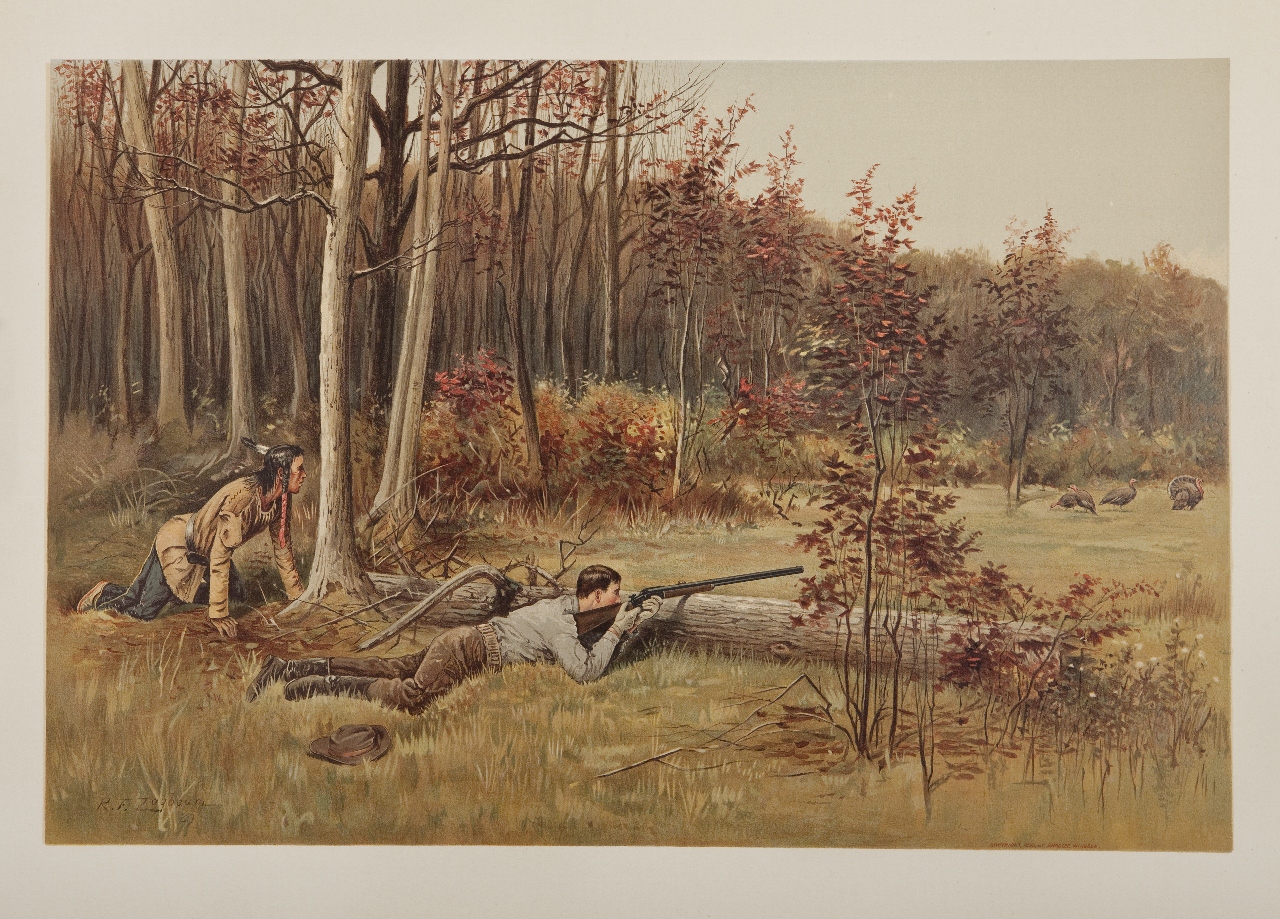 Most
breeds of
dogs are at most a few hundred
years old, but the English
Setter appeared about 400 years ago in England. The English
Pointer may have been around since 1650. Many turkey dogs are
part Plott
hound, a breed that originated in the mountains of western
North Carolina about 1800, and is also the state dog of North Carolina. Most
breeds of
dogs are at most a few hundred
years old, but the English
Setter appeared about 400 years ago in England. The English
Pointer may have been around since 1650. Many turkey dogs are
part Plott
hound, a breed that originated in the mountains of western
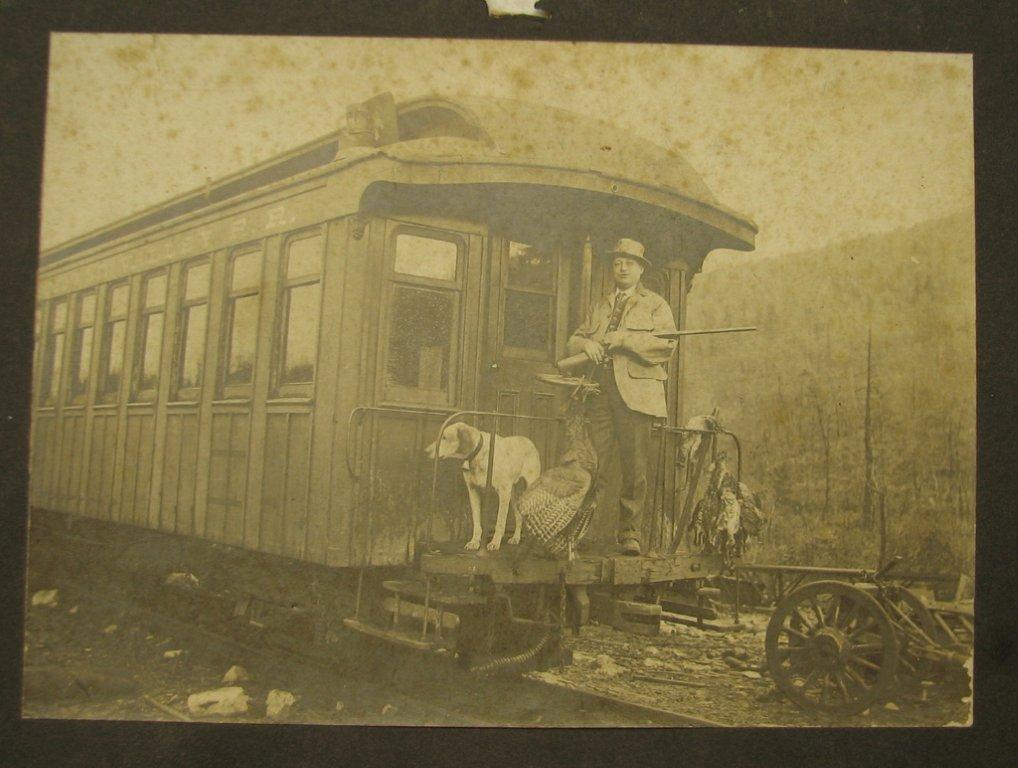
North Carolina about 1800, and is also the state dog of North Carolina.Who started hunting turkeys with dogs? Did the Jamestown VA immigrants learn it in the sacred hunting grounds of the Indians and their dogs that survived the period? Soon after, the Europeans imported hunting dogs. Virginians refined turkey hunting with a dog and kept the tradition alive for the next 400 years. See the source cited by the 1491 book and read more about the origin of the Turkey Hunting Dog. 1890 Wild Turkey Hunt with Indian Guide photo by special permission of the Smithsonian Institution, National Museum of American History, Home and Community Life, Harry T. Peters 'America on Stone' Collection (Image Use | Copyright | Credits). 1606 Apalatchy VA map credit: Jodocus Hondius [1606]-1636 Amsterdam. Old turkey dog hunter and Valley RR photos courtesy Steve Turpin. |
| “Our ability to perceive quality in nature begins, as in art, with the pretty. It expands through successive stages of the beautiful to values as yet uncaptured by language.” Aldo Leopold, A Sand County Almanac |
 The women
of the Caddo
Indian tribe perform the first four parts of the hour long Turkey Dance. The women
of the Caddo
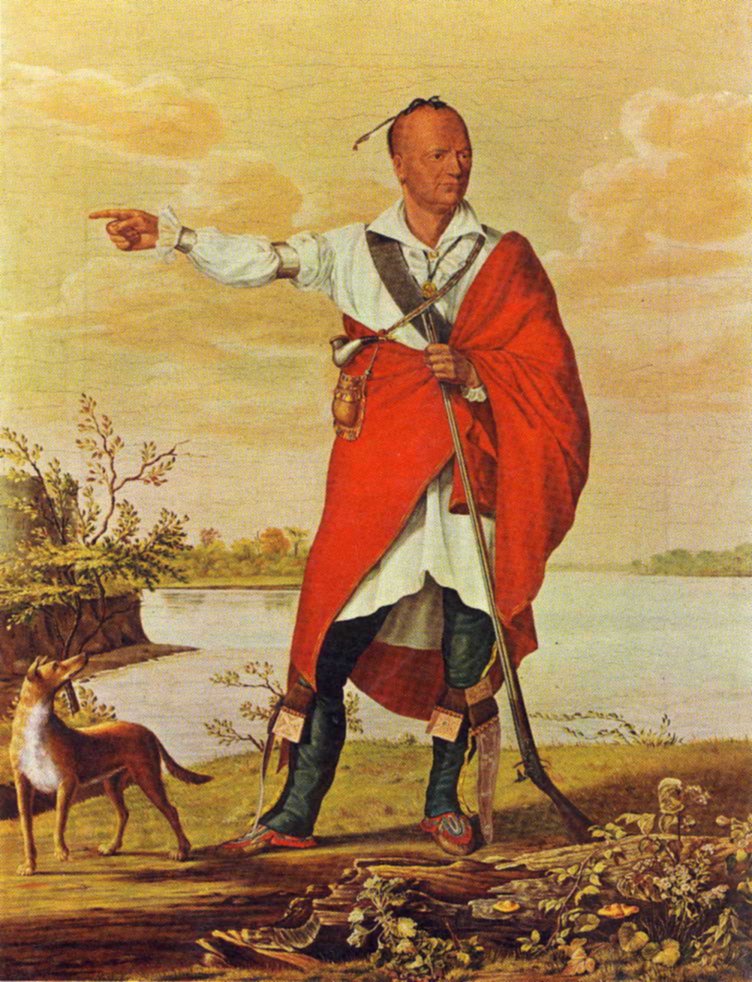
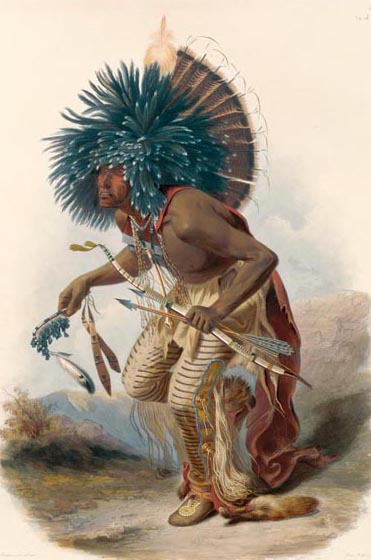
Indian tribe perform the first four parts of the hour long Turkey Dance. Turn up the speakers. The Caddo Nation 5 part turkey dance. The Zuni Indian turkey dance at the Albuquerque Indian Cultural Center. In 1834, Karl Bodmer illustrated the Hidatsa Warrior - Two Ravens Hand-coloured aquatint engraving by Rene Rollet after Bodmer. $60,000.00 |
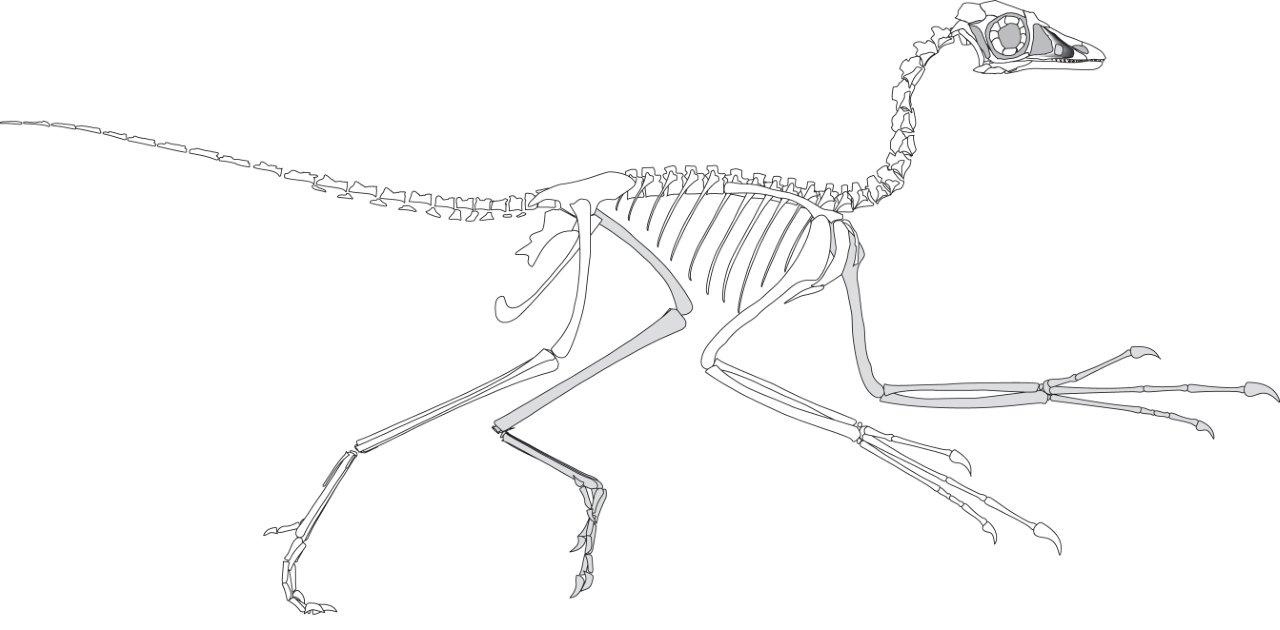 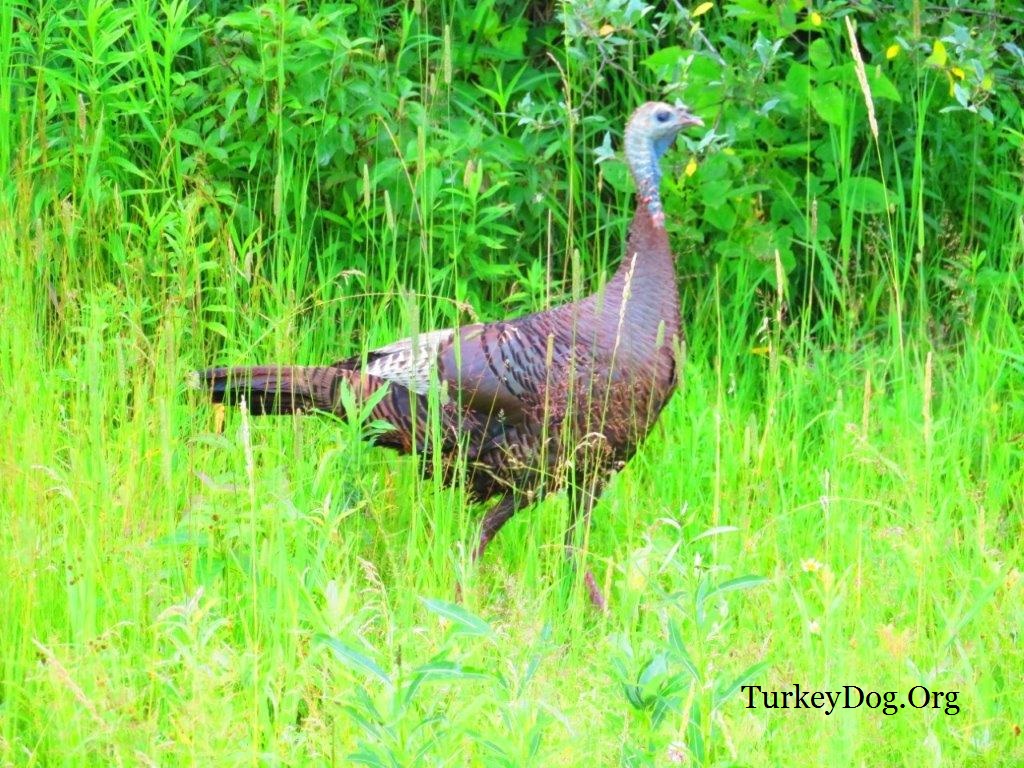 We
hunt
wild turkeys
with similarities in bone structure to the hollow-boned dinosaurs.
Imagine you're hunting this ancient bird, the feared velociraptor. Whose
main characteristics include three toes facing forward, scales on its
legs, a backbone parallel to the ground and its neck is S-shaped. Will
this theropod
be your familys thanksgiving dinner, or will you be the raptors?
Another 160 million year old forest dwelling bird-like creature named Aurornis, lived in the Jurassic
and Cretaceous times before Archaeopteryx, looks like the
ancestor of todays wild turkey. We
hunt
wild turkeys
with similarities in bone structure to the hollow-boned dinosaurs.
Imagine you're hunting this ancient bird, the feared velociraptor. Whose
main characteristics include three toes facing forward, scales on its
legs, a backbone parallel to the ground and its neck is S-shaped. Will
this theropod
be your familys thanksgiving dinner, or will you be the raptors?
Another 160 million year old forest dwelling bird-like creature named Aurornis, lived in the Jurassic
and Cretaceous times before Archaeopteryx, looks like the
ancestor of todays wild turkey....chickens and turkeys are genetically the closest dinosaur relatives (The Wonder of Birds by Jim Robbins) |
| National
Geographic - Man
and
Dog
an
Evolving Partnership (49 minutes), compliments of Hulu. |
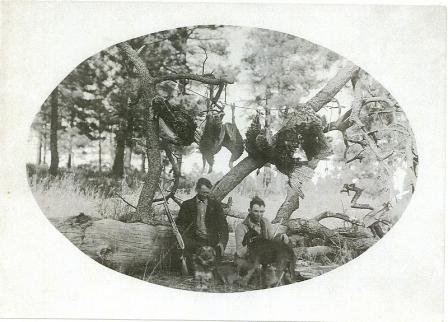 Dr.
Henry
Mosby,
a
noted
wild
turkey
researcher
and
teacher
at
Virginia
Tech,
wrote
about
fall turkey hunting with dogs in his 1943 book entitled ‘The Wild
Turkey in Virginia”: "The turkey dog, usually a pointer or setter, is
trained to trail a flock of turkeys, burst upon the flock at full
speed, thereby scattering them so that the individual turkeys are
flushed in all directions. Unless the birds are well scattered by being
suddenly frightened, most of the flock will fly in one direction and
may reassemble elsewhere, rather than the point of the flush. The
majority of fall turkey hunters prefer to use a silent trailing dog
that does not bark until it runs into the flock. The barking at the
flush serves several purposes: first, to scatter the turkeys, second to
notify the hunter of the flush, and third, to advise him of the
locality where the flush was Dr.
Henry
Mosby,
a
noted
wild
turkey
researcher
and
teacher
at
Virginia
Tech,
wrote
about
fall turkey hunting with dogs in his 1943 book entitled ‘The Wild
Turkey in Virginia”: "The turkey dog, usually a pointer or setter, is
trained to trail a flock of turkeys, burst upon the flock at full
speed, thereby scattering them so that the individual turkeys are
flushed in all directions. Unless the birds are well scattered by being
suddenly frightened, most of the flock will fly in one direction and
may reassemble elsewhere, rather than the point of the flush. The
majority of fall turkey hunters prefer to use a silent trailing dog
that does not bark until it runs into the flock. The barking at the
flush serves several purposes: first, to scatter the turkeys, second to
notify the hunter of the flush, and third, to advise him of the
locality where the flush was 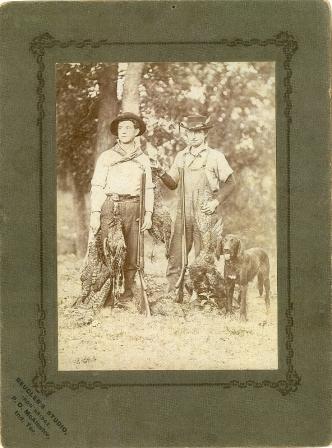 made.
The well-trained turkey dog
also must be taught to remain quietly at the feet of the hunter when he
is yelping. The advantages of using a trained turkey dog are: (1) it
permits the hunter to cover a much larger area and to do so more
thoroughly; (2) because of the tendency of the wild turkey to run
rather than to fly in eluding its enemies, the use of a dog is
desirable if the flock is to be well scattered, and (3) a well-trained
dog is of much assistance in recovering wounded birds. Severely wounded
turkeys are often capable of traveling a considerable distance and are
very clever at hiding themselves. Without the use of a dog such turkeys
often are lost. In addition to these materialistic advantages, many
hunters obtain a good portion of their sport from training and
observing the dogs which they work in the field. It cannot be denied
that it is a real thrill to hear a turkey dog make a flush and to see
him return to the hunter in the field, panting and hot from the chase,
and tail wagging and a demeanor that clearly shows he is as proud of
himself as his master is of him. It is of equal pleasure to the hunter
to observe the dog at his feet, quivering with excitement and
anticipation, when the long awaited turkey is heard answering the
"yelp" of the hunter as it approaches the blind." made.
The well-trained turkey dog
also must be taught to remain quietly at the feet of the hunter when he
is yelping. The advantages of using a trained turkey dog are: (1) it
permits the hunter to cover a much larger area and to do so more
thoroughly; (2) because of the tendency of the wild turkey to run
rather than to fly in eluding its enemies, the use of a dog is
desirable if the flock is to be well scattered, and (3) a well-trained
dog is of much assistance in recovering wounded birds. Severely wounded
turkeys are often capable of traveling a considerable distance and are
very clever at hiding themselves. Without the use of a dog such turkeys
often are lost. In addition to these materialistic advantages, many
hunters obtain a good portion of their sport from training and
observing the dogs which they work in the field. It cannot be denied
that it is a real thrill to hear a turkey dog make a flush and to see
him return to the hunter in the field, panting and hot from the chase,
and tail wagging and a demeanor that clearly shows he is as proud of
himself as his master is of him. It is of equal pleasure to the hunter
to observe the dog at his feet, quivering with excitement and
anticipation, when the long awaited turkey is heard answering the
"yelp" of the hunter as it approaches the blind."The Wild Turkey Population Dynamics Research Project transcript available upon request. Photos courtesy Steve Turpin. |

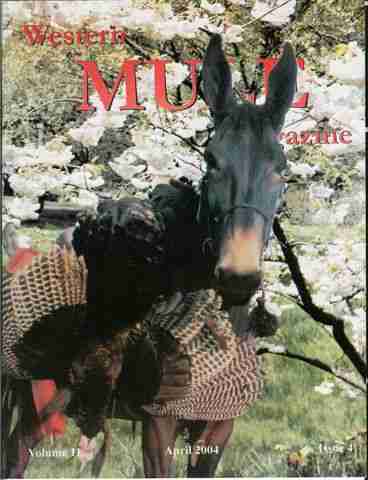 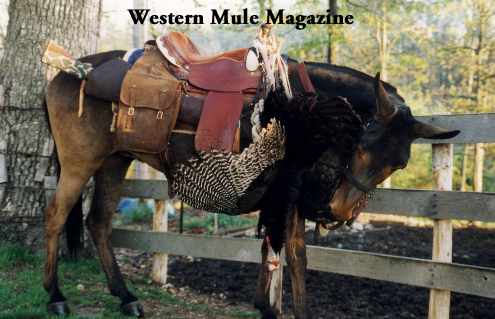 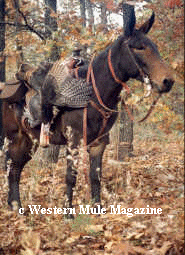 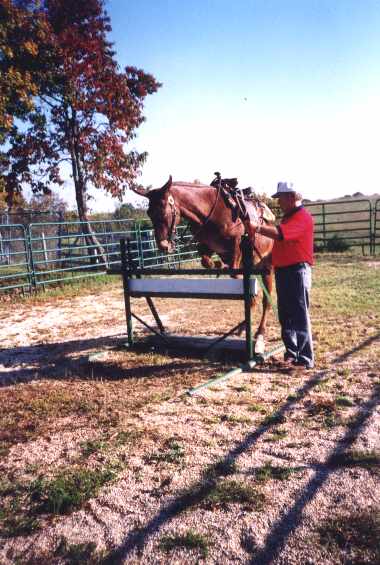 Ben Tennison of Western Mule Magazine hunts turkeys in the fall with his Missouri Jumping Mule. "When I see a flock across a field I just ride slowly towards them. Generally the flock will go into the woods where they're all bunched up. That's when I run my mule at them full speed, and if we get a good scatter, I tie up my mule a ways away, sit down and call the flock back. It doesn't always work, but it sure beats trying to run at them myself, especially at my age." Ben fully agrees Missouri should allow dogs in the fall. Photos © Western Mule Magazine. Starting in the fall of 2005 Missouri will have a longer season, and hunters can take both birds the same day. |
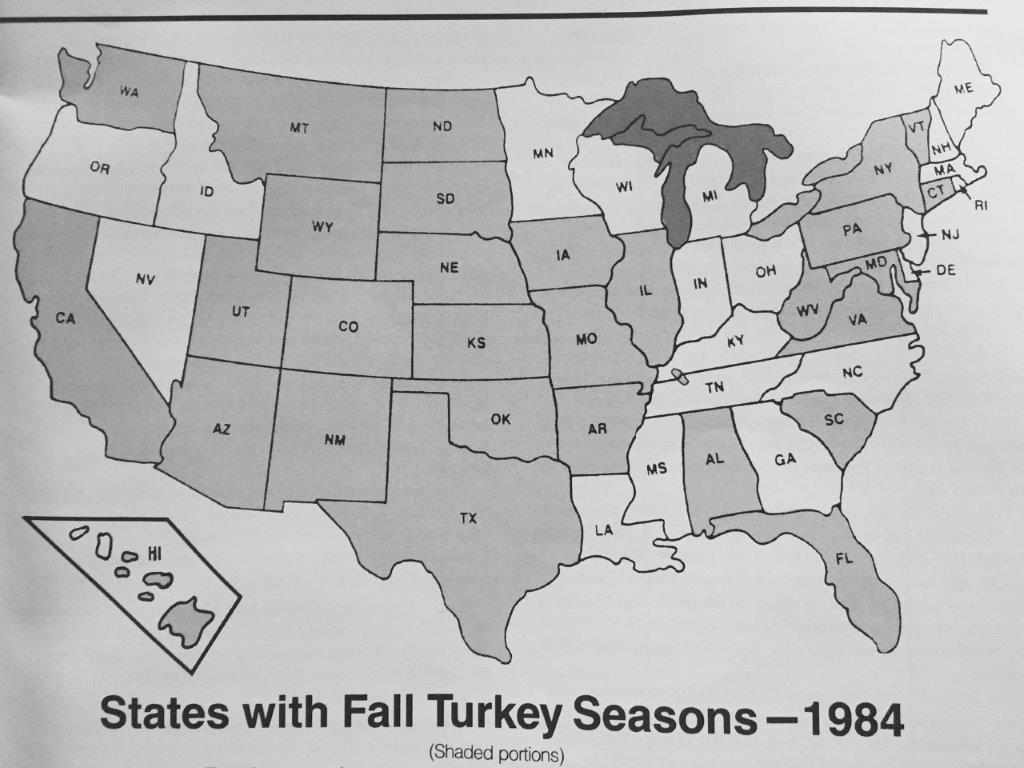 "The
hens have
recovered their flesh which they had lost by sitting, the gobblers have
regained their plumpness by feeding upon nuts, grapes, and a thousand
and one good things picked up in the forest. When all are fat and
strong they gradually form themselves into flocks, or gangs as the
forest settlers and hunters call them, frequently as many as a hundred
birds being in one group. This feathered ' gathering of the clans' has
given the Indians their name for the month of October, which they call
Turkey month." "The
hens have
recovered their flesh which they had lost by sitting, the gobblers have
regained their plumpness by feeding upon nuts, grapes, and a thousand
and one good things picked up in the forest. When all are fat and
strong they gradually form themselves into flocks, or gangs as the
forest settlers and hunters call them, frequently as many as a hundred
birds being in one group. This feathered ' gathering of the clans' has
given the Indians their name for the month of October, which they call
Turkey month." "But there is another kind of sport better suited to the winter months before the gobblers would answer a call: and that is, hunting them with a properly trained turkey dog. A well-trained dog will never range very far from his master till he finds the warm scent of a single turkey or a flock. Then he will start upon the trail without giving tongue until he finds the game. He will then run on, and by continual yelping, compel it to ascend some tree." 1866 A Hunter's Experiences in the Southern States of America |
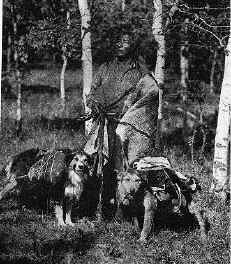
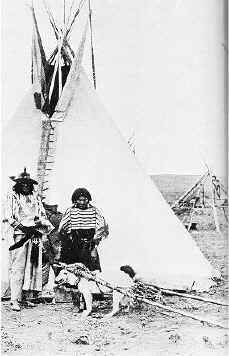 "In
the country of the Chickasaws, a
dog is necessary to hunt them. "In
the country of the Chickasaws, a
dog is necessary to hunt them. There are a great many in the same place, but he could do nothing without a dog." M. Le Page Du Pratz, The History of Louisiana 1724. Receive a Native American Name for your new turkey dog, from 47 Indian Tribes. |
 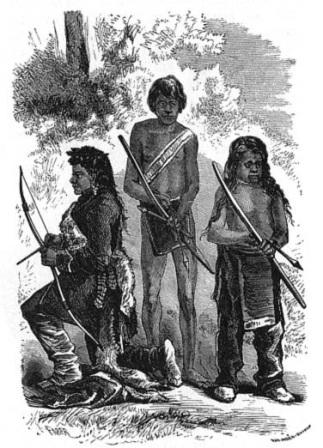 "Some
tribes did not consider
turkeys enough of a challenge or delicacy to warrant the attention of
experienced hunters, but they encouraged children to hunt them… They
did so in various ways, an unusual one being a dart blown through a
nine-foot-long reed. Some youngsters became proficient enough to kill a
turkey at thirty feet." Memoirs,
official and personal: With sketches of travels among the northern and
southern Indians : embracing a war excursion, and descriptions of
scenes along the western borders "Some
tribes did not consider
turkeys enough of a challenge or delicacy to warrant the attention of
experienced hunters, but they encouraged children to hunt them… They
did so in various ways, an unusual one being a dart blown through a
nine-foot-long reed. Some youngsters became proficient enough to kill a
turkey at thirty feet." Memoirs,
official and personal: With sketches of travels among the northern and
southern Indians : embracing a war excursion, and descriptions of
scenes along the western borders |
| Yet in
1804 to 1806, the Lewis
& Clark Expedition ate 1001 Deer, 375 Elk, 227 Bison,
but only 9 turkeys. The turkey population may have succumbed to blackhead,
from the introduction of chickens into the new
world. George Catlin participated in a Sioux Indian ceremony of friendship at which a meal of dog meat was the center of the festivities... Long's men observed how their host treated the cooked dog carcasses with reverence, each bone being meticulously cleaned in preparation for burial. The Sioux buried the bones to show respect for the species and to encourage more dogs to come into the world... The Indian sees fit to sacrifice his faithful companion to bear testimony to the sacredness of his vows of friendship. |
  "In
the early 1900's hunting turkeys
with dogs in Alabama was a legal and accepted way to hunt, and pretty
much the standard at that time." Uncle
Roy Moorer told me, "A man had rather be caught rustling
cattle, than shooting a turkey on the ground and not flushing it first,
and giving it a sporting chance to escape." John E. Phillips "In
the early 1900's hunting turkeys
with dogs in Alabama was a legal and accepted way to hunt, and pretty
much the standard at that time." Uncle
Roy Moorer told me, "A man had rather be caught rustling
cattle, than shooting a turkey on the ground and not flushing it first,
and giving it a sporting chance to escape." John E. Phillips Read about Alabama's turkey dog history in John's Outdoor Life Complete Turkey Hunting |
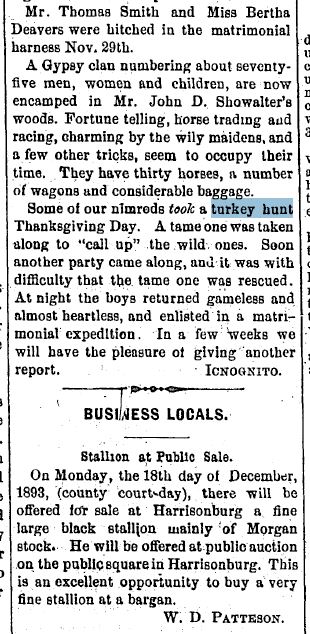 'I sold a
man a
dog in
Alabama. Now it is illegal in Georgia, by the way. I sold him a pup,
and he wanted it for a turkey dog, to tree wild turkeys. I said 'Man,
you’re crazy, and he told me how it was." “ He says, you walk in the
woods, and you come up on a bunch of wild turkeys, a person does,
they’ll fly to the next ridge. I mean, they gone! But a dog comes up on
a bunch of turkeys, they’ll just fly up in a tree. That dog’ll move on
the other side of the tree, and he’ll just bark every once in a while
to keep the turkey’s attention; the man just walks up and picks out the
one he wants and shoots it. They just stay there ‘cause the dog has got
their attention, and the hunter just real quietly sneaks up and shoots
it out of the tree.” That is illegal in Georgia, to hunt turkeys with
dog. I checked on that. Now whether it is in Alabama or not, I don’t
know. But the man bought the dog to turkey hunt with.' Ronia’s
Hunter’s Tales of the Cur by Austin Bauman pp. 142-143 (year
unknown) The
Foxfire Magazine, Volume 34 Issues 133 & 134
Fall/Winter 2000 (Note to Readers: It rarely works like that, most
times the birds see you coming and fly away. If the leaves are on the
trees or they're in evergreens, you can't see them. Good story when
selling a dog though. Ed.) 'I sold a
man a
dog in
Alabama. Now it is illegal in Georgia, by the way. I sold him a pup,
and he wanted it for a turkey dog, to tree wild turkeys. I said 'Man,
you’re crazy, and he told me how it was." “ He says, you walk in the
woods, and you come up on a bunch of wild turkeys, a person does,
they’ll fly to the next ridge. I mean, they gone! But a dog comes up on
a bunch of turkeys, they’ll just fly up in a tree. That dog’ll move on
the other side of the tree, and he’ll just bark every once in a while
to keep the turkey’s attention; the man just walks up and picks out the
one he wants and shoots it. They just stay there ‘cause the dog has got
their attention, and the hunter just real quietly sneaks up and shoots
it out of the tree.” That is illegal in Georgia, to hunt turkeys with
dog. I checked on that. Now whether it is in Alabama or not, I don’t
know. But the man bought the dog to turkey hunt with.' Ronia’s
Hunter’s Tales of the Cur by Austin Bauman pp. 142-143 (year
unknown) The
Foxfire Magazine, Volume 34 Issues 133 & 134
Fall/Winter 2000 (Note to Readers: It rarely works like that, most
times the birds see you coming and fly away. If the leaves are on the
trees or they're in evergreens, you can't see them. Good story when
selling a dog though. Ed.) |
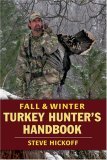 Outdoor writer Steve Hickoff travels from Maine to New York to hunt turkey with his dog. Update March 2006 NH is proposing a fall shotgun hunt, details on the Legislation page. UPDATE June 2007! DOGS ARE NOW ALLOWED during the NH fall turkey season. Update August 2007: A new fall shotgun season and with dogs approved in Maine for fall 2007. Steve's latest book features dogs, and is a must read: Fall and Winter Turkey Hunter's Handbook 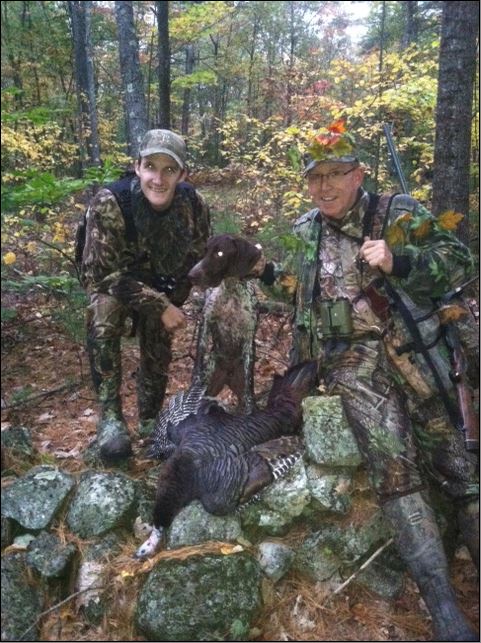 Maine 2013 - Here's a photo of one of our many successful fall hunts. L to R - son Tim Wescott, GSP Gunny (age 2), Niles Oesterle. Target species in foreground. Gunny had 19 scatters in 2012 as a pup. Didn't try to keep track in fall 2013. Maine season was four weeks long with two bird bag limit. We hunted and/or guided all but two days..... so there's room for improvement ;-) Love the Turkey Dog News! Jim Wescott Tenth Legion Guides Maine From 2013 to 2020, in Maine and New Hampshire! GSP Gunny and English cocker Henry having a great time chasing northern New England flocks. Gunny was in the NWTF Turkey Country September/October 2020. Our old Damascus Parker hammerguns have had warm barrels all fall. Happy Thanksgiving. Jim Wescott, Maine  Tenth
Legion Guide Robb Cotiaux with fall gobbler and 9 year old
GSP Gunny (gun is an 1880 Parker underlifter 12 gauge
Damascus). Tenth
Legion Guide Robb Cotiaux with fall gobbler and 9 year old
GSP Gunny (gun is an 1880 Parker underlifter 12 gauge
Damascus).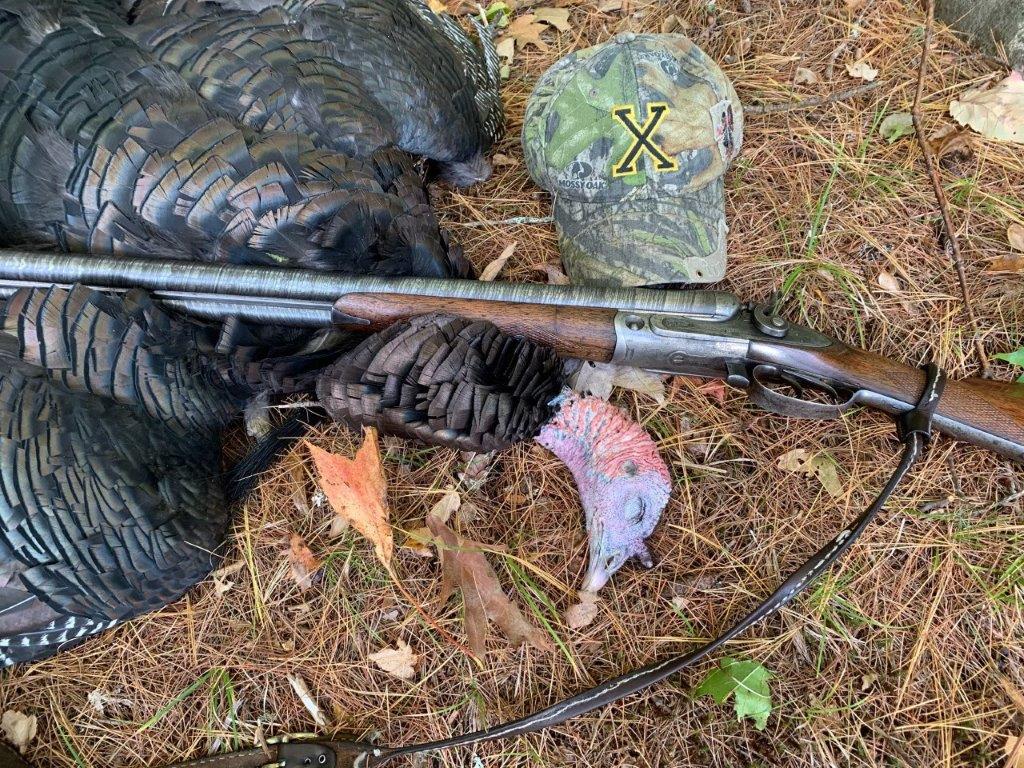 Another
fall gobbler with another 1880 Parker 32” Damascus. Another
fall gobbler with another 1880 Parker 32” Damascus.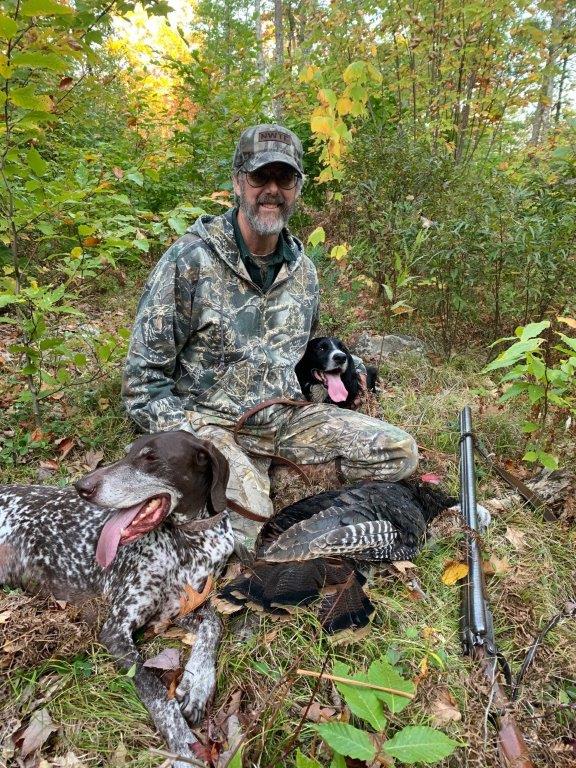 Connecticut
wild turkey biologist Mike Gregonis with 5 year old Henry,
Gunny and jenny. Connecticut
wild turkey biologist Mike Gregonis with 5 year old Henry,
Gunny and jenny.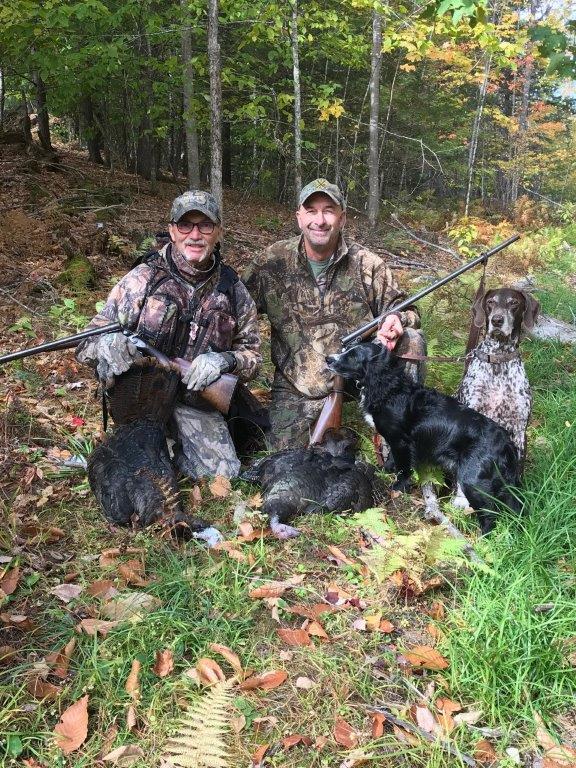 Fine New Hampshire morning, excellent bust and classic call back of two Granite State jakes. (Robb on left, yours truly on the right) 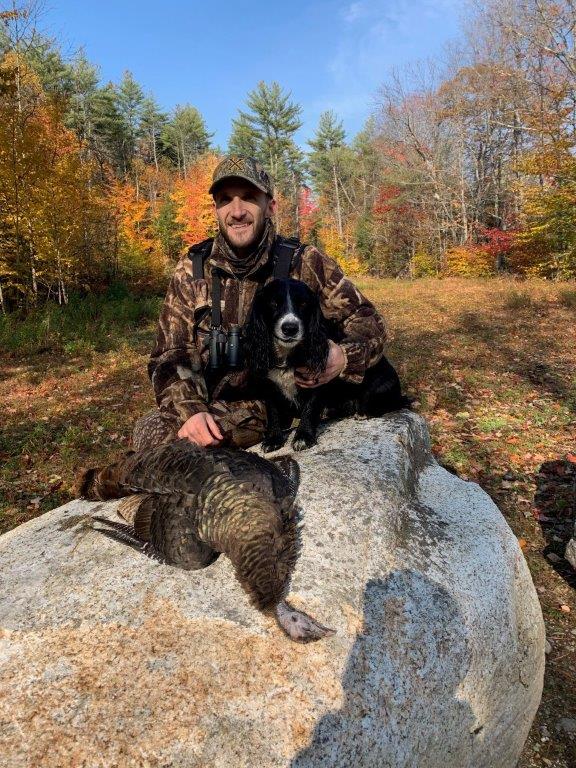 Son
Tim Wescott with
Henry and a New Hampshire jenny. Tim totes
an 1878 Parker. Gunny would not get up on the boulder. These two turkey
dogs work very well together, far ranging Gunny and medium range Henry. Son
Tim Wescott with
Henry and a New Hampshire jenny. Tim totes
an 1878 Parker. Gunny would not get up on the boulder. These two turkey
dogs work very well together, far ranging Gunny and medium range Henry.
The Parkers range from 0 grade to grade 2 and cost from $350 - 2,500, depending on condition, originality etc. The less expensive are great finds or need some work. They are all 30 yard guns with some capable of a little more. I’ve owned ten Parkers, all Damascus hammerguns over 140 years old, 12 gauges chambered 2 5/8”. My hunting buddies have a great interest in them also. I reload black powder shells in full length brass or once-fired paper. My best guns have birds and setters engraved on the sides and floor plate, some have no engraved animals. As you can imagine they are a blast to shoot and add so much to the hunt. I’ve been hunting turkey with Parkers for 20 years and turkey dogging for the last 12. Thank you for putting so much great information on the AWTHDA. Jim Wescott, Maine 11/6/20 |
 A
hundred years ago,
you could get arrested, or fired, for doing the Turkey Trot. A
hundred years ago,
you could get arrested, or fired, for doing the Turkey Trot. Since 1987, it gets a lot more outrageous than that at Turkey Trot Acres, the NorthEast's Premier Hunting Lodge. |
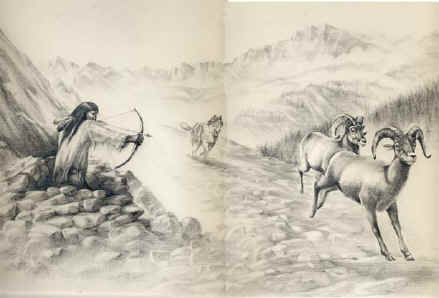 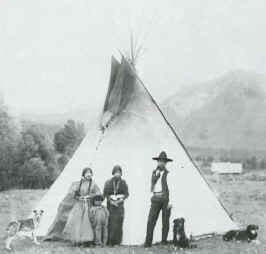 'Indian children had to learn the different calls of the turkey, to communicate among hunting and war parties.' Samuel Kercheval A HISTORY OF THE VALLEY OF VIRGINIA A history of the valley of Virginia |
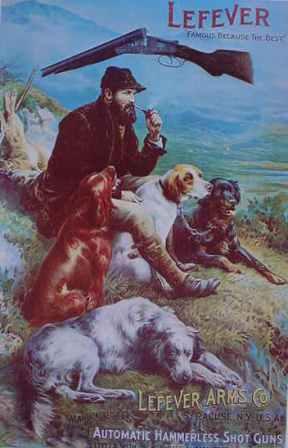 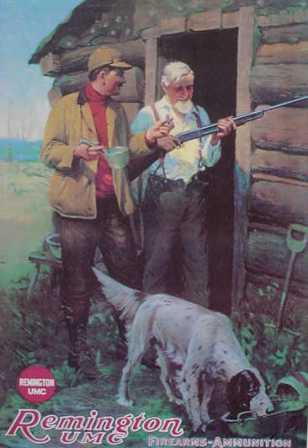 "In
some states... hunting turkeys
during the fall is a bigger tradition than hunting them in the spring.
Most southerners would classify fall turkey hunting as a northern or
“Yankee” tradition... The bottom line is that fall turkey hunting can
be a lot of fun without harming turkey populations. Fall turkey seasons
are a great opportunity to introduce youth hunters to the sport that we
all enjoy so much." "In
some states... hunting turkeys
during the fall is a bigger tradition than hunting them in the spring.
Most southerners would classify fall turkey hunting as a northern or
“Yankee” tradition... The bottom line is that fall turkey hunting can
be a lot of fun without harming turkey populations. Fall turkey seasons
are a great opportunity to introduce youth hunters to the sport that we
all enjoy so much."Fall Turkey Hunting: Chasing that Elusive "Thanksgiving Butterball" By James Austin and Ron Seiss (see last page of the pdf). Mississippi expands their area for the fall 2006 turkey hunt, but dogs are not allowed. See details on the Legislation page. |
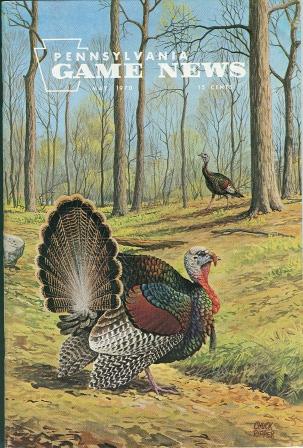 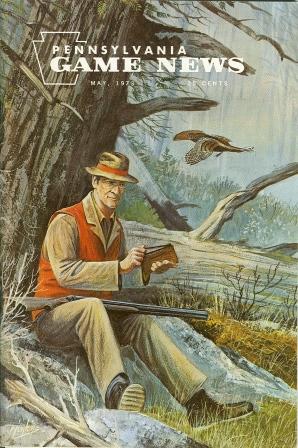 Pennslvania
raised more turkeys for release than anywhere, and for years you
couldn’t use a call or a blind in the fall. Hunting turkeys in
Pennslvania in the fall is a longer tradition than in the spring (it
was closed for 95 years). All of which makes it particularly odd they
don't allow dogs, and now they're surrounded by States that do! And as
of 2006 you can take a 2nd gobbler in the spring, but still only one
bird in the fall, and not with a dog. Pennslvania
raised more turkeys for release than anywhere, and for years you
couldn’t use a call or a blind in the fall. Hunting turkeys in
Pennslvania in the fall is a longer tradition than in the spring (it
was closed for 95 years). All of which makes it particularly odd they
don't allow dogs, and now they're surrounded by States that do! And as
of 2006 you can take a 2nd gobbler in the spring, but still only one
bird in the fall, and not with a dog. As of June 30, 2007, after 15 months of hard lobbying by the PA chapter of the AWTHDA, PA once again allows turkey hunting with a dog, like they did in the 1800's. |
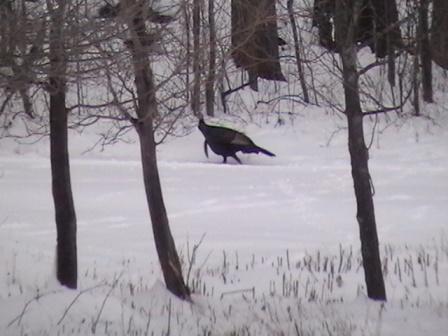  "Lieut.
Henry Timberlake describes
Cherokee children in 1765 using a “sarbacan, or hollow cane” to blow a
small dart into the turkey’s eye. They seldom missed." John D. Hunter,
Memoirs of Captivity among the Indians of North America 1823 "Lieut.
Henry Timberlake describes
Cherokee children in 1765 using a “sarbacan, or hollow cane” to blow a
small dart into the turkey’s eye. They seldom missed." John D. Hunter,
Memoirs of Captivity among the Indians of North America 1823Memoirs of Lieutenant Henry Timberlake (The First American Frontier) by Henry Timberlake. The Cherokee Chief Standing Turkey went with Henry Timberlake to London in 1762-1763. Standing Turkey's nephew, Chief Stalking Turkey, was half Shawnee and half Cherokee. (The Native Americans used many techniques for hunting or capturing wild turkeys. Unlike the wild turkey of today, the birds were unwary of humans and easily captured. The Wild Turkey: Biology & Management by James G. Dickson) Photo courtesy Steve Turpin. |
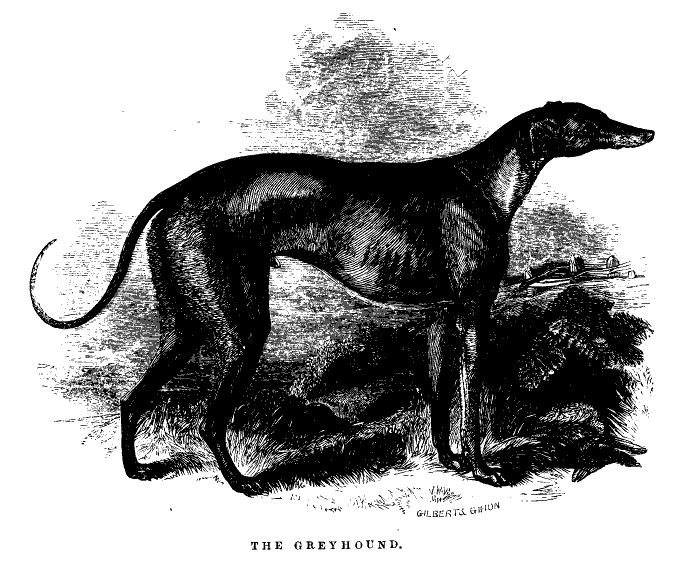 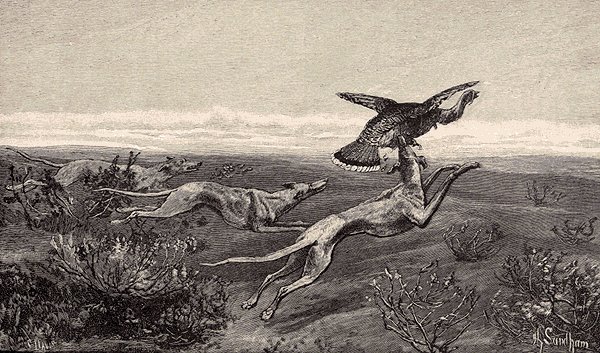 'Coursing
turkeys with greyhounds, as practiced in the more open 'Coursing
turkeys with greyhounds, as practiced in the more open western country is exciting sport... Well-trained turkey dogs are useful in chasing winged birds, which a man could never catch.' Audubon (1840) 'The Californian and Texan horsemen course hare, antelope, and wild turkey with their fleet greyhounds.' Theodore Roosevelt - Hunting Trips of a Ranchman 1885. |
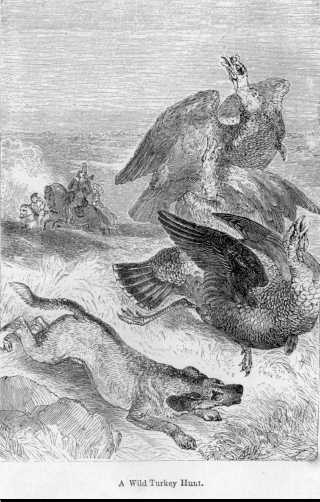 Chapter
Fourteen - A Wild-Turkey Hunt
(from the 1800's): Chapter
Fourteen - A Wild-Turkey Hunt
(from the 1800's): "We can ‘run’ them as we were about to do had they been buffaloes.” “Ha! ha! ha!” laughed François; “run a turkey! Why it will fly off at once. What nonsense you talk, brother!” “I tell you, no,” replied Basil. “It is not nonsense—it can be done—I have often heard so from the trappers,—now let us try it ourselves.”... He saw the dog standing by the root of a large oak. He had “treed” the turkey, and was looking upward with glancing eyes, barking and wagging his tail. The Boy Hunters by Captain Mayne Reid (1818-1883). |
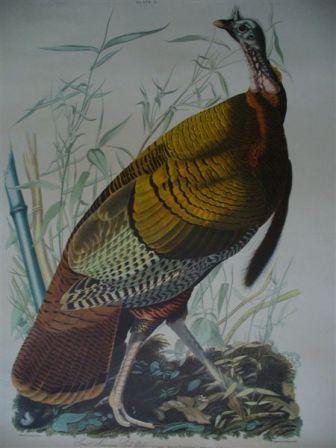 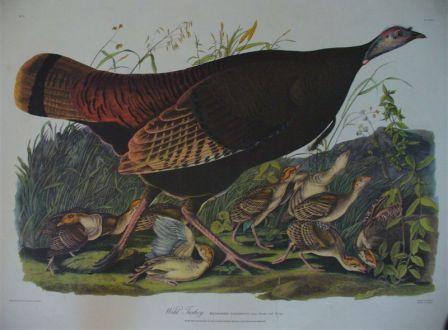 In Audubon's time, he couldn't find a single wild turkey in some areas of the Northeast. Today, Connecticut has 40,000 turkeys. New biography - John James Audubon : The Making of an American |
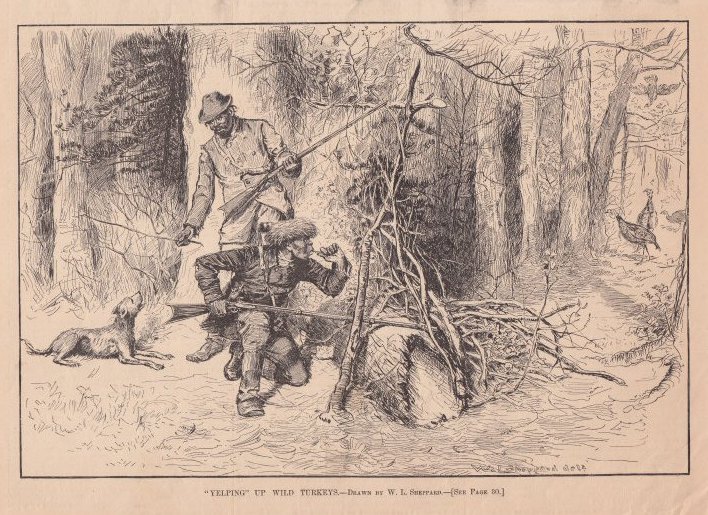 While
a Southern tradition back in
the old days, today hunting turkeys with dogs in the fall or winter is
no longer allowed in AL,
AR,
FL,
GA,
LA,
or SC.
Now, most of these states allow hunters to shoot up to five gobblers in
the spring, and don't even have a fall or winter season! While
a Southern tradition back in
the old days, today hunting turkeys with dogs in the fall or winter is
no longer allowed in AL,
AR,
FL,
GA,
LA,
or SC.
Now, most of these states allow hunters to shoot up to five gobblers in
the spring, and don't even have a fall or winter season!This photo (from a wood-engraved illustration made from the artists sketch) depicts fall/winter turkey hunting with a dog. One hunter keeps the dog still, while the other calls to the regrouping turkeys. Turkeys in the trees are pitching down to ones on the ground. "Yelping Up Wild Turkeys" from the 1/10/1885 Harper's Weekly (A Journal of Civilization), drawn by W.L. Sheppard (1833-1912). Photo courtesy of America's Oldest Name in Custom Calls |
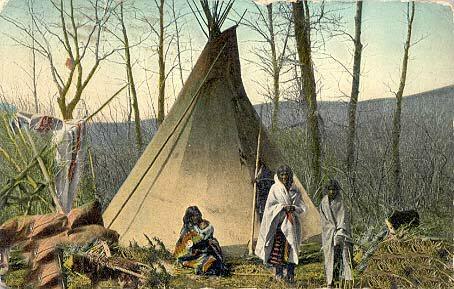 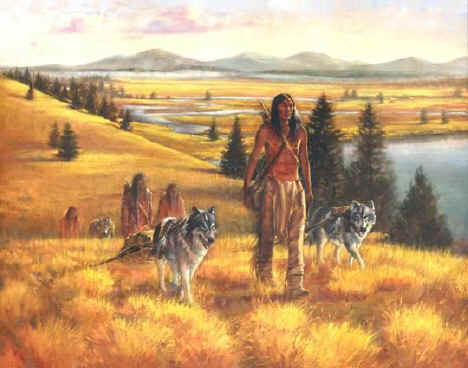 'American Indians would attract the gobbler by placing a decoy, then hiding behind logs and imitating the call of the hen.' John D. Hunter, Memoirs of Captivity among the Indians of North America 1823 |
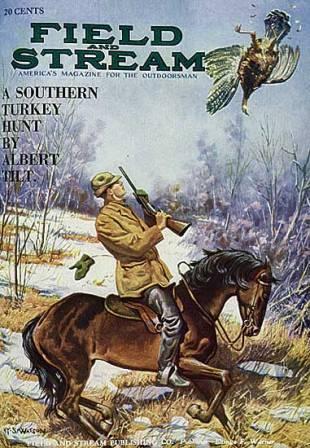 'In
the 1950's, Leigh H. Perkins of
the Orvis
Company hunted fall turkeys in Georgia by driving them off
the roost just before dawn to 6 or 8 gunners. They'd shoot for their
heads at the height of the tree-tops. Sometimes they only winged them,
and they ran off (even wounded they ran faster than a horse through the
woods). He began to use his Brittany Leda to find these birds, and was
soon invited to go on turkey drives with others. One time Leda
recovered a bird 2 miles from where it was shot!' From A
Sportsman's Life: How I Built Orvis by Mixing Business and Sport 'In
the 1950's, Leigh H. Perkins of
the Orvis
Company hunted fall turkeys in Georgia by driving them off
the roost just before dawn to 6 or 8 gunners. They'd shoot for their
heads at the height of the tree-tops. Sometimes they only winged them,
and they ran off (even wounded they ran faster than a horse through the
woods). He began to use his Brittany Leda to find these birds, and was
soon invited to go on turkey drives with others. One time Leda
recovered a bird 2 miles from where it was shot!' From A
Sportsman's Life: How I Built Orvis by Mixing Business and Sport |
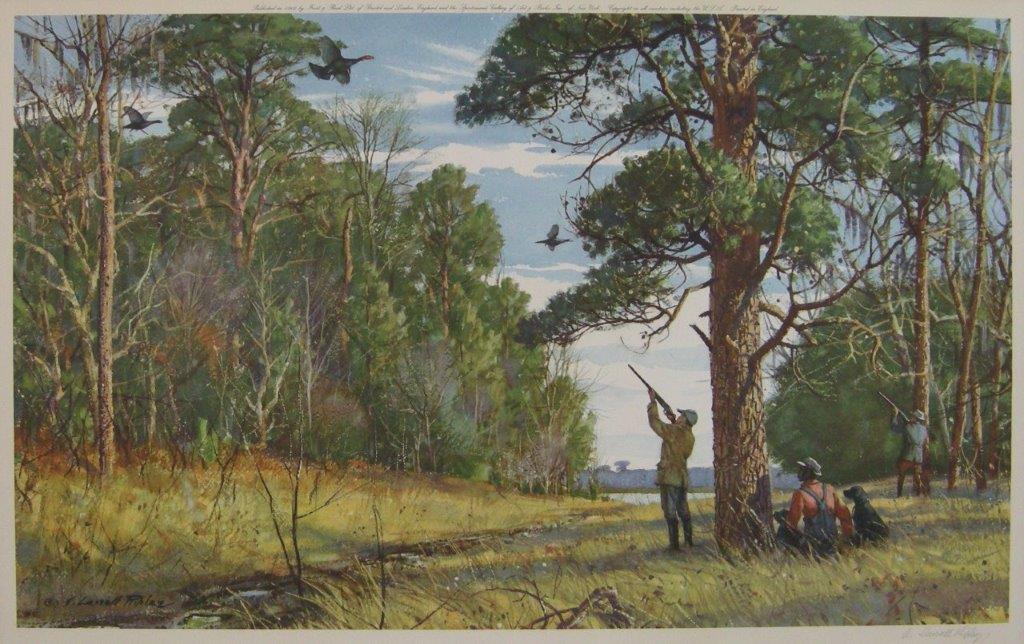 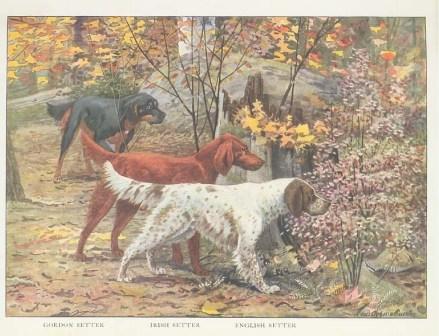 "Drive
hunting
has
become
very
popular
in
the
Southeast...
The
most
spectacular
effect
is
when
the
great birds come over in their beautiful glide with rigidly bowed
wings. Anyone who has seen a flight composed mostly of old gobblers,
with lighting effects right to bring out all their gorgeous coloration,
has witnessed one of the most beautiful and spectacular sights of the
sporting world. They may well be excused if they become so absorbed in
the spectacle that guns are forgotten and the birds pass by without a
shot being fired." The Wild Turkey - Its History and Domestication;
A.W. Schorger, Univ. of OK Press "Drive
hunting
has
become
very
popular
in
the
Southeast...
The
most
spectacular
effect
is
when
the
great birds come over in their beautiful glide with rigidly bowed
wings. Anyone who has seen a flight composed mostly of old gobblers,
with lighting effects right to bring out all their gorgeous coloration,
has witnessed one of the most beautiful and spectacular sights of the
sporting world. They may well be excused if they become so absorbed in
the spectacle that guns are forgotten and the birds pass by without a
shot being fired." The Wild Turkey - Its History and Domestication;
A.W. Schorger, Univ. of OK Press |
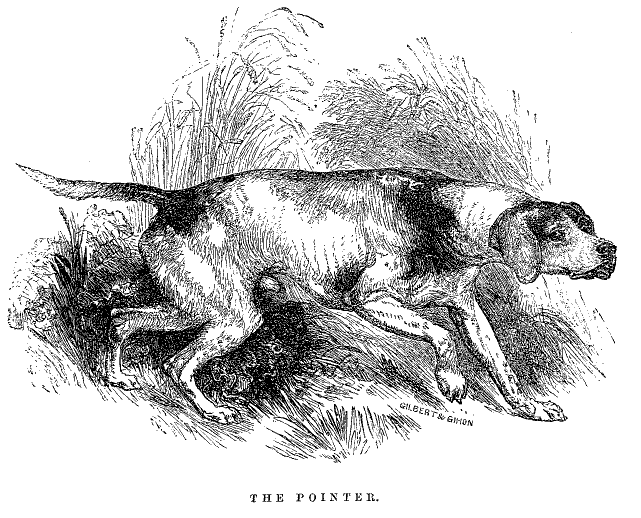 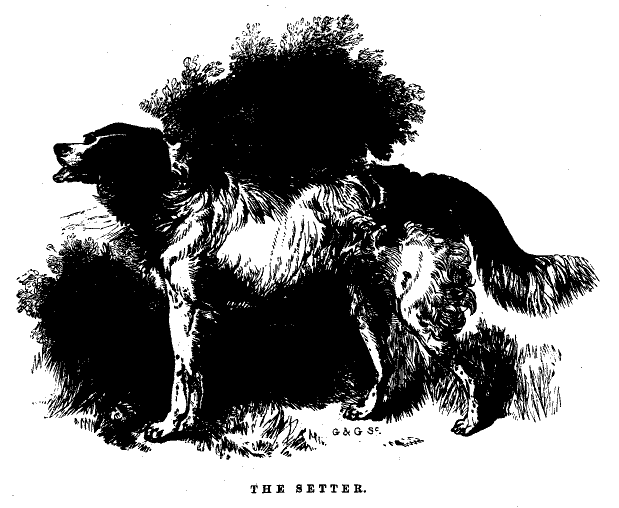 From
1843 to 1845 Captain George A.
McCall wrote about his hunting trips near Fort Scott, Kansas. His
favorite dog was a setter
pointer cross with a nose for grouse, woodcock, or turkey... From
1843 to 1845 Captain George A.
McCall wrote about his hunting trips near Fort Scott, Kansas. His
favorite dog was a setter
pointer cross with a nose for grouse, woodcock, or turkey...The backwoodsmen and western settlers think “The only bird worthy of their attention is the wild turkey.” Wm. Priest, Travels in the United States of America, 1795 |
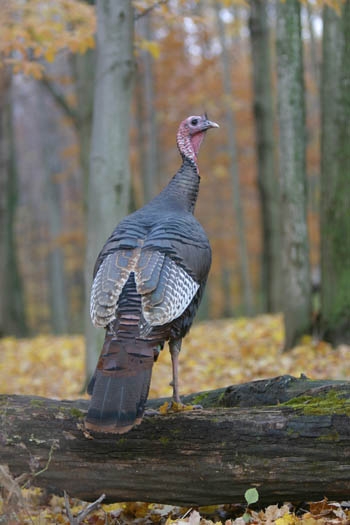 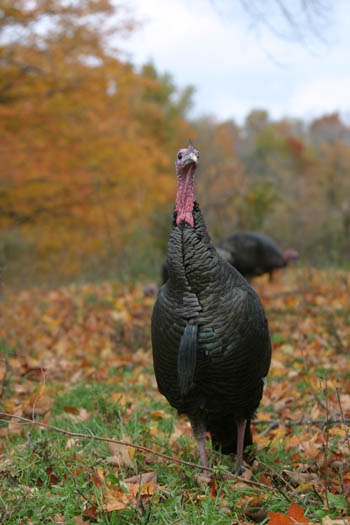 "Wild turkeys are relatively easy to catch; some Native Americans used snares and pole traps to secure one bird at a time." W. P. Baldwin, Trapping wild turkeys in South Carolina, Journal of Wildlife Management II 1947 Photos © Monte Loomis |
|
Pioneers built traps to catch
wild turkeys, they were the settlers primary source
of food.
How to trap wild turkey from A Boys Own Book of Outdoor Sports Rare print of wild turkey trap by Peter Rindisbacher (1833). |
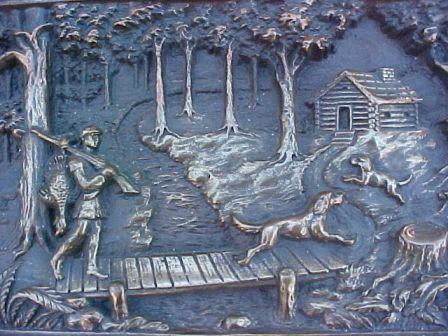 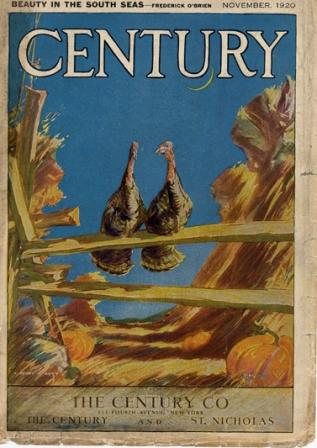 If
you know the origin of the brass
piece to the left, let
us know. If
you know the origin of the brass
piece to the left, let
us know. Picture courtesy of Steve Turpin A Dog's History of America : How Our Best Friend Explored, Conquered, and Settled a Continent |
  "The
best thing about hunting and fishing,' the Old Man said, 'is that you
don't have to actually do it to enjoy it. "The
best thing about hunting and fishing,' the Old Man said, 'is that you
don't have to actually do it to enjoy it.You can go to bed every night thinking about how much fun you had twenty years ago, and it all comes back clear as moonlight." — Robert Ruark "The Old Man's Boy Grows Older," 1957 |
  PBS and Nova special on how dogs evolved from wolves, and the truth about dogs. |
|
The reader is reminded that this
is a cooperative work, if you don't find something
that you know about turkeys, or the dogs that hunt them in these pages, you can only blame yourself for not having sent it in. |
|
Home | About Us
|
Books |
Breeds
| Classifieds
| FAQ
|
History
| Kit
Shaffer
Legislation | Links | Scratchings | Spring | Stories | Tales | Shop in the Store Members are invited to send pictures of yourself and your dog, with a short story like these: Carson Quarles | Earl Sechrist | Frederick Payne 1 | Frederick Payne 2 | Gary Perlstein | Gratten Hepler | Jon Freis 1 | Jon Freis 2 | Larry Case | Marlin Watkins 1 | Marlin Watkins 2 | Mike Joyner | Mike Morrell | Parker Whedon | Randy Carter | Ron Meek 1 | Ron Meek 2 | Tom McMurray | Tommy Barham 1 | Tommy Barham 2 Members Only: Hall of Fame | Members | Museum | Studies | and the States KY | NC | NY | OH | ON | PA | TN | VA | WI | WV © 2004 - 2024 American Wild Turkey Hunting Dog Association All Rights Reserved Permission to copy without written authorization is expressly denied. |