| Kentucky
Turkey Dogs |
Sixteen
fall turkey dog hunters wrote a similar letter to the
Kentucky Dept. of
Fish and Wildlife in 2008 to request a longer season: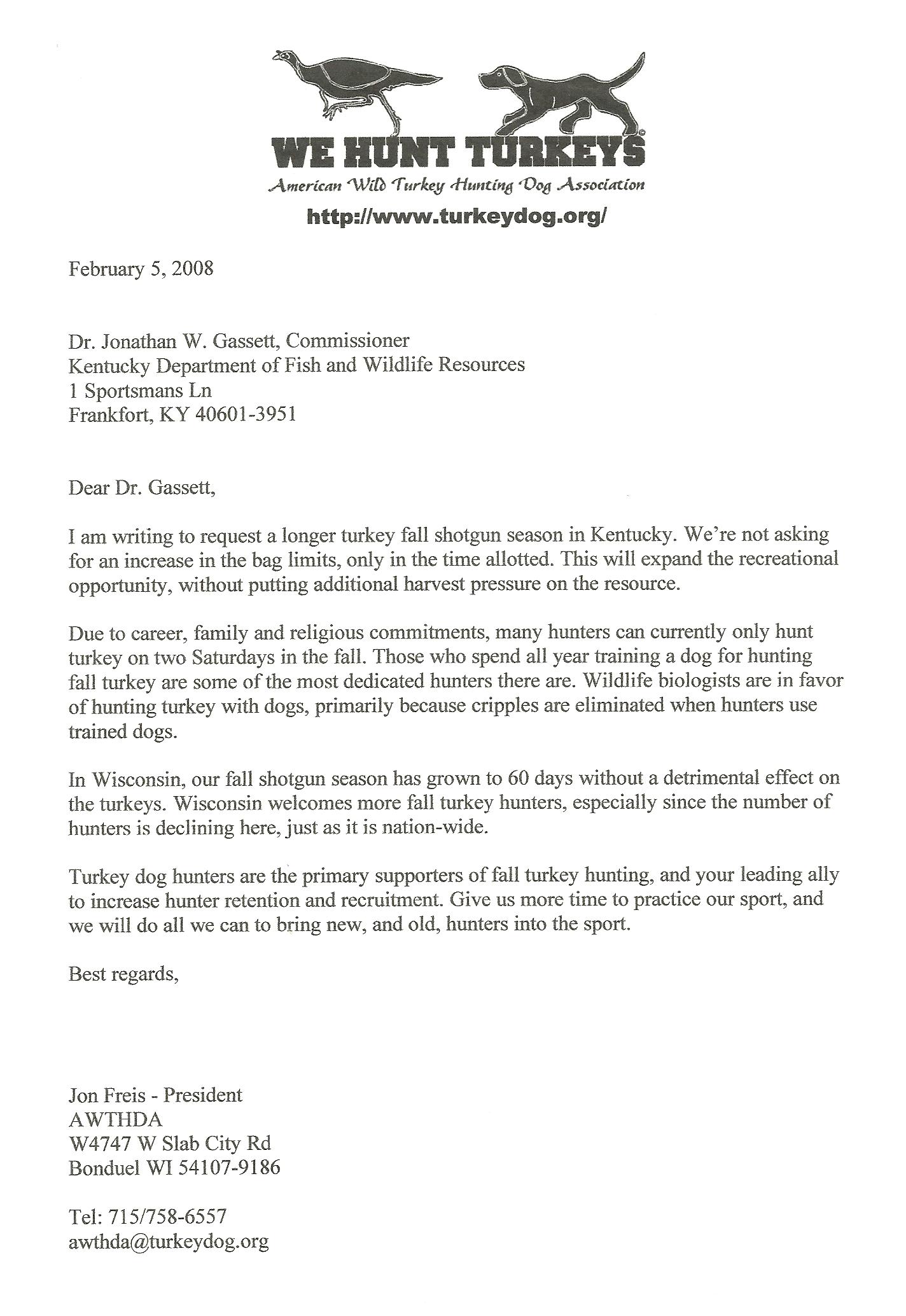
1. Eddie Williams Birdshot49@hotmail.com
|
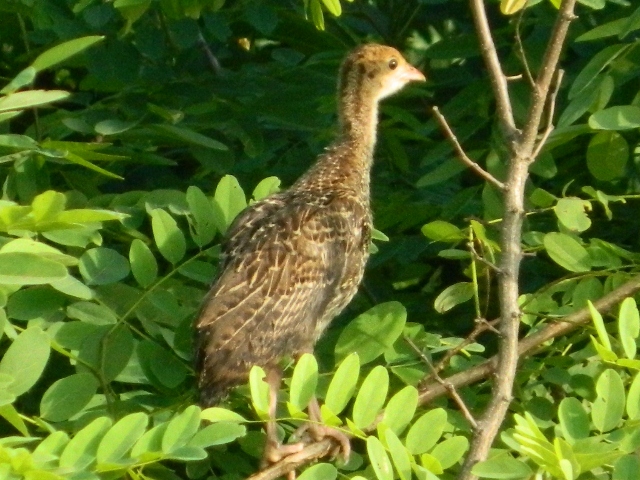 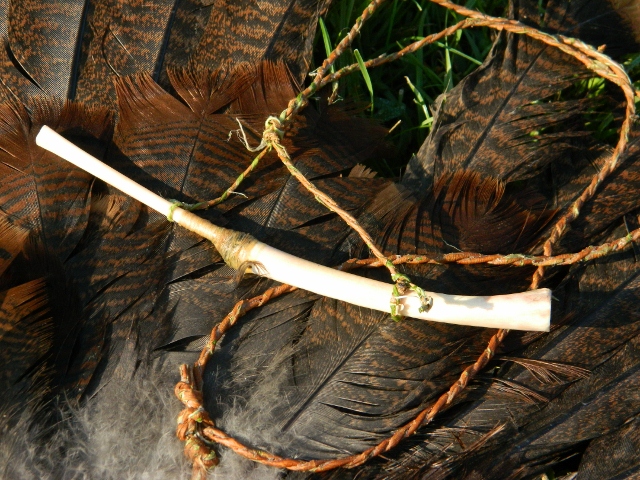 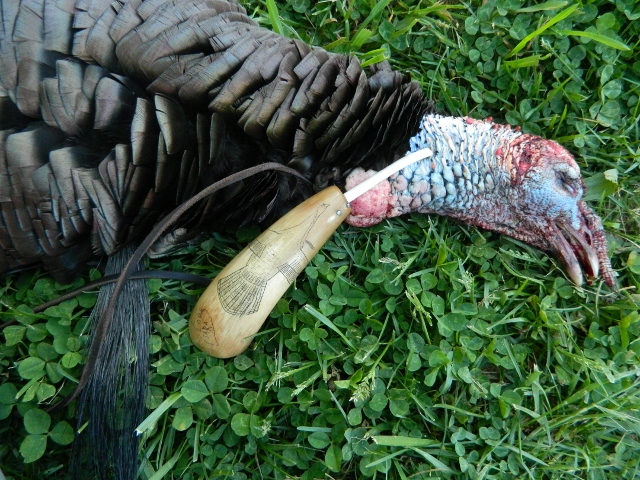 Here's
some pics
of my calls and of my pup Minky, or Chaqui as I call
her in Shawnee.
She flushed her first turkey this morning. She's part
Mountain Feist
and supposedly Jack Russell. Her Momma is English
Beagle. Here's
some pics
of my calls and of my pup Minky, or Chaqui as I call
her in Shawnee.
She flushed her first turkey this morning. She's part
Mountain Feist
and supposedly Jack Russell. Her Momma is English
Beagle. I'm not Shawnee that can be traced back, but I'm descendant of natives on both sides and on my mom's side, one ancestor goes back to Chillicothe, which was a principal town of the Shawnee. Anyhow, I'm mostly just nostalgic to a fault. I  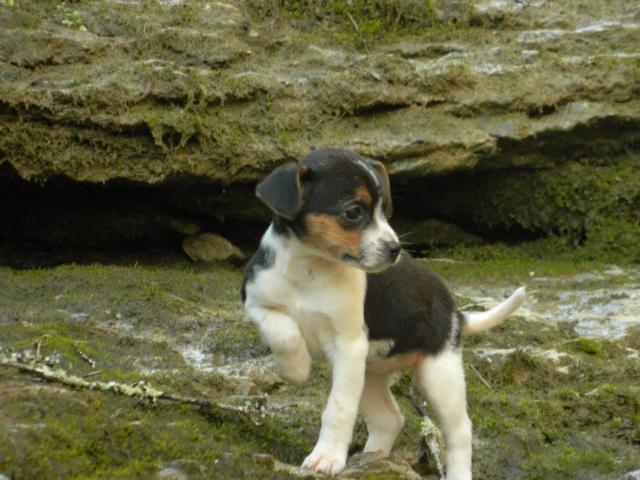 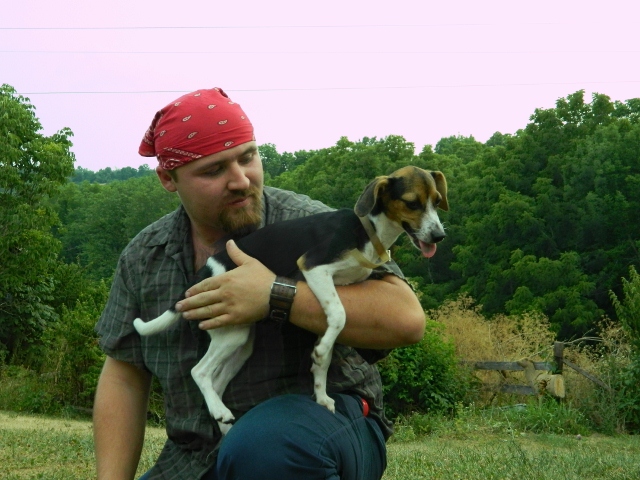 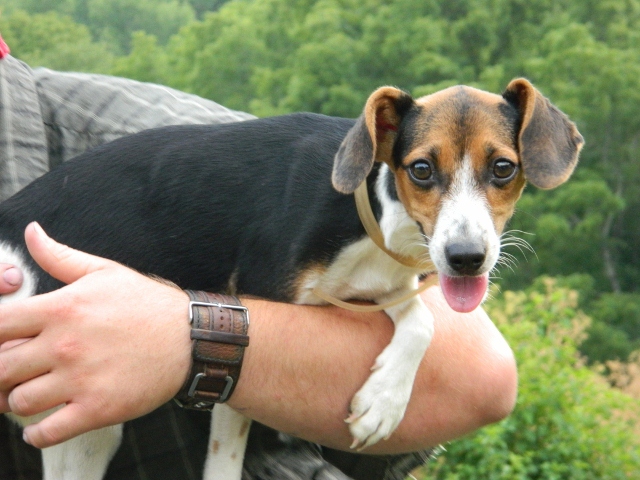 flint knapp and
make primitive bows and arrows. I love primitive man,
so naturally I've
taught myself a little native language. flint knapp and
make primitive bows and arrows. I love primitive man,
so naturally I've
taught myself a little native language. Colt Peel 859-396-2260 1554 Hunters Ferry Rd. Nicholasville, KY 40356 July 4, 2012 |
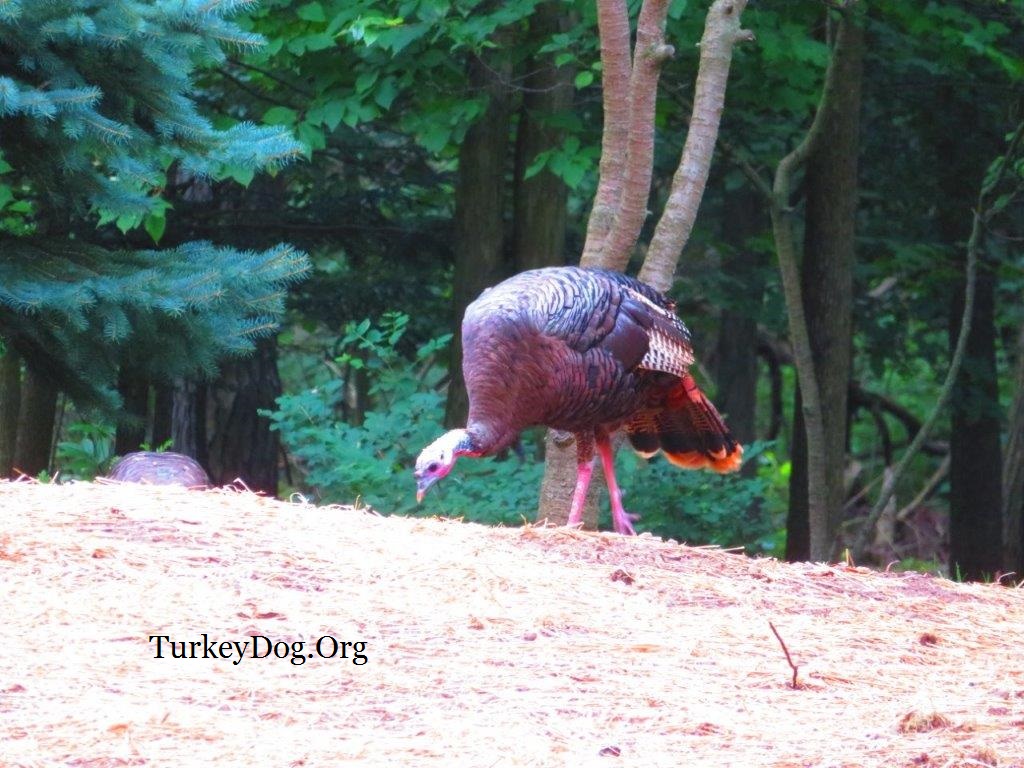 By
the 1630's, turkeys had become scarce in NY, MA
and CT.
And by the early 1700's,
the wild turkey was becoming scarce in much of the Piedmont
region.
Turkey hunters started to become secretive. They didn't
want others to
know where turkeys still existed, or learn about their
prized hunting
dogs. By
the 1630's, turkeys had become scarce in NY, MA
and CT.
And by the early 1700's,
the wild turkey was becoming scarce in much of the Piedmont
region.
Turkey hunters started to become secretive. They didn't
want others to
know where turkeys still existed, or learn about their
prized hunting
dogs."Before the emergence of the fur trade, the problem of boundaries between Indian nations was not particularly significant. Bear, beaver, buffalo, deer, mink, and fox were plentiful. The sparse Indian populations and their type of agriculture did not impose a heavy ecological demand upon the forest. But with the development of the fur trade, local game was frequently hunted and trapped into desperate scarcities. Indians often complained about Europeans trapping game on hunting grounds that had always been theirs, and disputes arose between Indian nations. The quest for the precious skins and furs stretched westward at an alarming rate. French, Carolinian, Virginian and, indeed, Iroquois imperial tentacles extended westward in a search for new forest grounds and a larger share of the market. For a time, the Appalachian forest had been virgin hunting ground, but by 1750, game in the Appalachian forest was not easily available. However, Daniel Boone and the "long hunters" attest to the continued richness of the game in the Kentucky's "reserve" of the Iroquois and the Cherokee, even as late as the 1770's." Page 30 A History of Appalachia  |
| Questions or
problems with this page, call 920-776-1272 or email awthda@turkeydog.org
No part of this webpage may be reproduced in any form by any means, electronic or mechanical, including photocopy, recording, or any other information storage or retrieval system without permission in writing from the AWTHDA. |
| Home | About
Us
|
Books
|
Breeds
| Classifieds
| FAQ
|
History
| Kit
Shaffer Legislation | Links | Scratchings | Spring | Stories | Tales | Shop in the Store Members are invited to send pictures of yourself and your dog, with a short story like these: Carson Quarles | Earl Sechrist | Frederick Payne 1 | Frederick Payne 2 | Gary Perlstein | Gratten Hepler | Jon Freis 1 | Jon Freis 2 | Larry Case | Marlin Watkins 1 | Marlin Watkins 2 | Mike Joyner | Mike Morrell | Parker Whedon | Randy Carter | Ron Meek 1 | Ron Meek 2 | Tom McMurray | Tommy Barham 1 | Tommy Barham 2 Members Only: Hall of Fame | Members | Museum | Studies | and the States KY | NC | NY | OH | ON | PA | TN | VA | WI | WV © 2011 - 2026 American Wild Turkey Hunting Dog Association All Rights Reserved Permission to copy without written authorization is expressly denied. |