|
The best
turkey callers have an ear for music.
They hear a tune, or a turkey call, one time, and can duplicate it perfectly from then on. 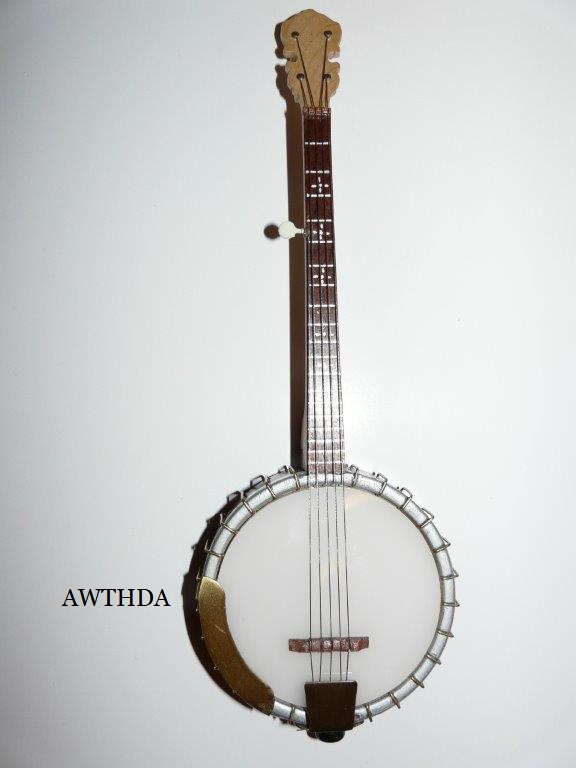 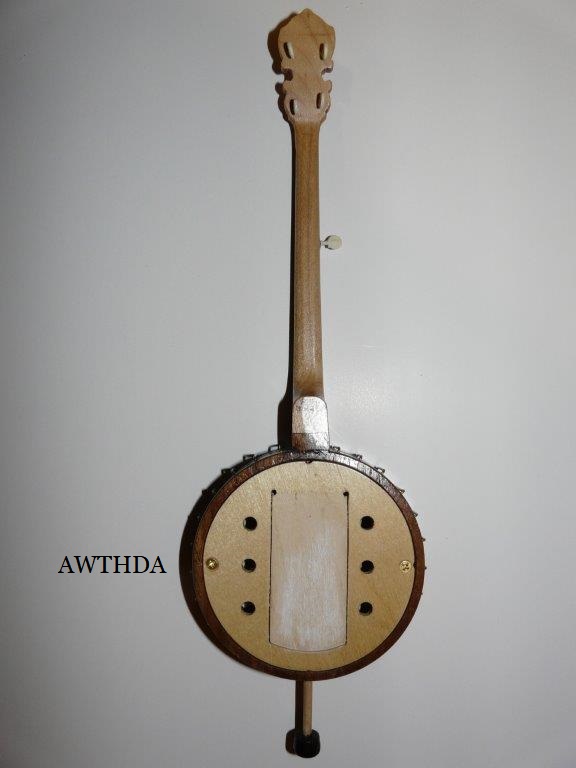 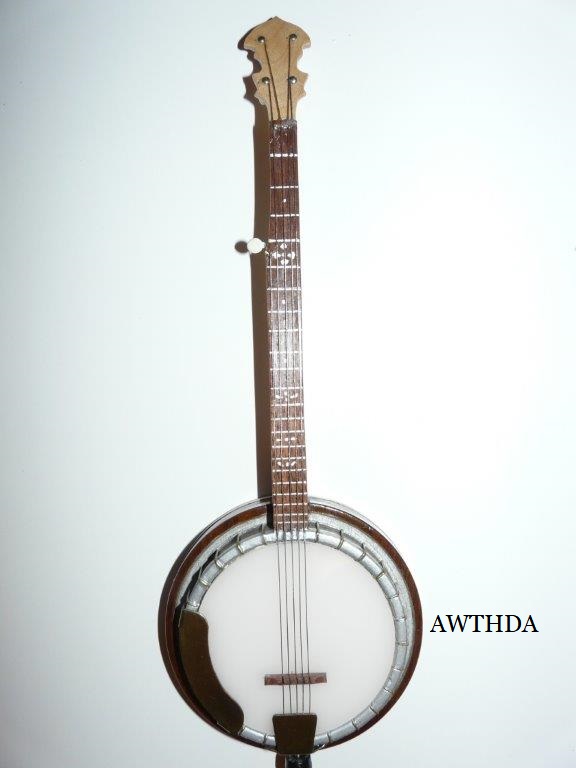 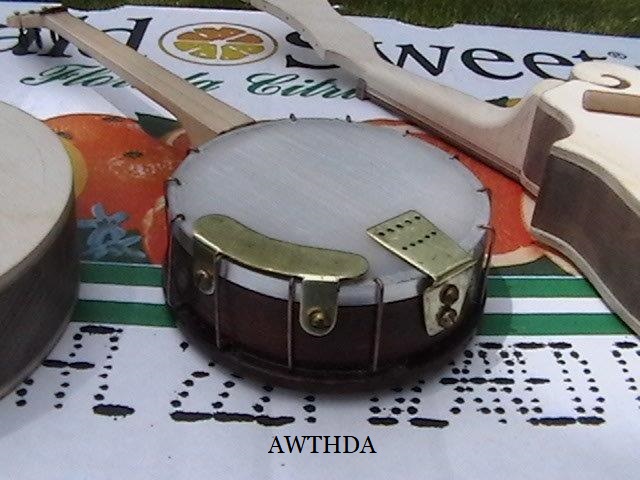 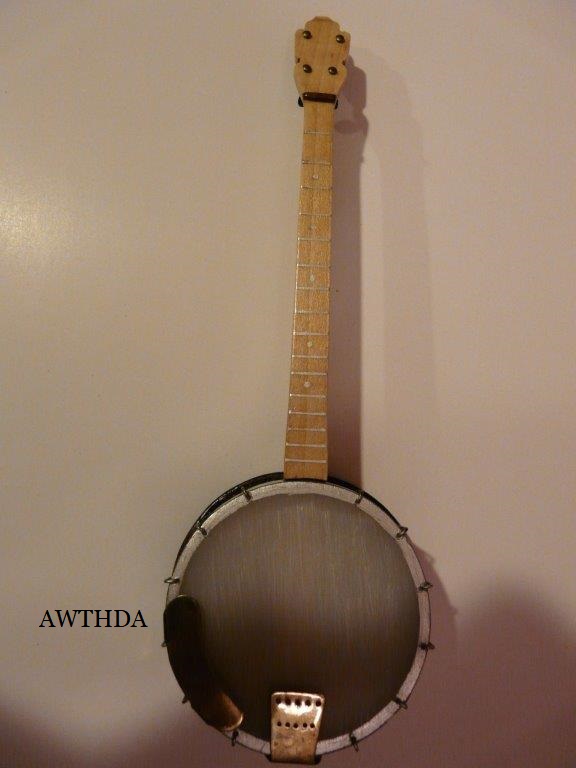 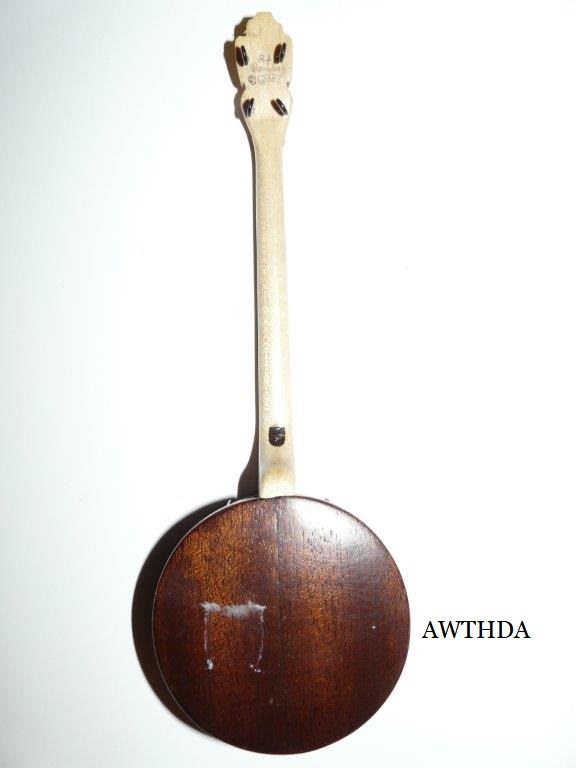 To
celebrate that connection, in the Winter of 2004/2005
I imagined a set of turkey calls like musical
instruments.
I showed my dear friend Bob, the number one gifted artist, talented musician, master craftsman and Chief model maker I ever knew (who freely shared his knowledge, always willing to help others) the first scale drawing of the fiddle. Bob let me take these rare pictures of him making the first fiddle, for posterity. When I saw him 5 weeks later, he had made 9 calls! 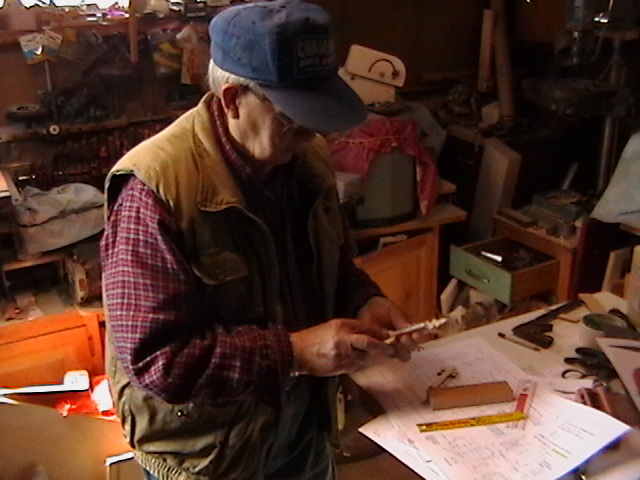 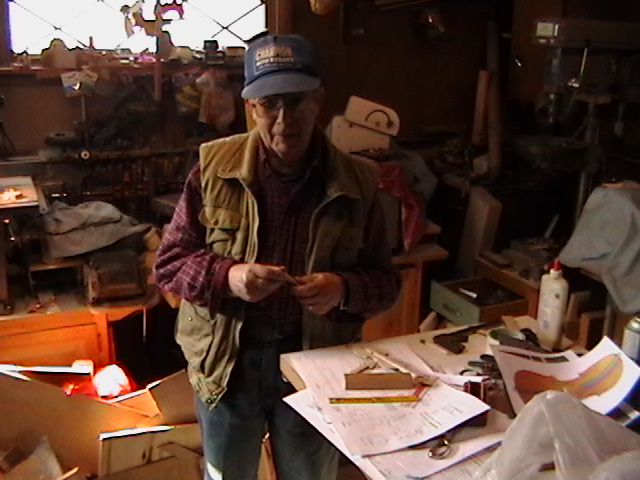 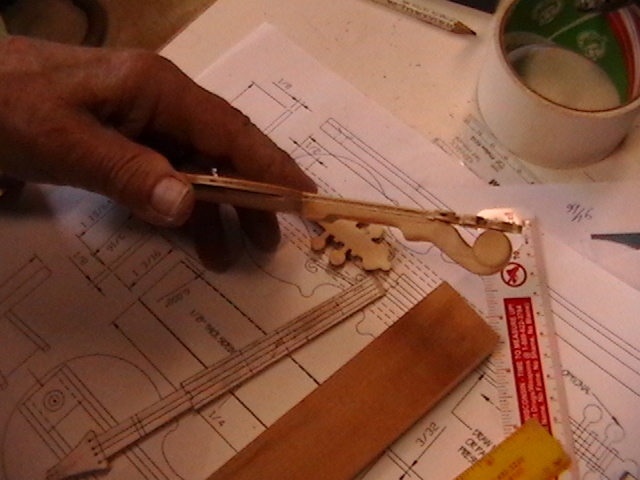  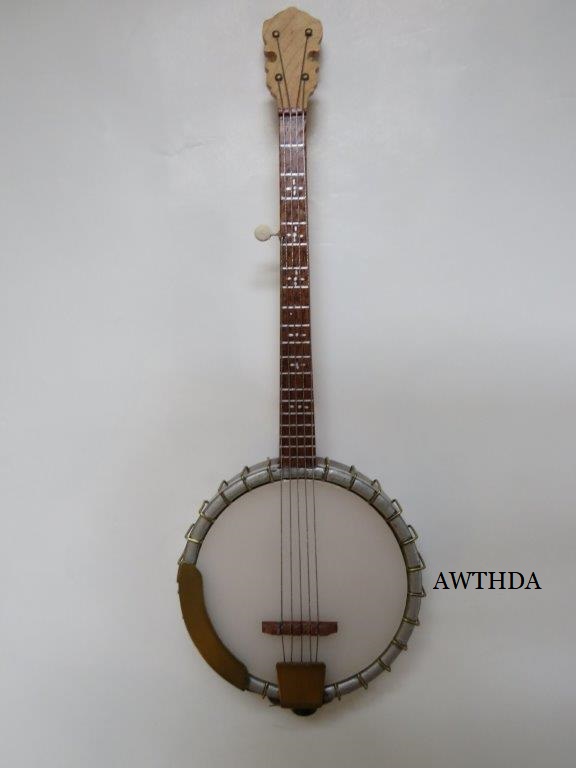 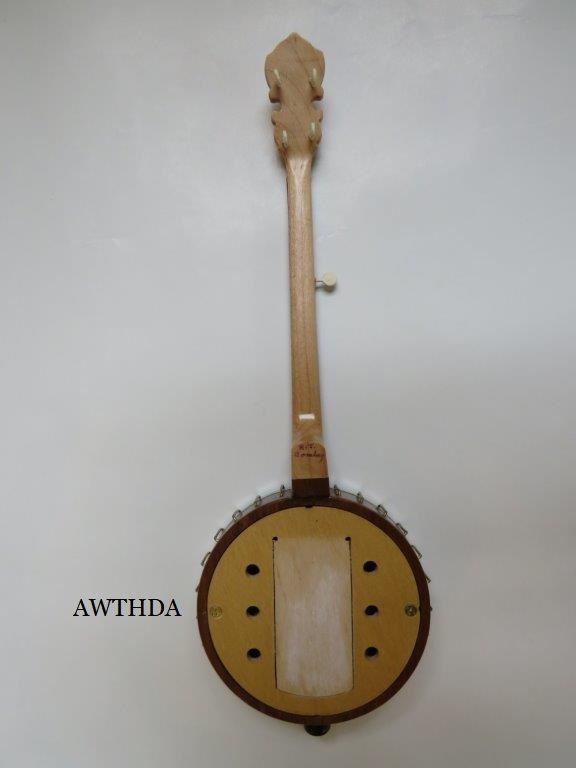  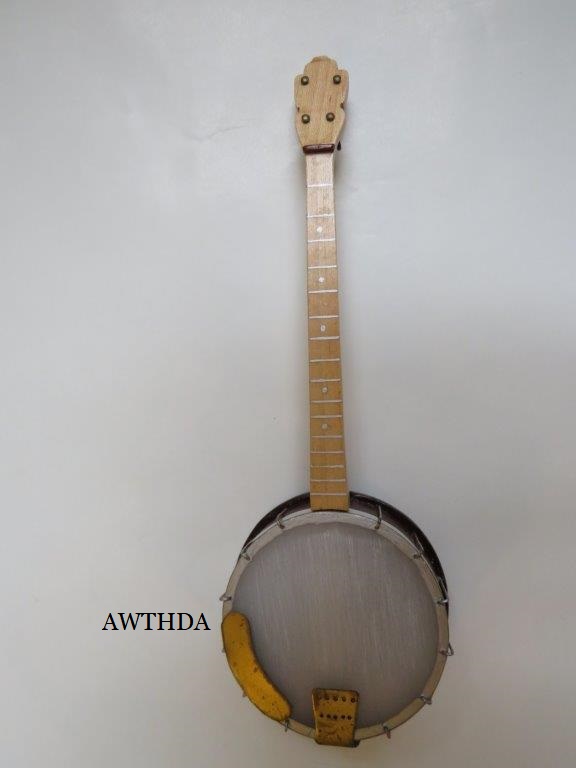 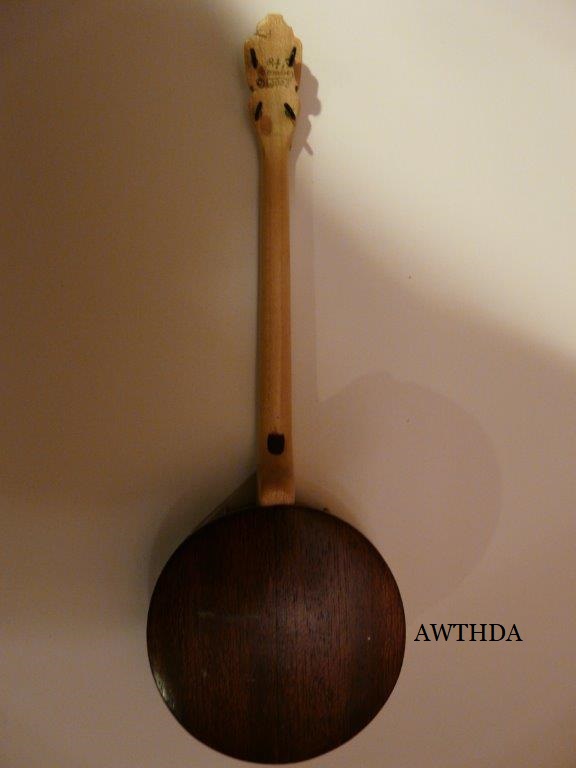 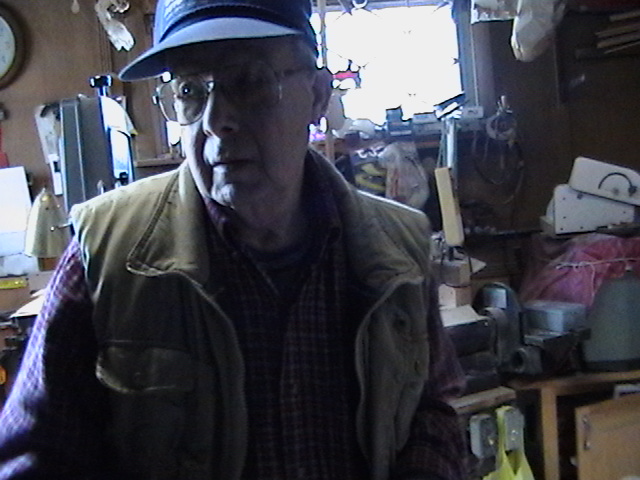 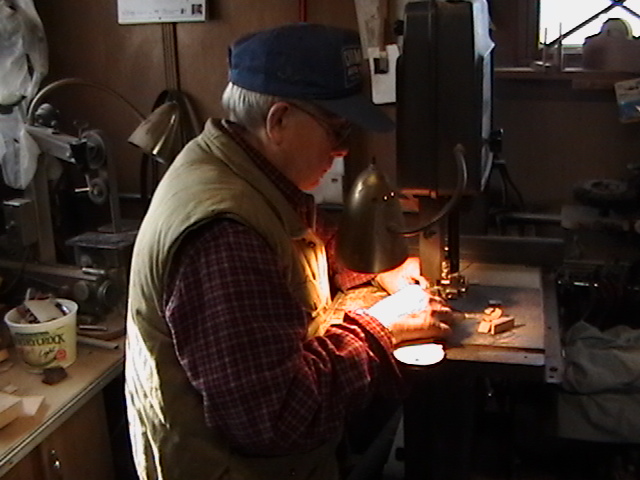 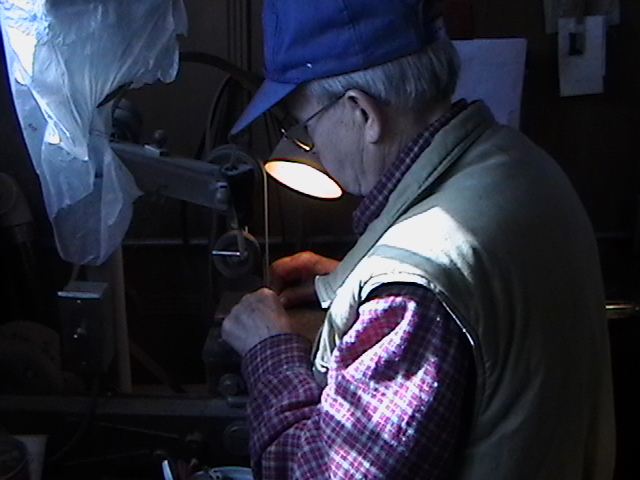 Bob made all but the fiddles without any drawings! You know how easy it is to cut the shape out on a scroll saw, by gluing the drawing onto the wood? Well, Bob made these perfectly scaled models from his full size instruments, without drawings: 3 banjos (5-String, Tenor and Resonator), 1 guitar, 2 types of mandolins. Plus the 3 fiddles (and a few others). 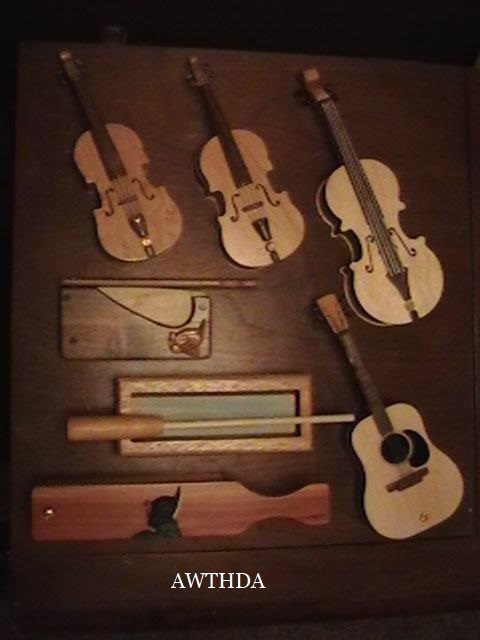  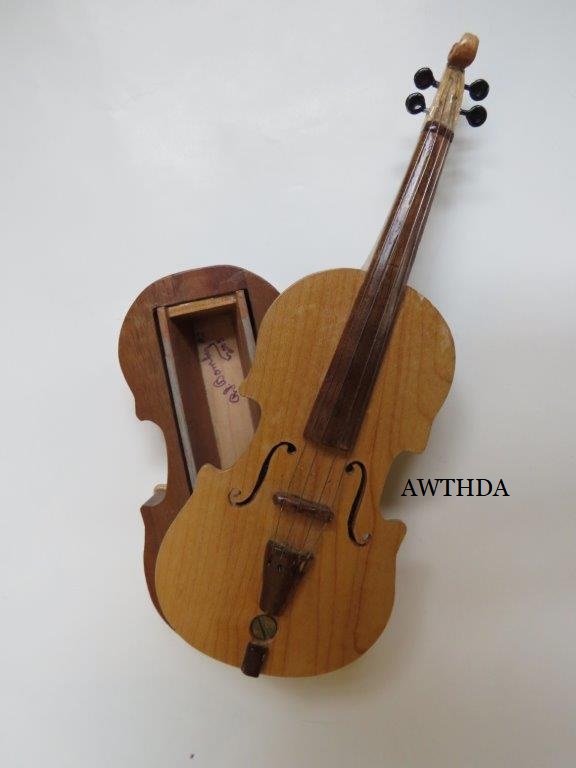 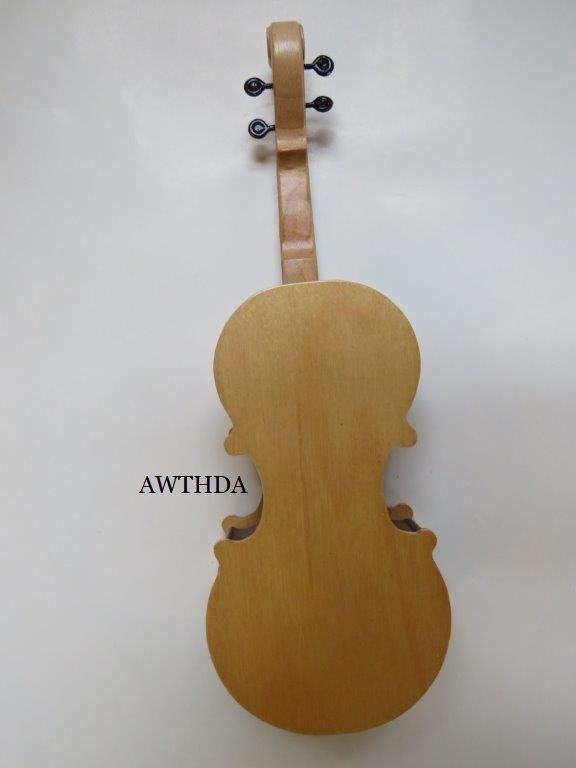 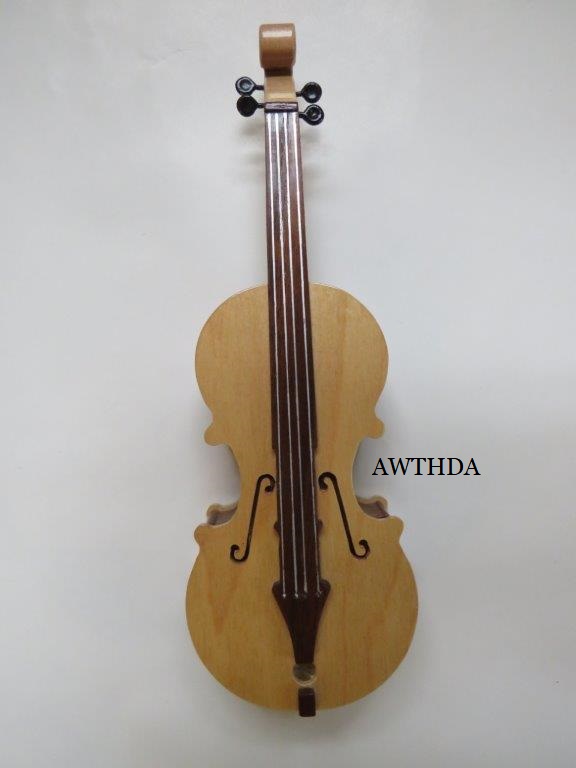 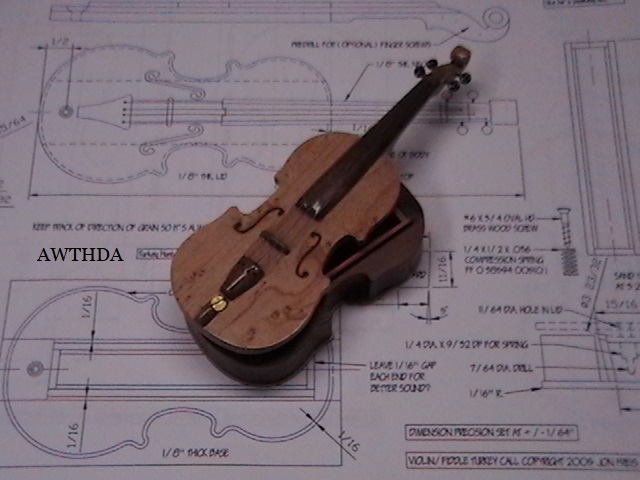 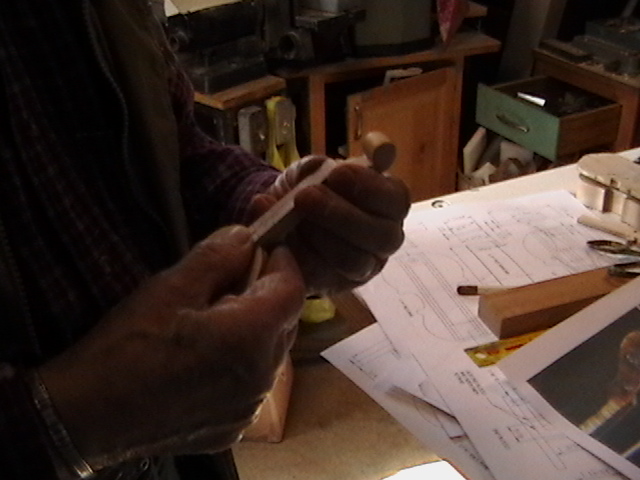 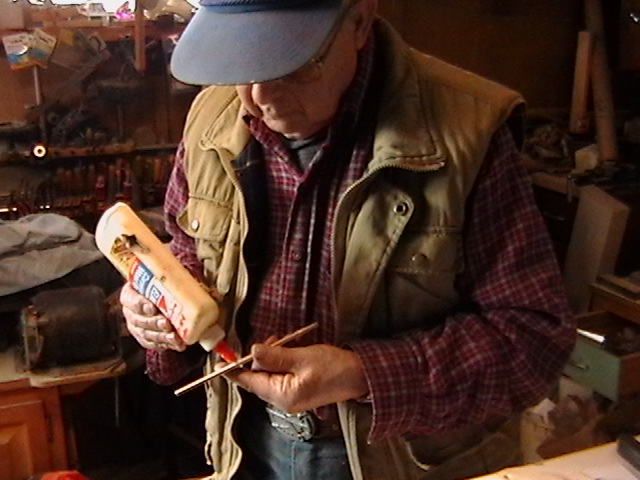 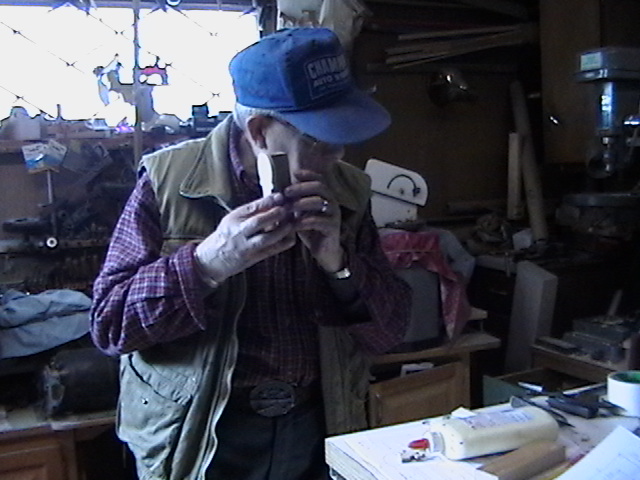 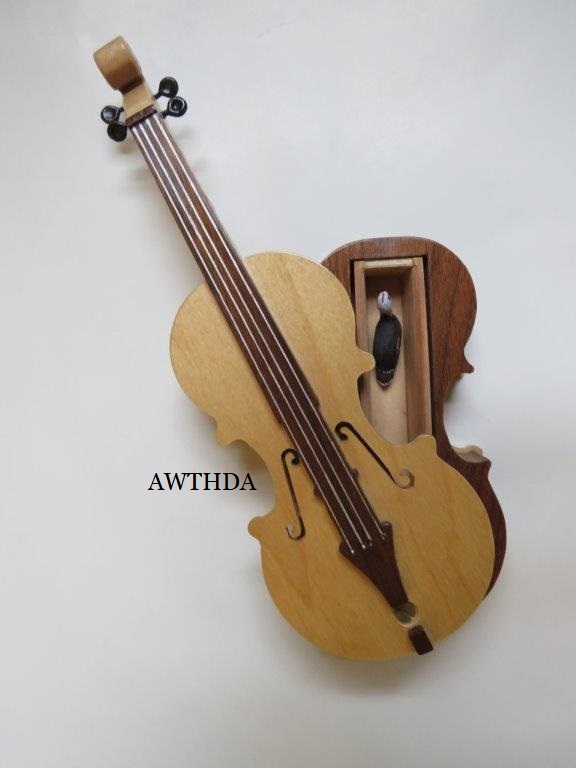 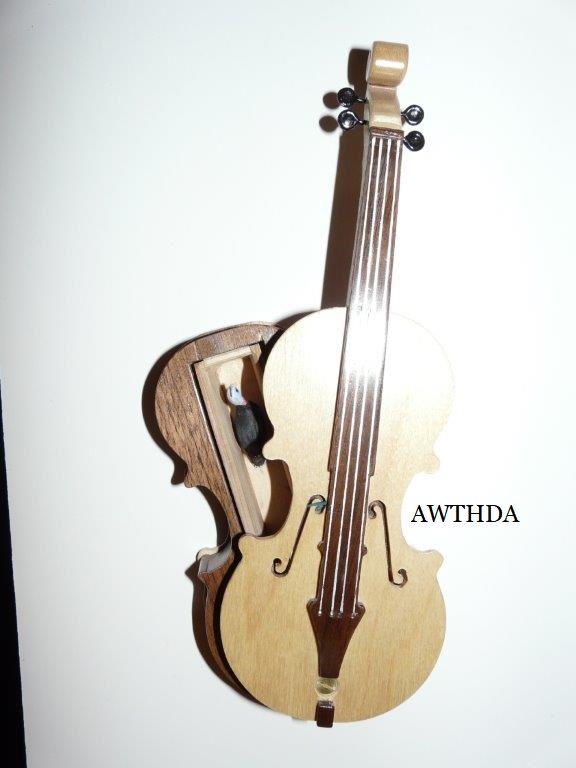 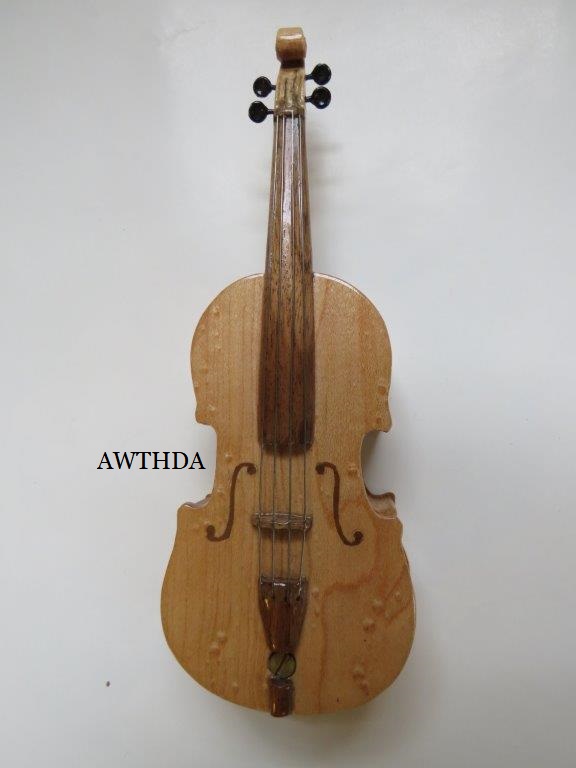  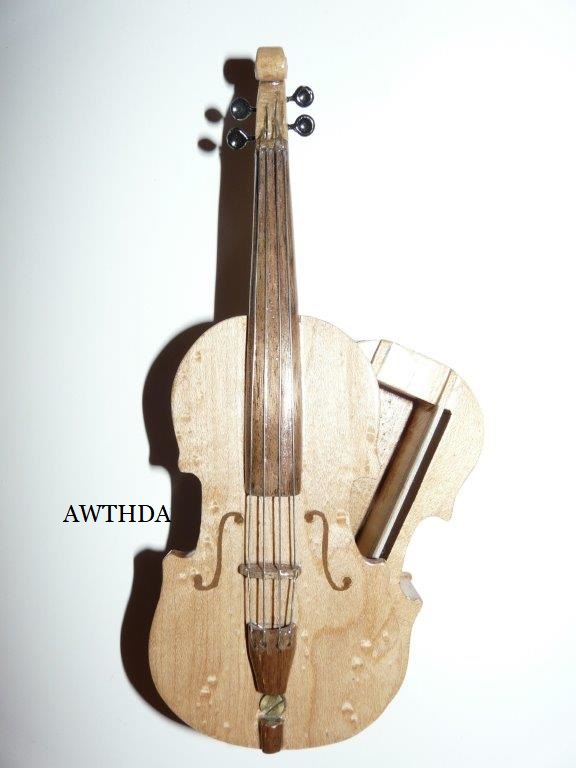  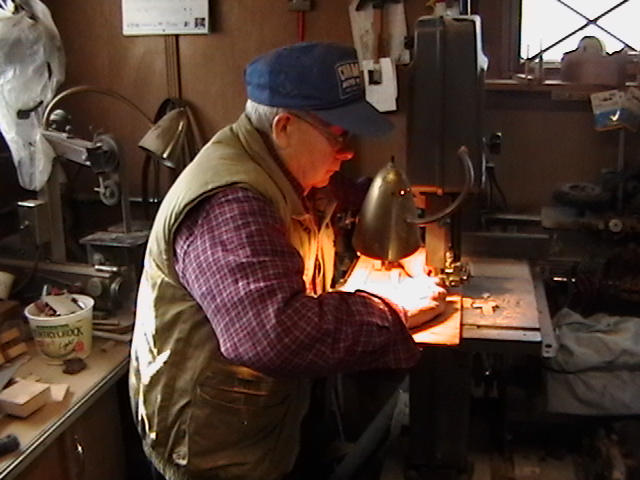 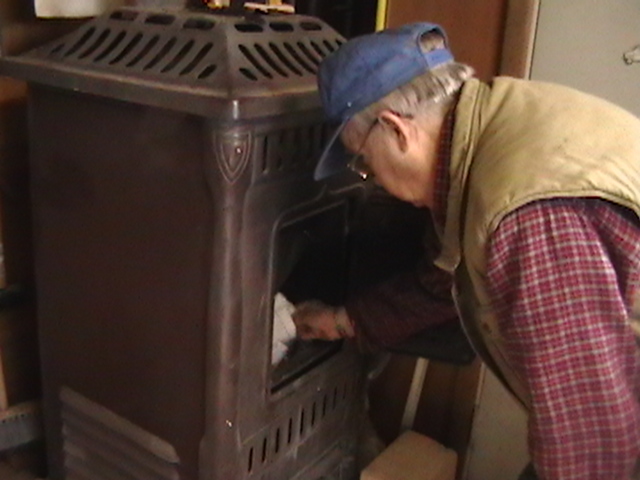 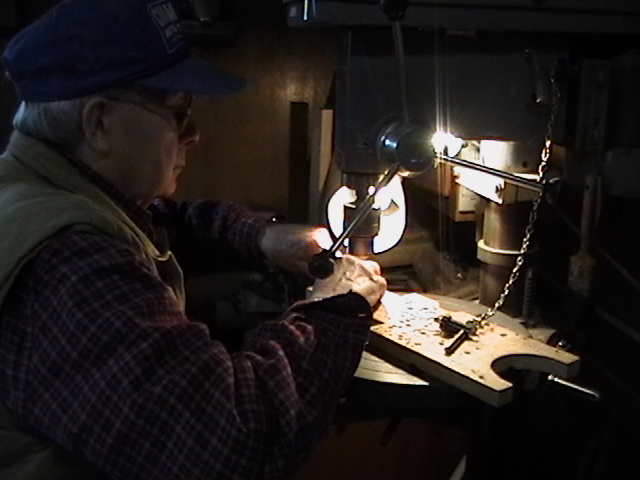 Among the many thousands of pieces Bob made for people to enjoy, this Hillbilly Banjo Picker and Gold Miner's Mule are in my collection. Bob made the first mule in 1976. It's got packs lashed onto the crossbucks, a shovel, pick, frying pan, coffee pot, gold miners pan, extra rope, hobbled with the halter rope tied to it's front leg. One ear back to the side, as if the mule is all done in, tired after hauling them heavy packs of gold. Bob's grasp of movement and sense of proportion is enjoyed by everybody that sees his work. For 33 years I asked Bob to make another one. In 2009 he did. Been treasured by me ever since. 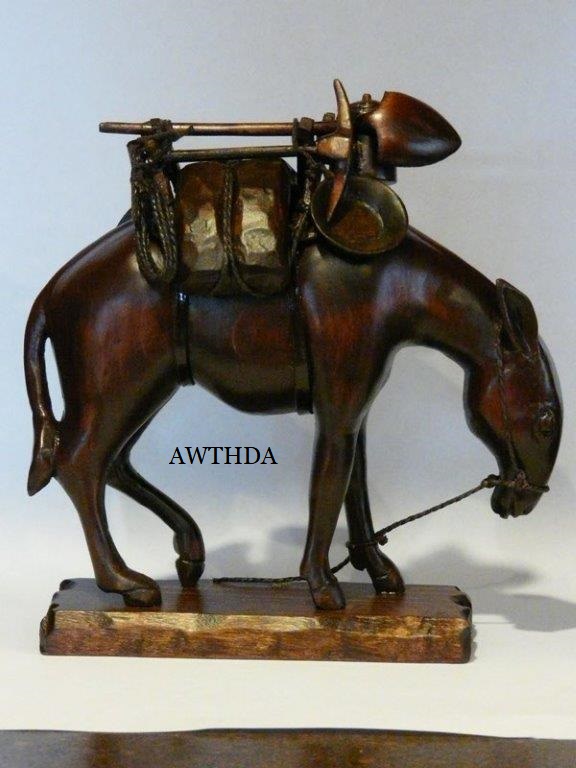 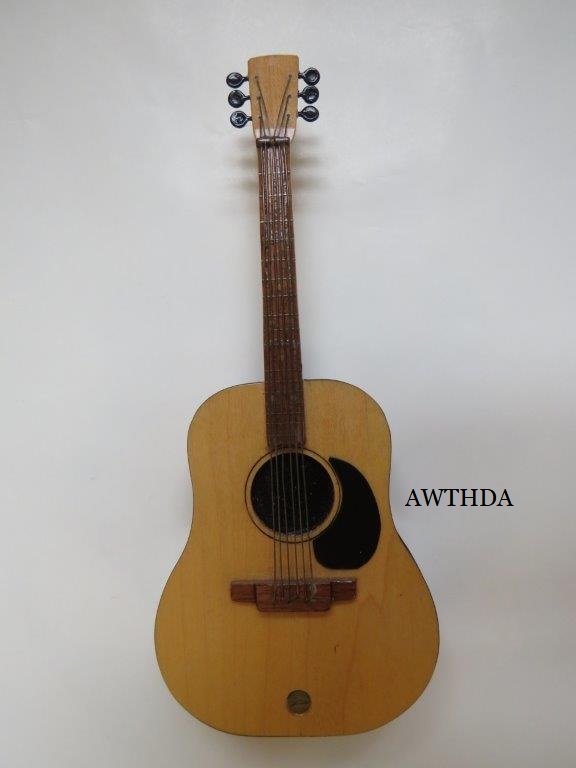 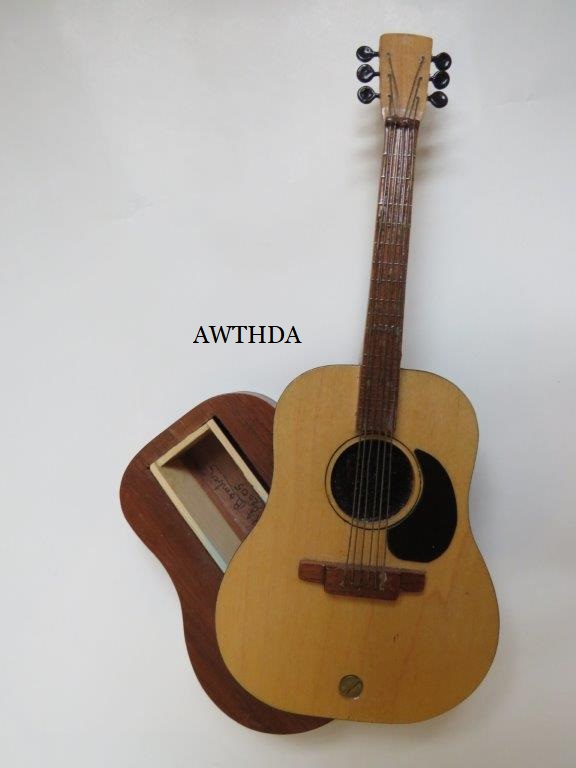 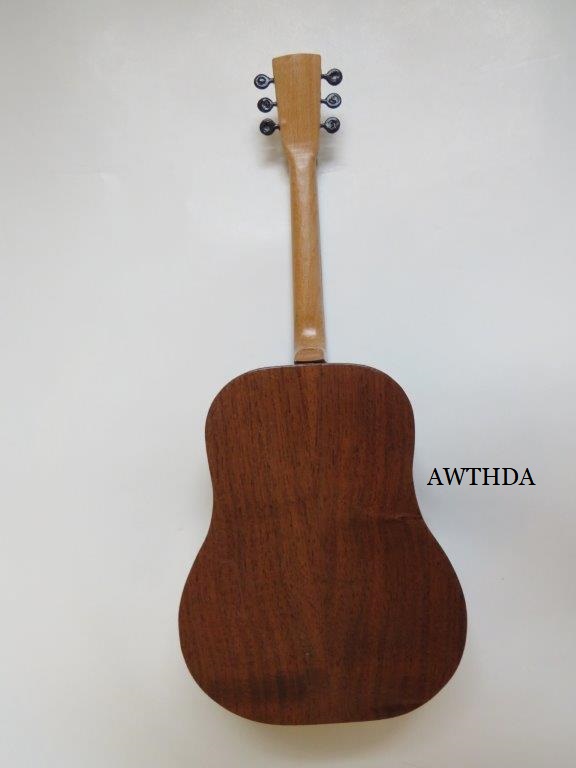 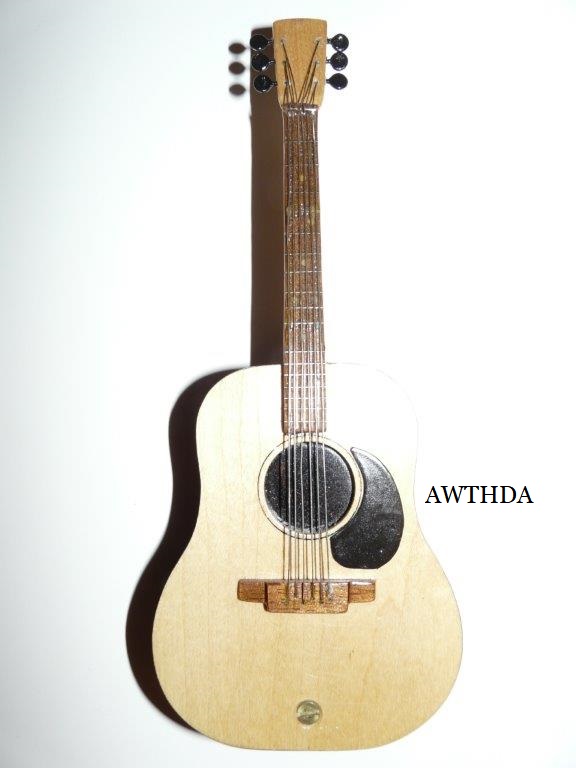 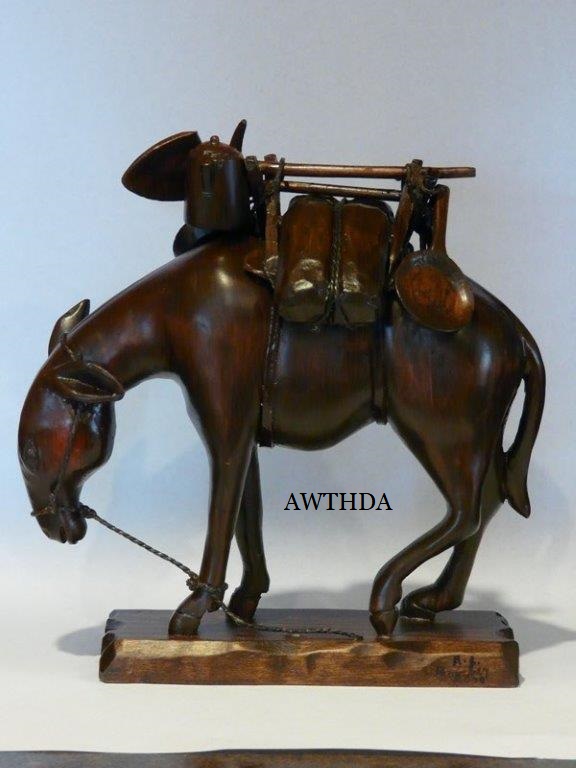 These are
working calls. Box, scratch, or pot calls
(strikers inserted in the body of the call).
They have to be seen, to appreciate the fine details. Imagine authentic miniature frets and strings on them all. 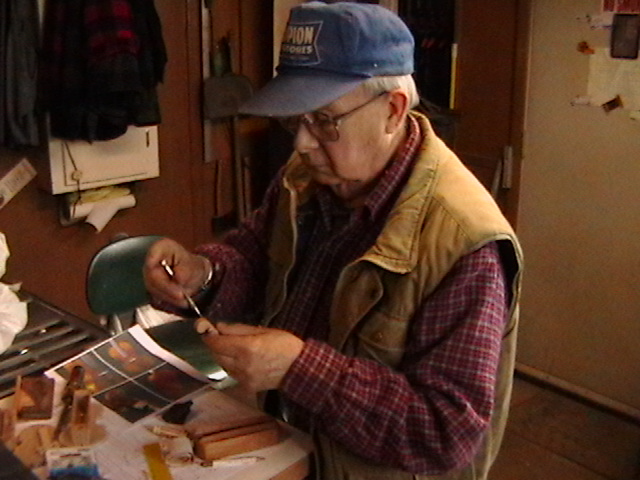 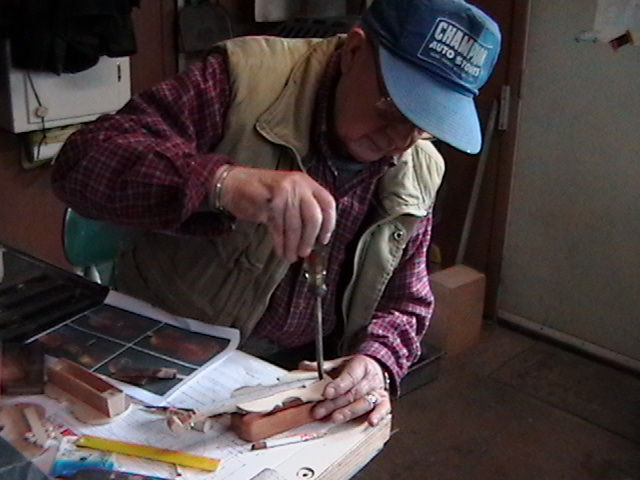 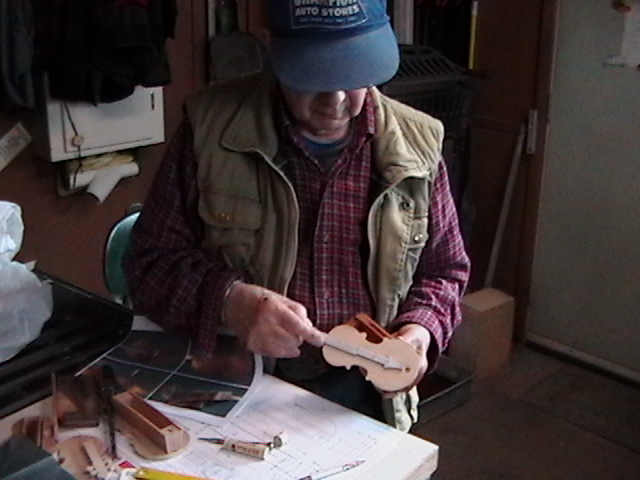 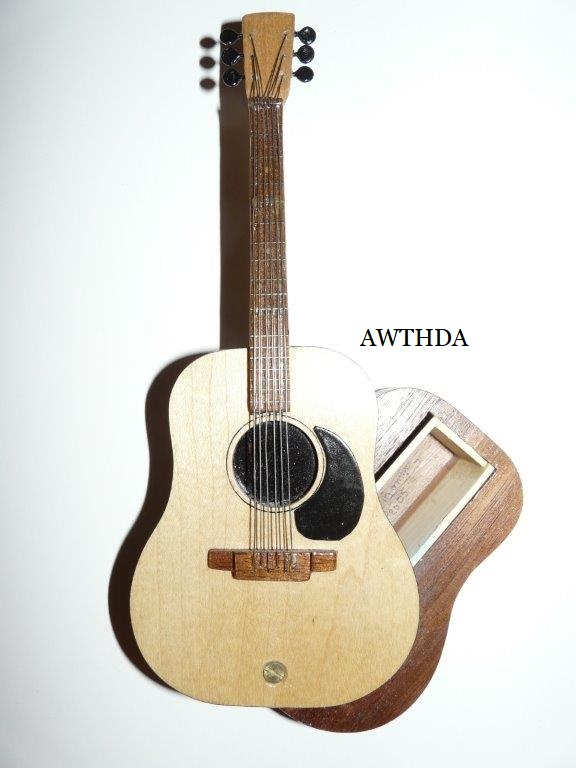 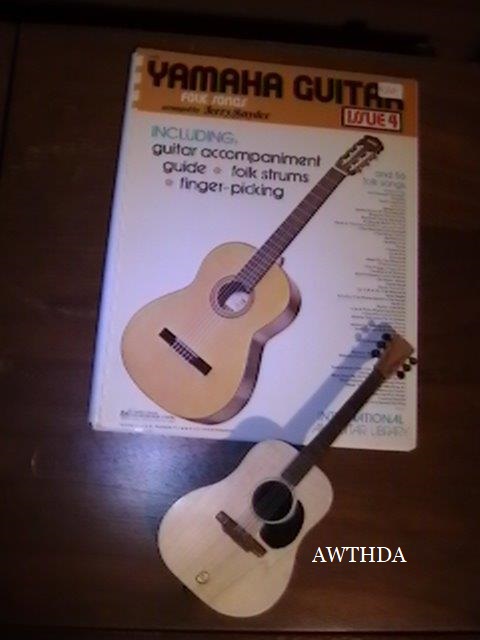 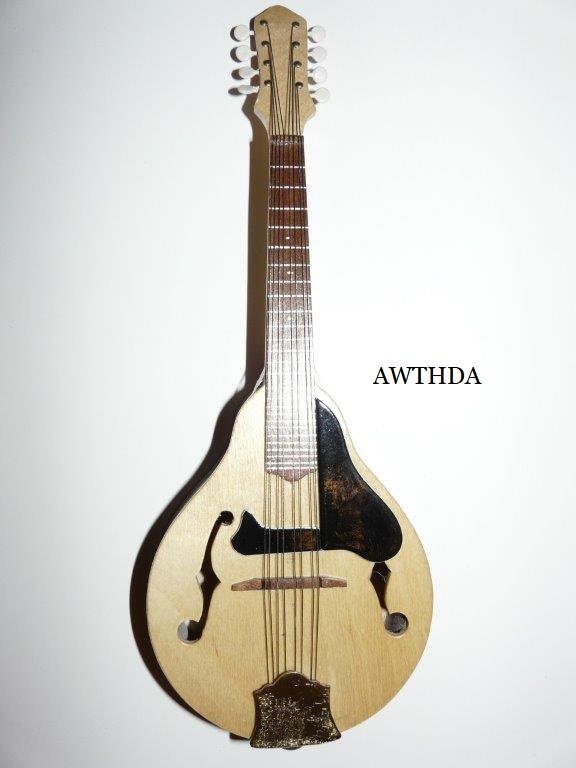  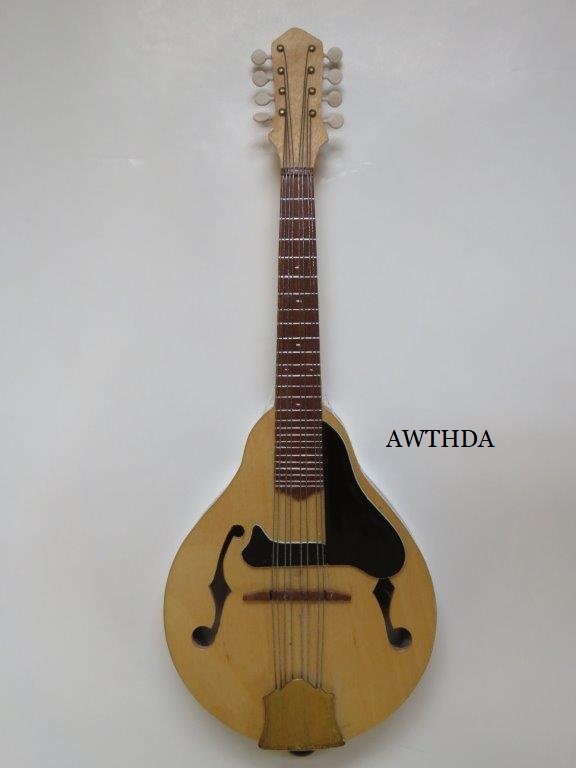 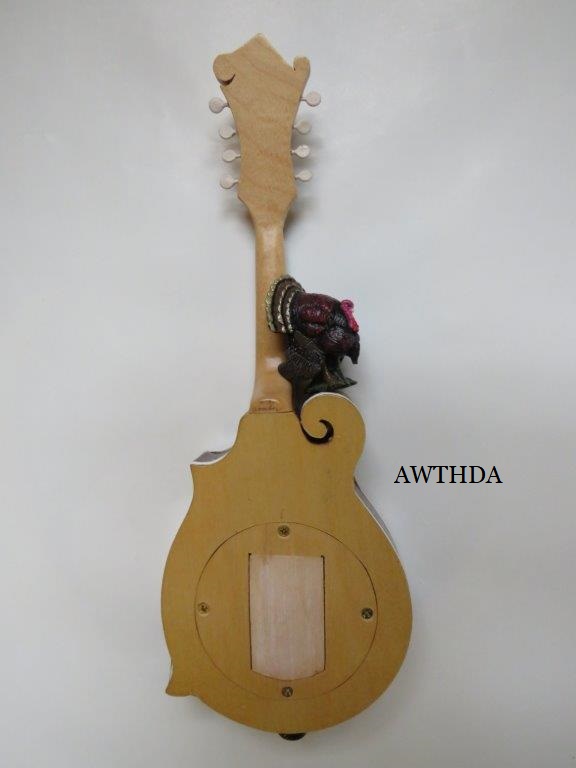 Loved by
everybody that knew him, Bob left behind his wife of
nearly 67 years,
6 children, 20 grandchildren and 14 great grandchildren. He was 21 years old when he suffered tremendous cold in the Korean War. Good thing he survived, he made this world a better place for so many. I'm so glad to have been his friend, proud to share his goodness and his genius. Robert J. Bomber 7/5/29 - 5/6/19 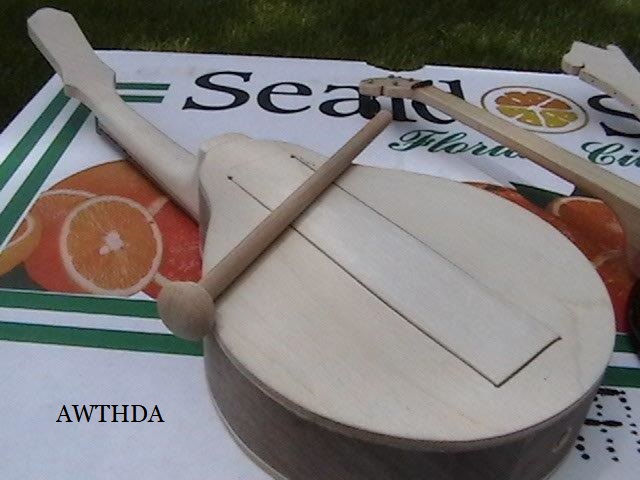 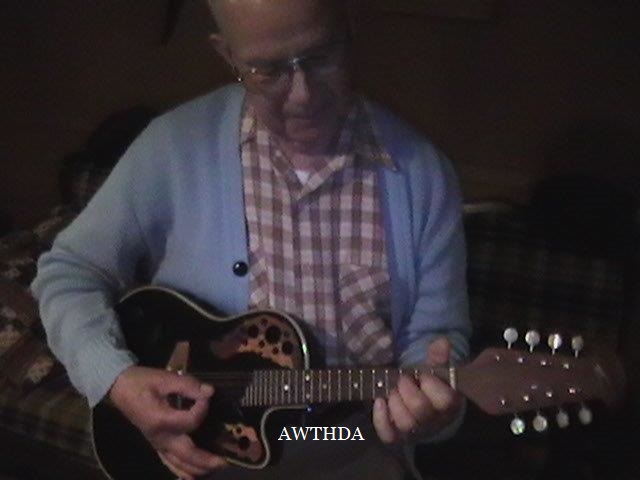 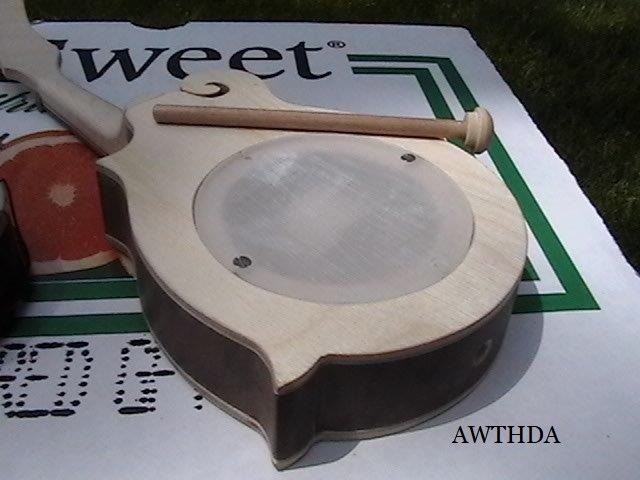 Besides
his many talents, Bob had such a wonderful sense of
humor. Always fun to be with, lots of jokes, lots of
laughs.
So sad to see him go. Left us with lots of great memories. Missed by us forever. Thank God for Bob Bomber. 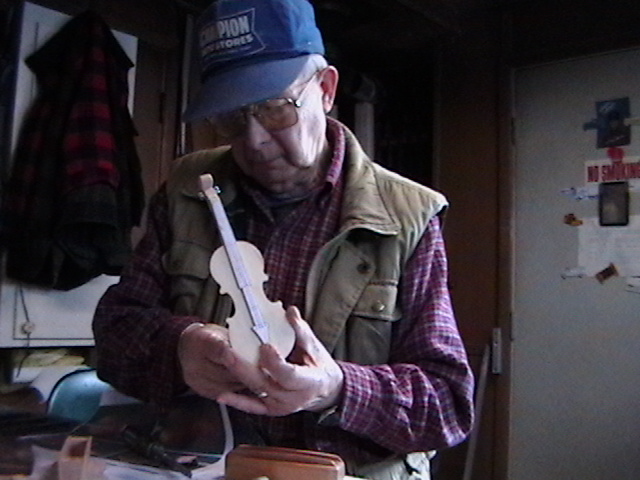 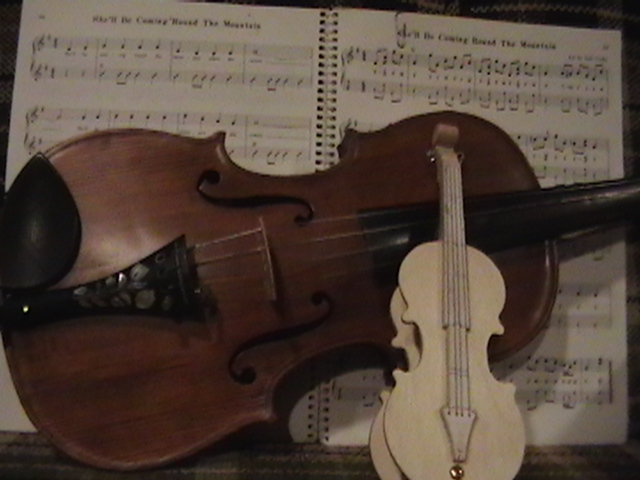 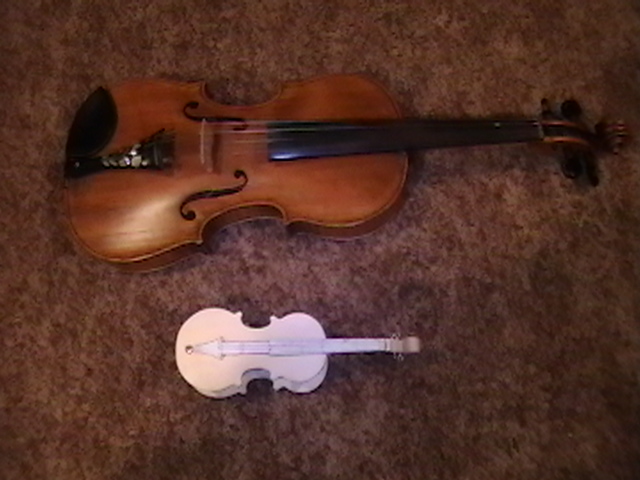 The Bob Bomber Banjo, Guitar, Mandolin and Violin Turkey Call collection. © The Bomber Family |
  This is so good, but
the original was so hard to read, I retyped the whole
thing. This is so good, but
the original was so hard to read, I retyped the whole
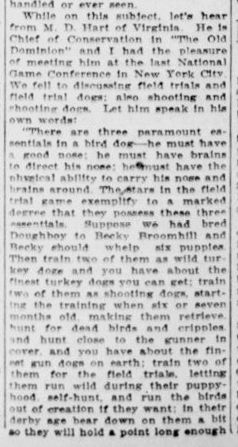
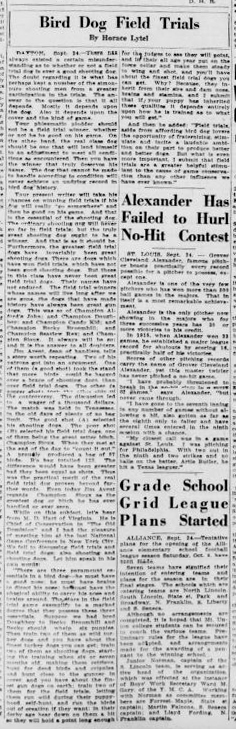
thing.Bird Dog Field Trials By Horace Lytel for the Canton, OH Daily News 9/25/1927 DAYTON, Sept. 24. -- There has always existed a certain understanding as to whether or not a field trial dog is ever a good shooting dog. The doubt regarding it is what has perhaps kept a number of the simon-pure shooting men from a greater participation in the trials. The answer to the question is that it all depends. Mostly it depends upon the dog. Also it depends upon the cover and the kind of game. Your phlegmatic plodder should not be a field trial winner, whether or not he be good at his game. On the other hand, the real class dog should be one that will lend himself to an adjustment to meet all conditions as encountered. Then you have the winner that truly deserves his name. The dog that can not be made to handle according to conditions will never achieve an undying record in bird dog history. Your present writer will take his chances on winning field trials if his dog will really “go somewhere” and then be good on his game. And that is the essential of the shooting dog. The ordinary shooting dog will never go far in field trials; but the truly great shooting dog ought to be a winner. And that is at it should be. Furthermore, the greatest field trial dogs have invariably been great shooting dogs. There are dogs which have won field trials, which have not been good shooting dogs. But those in this class have never been great field trial dogs. Their names have not endured. The field trial winners whose names will live long after we are gone, the dogs that have made history have always been great gun dogs. This was so of Champion Alford's John; and Champion Doughboy; and Champion Candy Kid; and Champion Becky Broomhill; and Champion Seaview Rex; and Champion Sioux. It will always be so; and it is the answer to all doubters. Jim Avent, dean of handlers, tells a story worth repeating. Two of his patrons got into an argument. One of them (a good shot) took the stand that more birds could be bagged over a brace of shooting dogs, than over field trial dogs. The other (a poorer shot) took the other side of the controversy. The discussion led to a wager of a thousand dollars. The match was held in Tennessee, in the old days of plenty of no bag limit. The good shot (A) selected his shooting dogs. The poor shot (B) selected his field trial dogs, one of them being the great setter bitch, Champion Sioux. When they met at the end of the day to 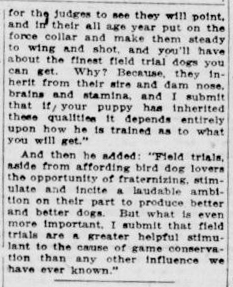 “count it out”, A proudly
produced a bag of 87 birds. B's bag totalled 123. The
difference would have been greater had they been equal as
shots. Thus was the practical merit of the real field
trial dog proven beyond further words. Even today Jim
Avent regards Champion Sioux as the greatest dog or bitch
he has ever handled or seen. “count it out”, A proudly
produced a bag of 87 birds. B's bag totalled 123. The
difference would have been greater had they been equal as
shots. Thus was the practical merit of the real field
trial dog proven beyond further words. Even today Jim
Avent regards Champion Sioux as the greatest dog or bitch
he has ever handled or seen.While on this subject, let's hear from M. D. Hart of Virginia. He is Chief of Conservation in “The Old Dominion” and I had the pleasure of meeting him at the last National Game Conference in New York City. We fell to discussing field trials and field trial dogs; also shooting and shooting dogs. Let him speak in his own words: “There are three paramount essentials in a bird dog - he must have a good nose; he must have brains to direct his nose; he must have the physical ability to carry his nose and brains around. The stars in the field trial game exemplify to a marked degree that they possess these three essentials. Suppose we had bred Doughboy to Becky Broomhill and Becky should whelp six puppies. Then train two of them as wild turkey dogs and you have about the finest turkey dogs you can get; train two of them as shooting dogs, starting the training when six or seven months old, making them retrieve, hunt for dead birds and cripples and hunt close to the gunner in cover and you have about the finest gun dogs on earth; train two of them for the field trials, letting them run wild during their puppy-hood, self-hunt and run the birds out of creation if they want; in their derby age (6 months of age and no more than 2 years of age) bear down on them a bit so they will hold a point long enough for the judges to see they will point, and in their all age year put on the force collar and make them steady to wing and shot, and you'll have about the finest field trial dogs you can get. Why? Because they inherit from their sire and dam nose, brains and stamina, and I submit that if your puppy has inherited these qualities it depends entirely upon how he is trained as to what you will get.” And then he added: “Field trials, aside from affording bird dog lovers the opportunity of fraternizing, stimulate and incite a laudable ambition on their part to produce better dogs. But what is even more important, I submit that field trials are a greater helpful stimulant to the cause of game conservation than any other influence we have ever known.” ---
The AFTCA guidelines for
Field Trial Pointing Dogs are a good description of a
Turkey Dog too: Dogs are judged on their genetic
characteristics and their training. Each dog is judged on
their ground effort (race) demonstrating their ability to
intelligently search, using the wind to their advantage,
and accurately locate game birds. Dogs must handle, always
to the front, moving efficiently and attractively with
high tail and head carriage, displaying confidence and
boldness, wasting no time hunting unlikely cover. The
"All-Age
Stake" could just as well be describing a Turkey
Dog.M.D. Hart doesn't say how to train a turkey dog, but he gives a good outline: Let a young dog self-hunt and run uninhibited in their puppy-hood. Keep them safe from roads and varmints inside a fence, or with a training & tracking collar. Let them run as big as they like. Break them of deer and off-game. In their second season, reel them in a bit, require them to always come to the tone. By three years old, they'll be wide-ranging, but routinely returning to check on you, truly competent and doing it all on their own. You'll have about the finest turkey hunting dog you can get. It worked for me. Jon |
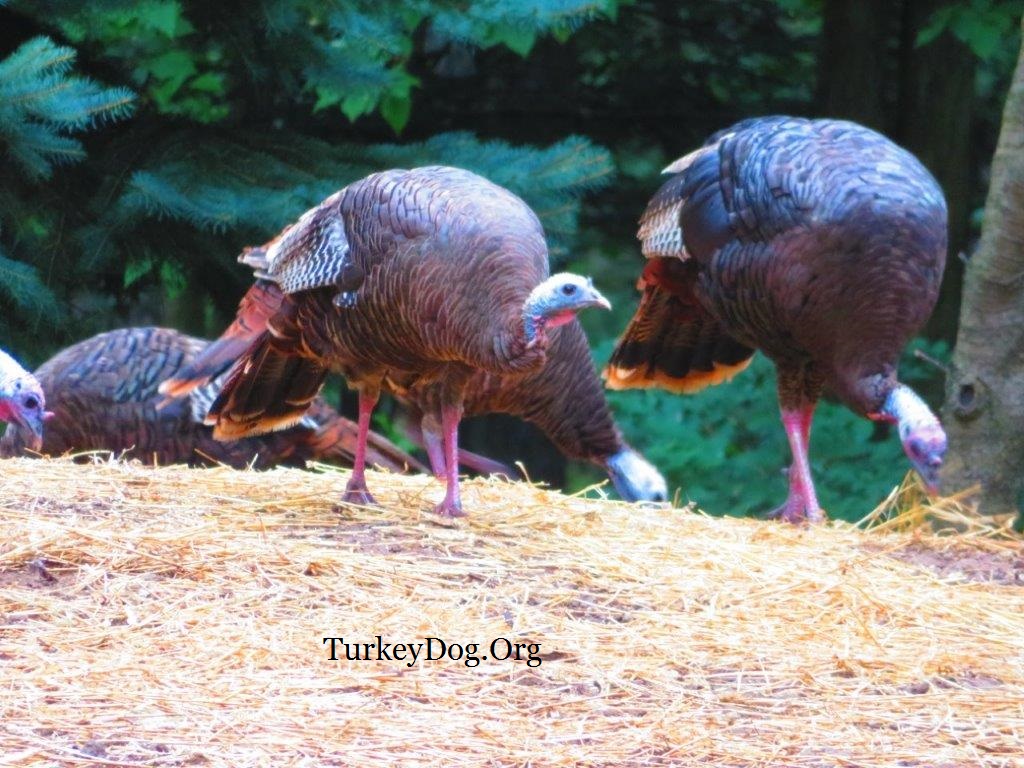 Circa 1863:
"There are a variety of ways to kill turkeys, but the
following are the most usual. In August, when the young
turkeys are rather better than half grown, a favourite
plan is to disperse the brood either by shooting in
amongst them (the whistling of the shot or bullet
causing them to scatter in all directions), or by
letting a dog run into them, then calling your dog in,
and remaining perfectly quiet for fifteen or twenty
minutes, when you will hear some of the young ones begin
to call, making a kind of whistling noise easily
imitated. In this way you can kill as many as you
please. And if the old hen is decoyed and killed—which
is easily done—you may kill the whole family. Circa 1863:
"There are a variety of ways to kill turkeys, but the
following are the most usual. In August, when the young
turkeys are rather better than half grown, a favourite
plan is to disperse the brood either by shooting in
amongst them (the whistling of the shot or bullet
causing them to scatter in all directions), or by
letting a dog run into them, then calling your dog in,
and remaining perfectly quiet for fifteen or twenty
minutes, when you will hear some of the young ones begin
to call, making a kind of whistling noise easily
imitated. In this way you can kill as many as you
please. And if the old hen is decoyed and killed—which
is easily done—you may kill the whole family. Perhaps the most sporting way to kill turkeys is, in the fall of the year, to take a dog trained for the purpose, who keeps close in to heel until he comes across the trail of a turkey or a flock, when he follows it till he gets pretty close to his game, then makes a rush and trees it, sitting under and barking, thus guiding you to your game. You must be very careful in your approach, slipping from tree to tree; for although, probably, the bird will be attentively watching the dog, yet if he once gets sight of you he is off."Baily's Magazine Of Sports And Pastimes, Volume 6  |
Ray P. Holland- Editor of Field
& Stream - New York, NY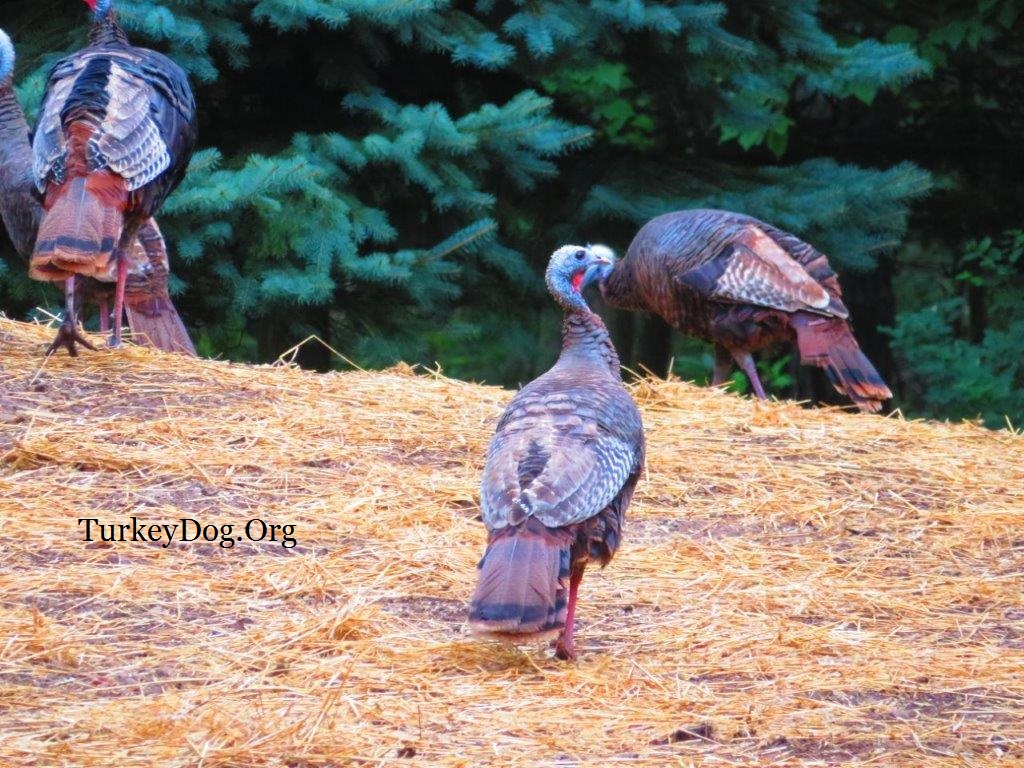 Dear
Ray: I know this is a kind of unusual request; but I'd
like to borrow some space in your columns to write an open
letter to a man I do not know. He may read it, if it is in
your columns; or some of his friends may notice his name
and ask him to read it. You see, it has to do with sport-a
certain kind of sport. Dear
Ray: I know this is a kind of unusual request; but I'd
like to borrow some space in your columns to write an open
letter to a man I do not know. He may read it, if it is in
your columns; or some of his friends may notice his name
and ask him to read it. You see, it has to do with sport-a
certain kind of sport.The man's name is Sherwood G. Coggins. That was the name on his hunting license. He lives in Lowell. He says he is in the real estate and insurance business in Lowell. This weekend, Mr. Coggins, you drove up into New Hampshire with some friends to go deer hunting. You went hunting on my property here in Freedom. You didn't ask my permission; but that was all right. I let people hunt on my land. Only, while you were hunting, you shot and killed my bird dog. Oh, it was as accident, of course, You said so yourself. You said that you saw a flick of something in the bushes, and you shot it. All you saw was the flash of something moving, and you brought up your rifle and fired. It might have been another hunter. It might have been a child running throught he woods. As it turned out, it was just a dog. Just a dog, Mr. Coggins. Just a little English setter I have hunted with for quite a few years. Just a little female setter who was very proud and staunch on point, and who always held her head high, and whose eye had the brown of October in them. We had hunted a lot of alder thickets and apple orchards together, the little setter and I. She knew me, and I knew her, and we liked to hunt together. We had hunted woodcock together this fall, and grouse, and in another week we were planning to go down to Carolina together and look for quail. But yesterday morning she ran down in the fields in front of my house, and you saw a flick in the bushes, and you shot her. You shot her through the back, you said, and broke her spine. She crawled out of the bushes and across the field toward you, dragging her hind legs. She was coming to you to help her. She was a gentle pup, and nobody had ever hurt her, and she could not understand. She began hauling herself toward you, and looking at you with her brown eyes, and you put a second bullet through her head. You were sportsman enough for that. I know you didn't mean it, Mr. Coggins. You felt very sorry afterward. You told me that it really spoiled your deer hunting the rest of the day. It spoiled my bird hunting the rest of a lifetime. At least, I hope one thing, Mr. Coggins. That is why I am writing you. I hope that you will remember how she looked. I hope that the next time you raise a rifle to your shoulder you will see her over the sights, dragging herself toward you across the field, with blood running from her mouth and down her white chest. I hope you will see her eyes. I hope you will always see her eyes, Mr. Coggins, whenever there is a flick in the bushes and you bring your rifle to your shoulder before you know what is there. Corey Ford Just a Dog by Corey Ford - From The Corey Ford  Sporting
Treasury
1941 Sporting
Treasury
1941 |
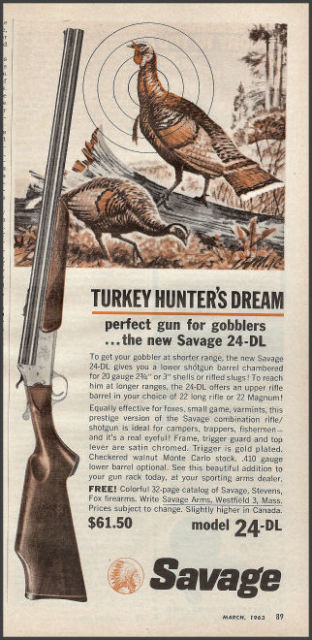 In veterinary medicine,
lead poisoning is most
common
in dogs and cattle. Many of us reward our dog with
the turkeys head and neck when we kill one. Parker
Whedon used to advocate that. But with all we know
today about lead
poisoning in animals that ingest lead, it's just not
worth the risk. The lead fragments can sit in the digestive
system for a long time, while the dogs body absorbs
the toxic material. If I shot the turkey in the head (like
usual), I'll skin it out first and see if there's any
pellets in the head or neck. If there are I won't give it
to the dog, but reward her with other scraps from the
carcass instead. I found a local grocery store that
carries turkey necks for $.99 to $1.69/lb. that are so
huge I chop them up into quarters. I buy all they have
every month or so and put them in the freezer for a
healthy snack. They are absolutely the #1 treat for Keena
and Lucky.
I believe chewing on turkey necks keeps their teeth clean
too. The Vet always says how clean my dogs teeth are.
Update 9/12/23 met a local organic farmer offering them
for $1.99/lb. Jon In veterinary medicine,
lead poisoning is most
common
in dogs and cattle. Many of us reward our dog with
the turkeys head and neck when we kill one. Parker
Whedon used to advocate that. But with all we know
today about lead
poisoning in animals that ingest lead, it's just not
worth the risk. The lead fragments can sit in the digestive
system for a long time, while the dogs body absorbs
the toxic material. If I shot the turkey in the head (like
usual), I'll skin it out first and see if there's any
pellets in the head or neck. If there are I won't give it
to the dog, but reward her with other scraps from the
carcass instead. I found a local grocery store that
carries turkey necks for $.99 to $1.69/lb. that are so
huge I chop them up into quarters. I buy all they have
every month or so and put them in the freezer for a
healthy snack. They are absolutely the #1 treat for Keena
and Lucky.
I believe chewing on turkey necks keeps their teeth clean
too. The Vet always says how clean my dogs teeth are.
Update 9/12/23 met a local organic farmer offering them
for $1.99/lb. Jon |
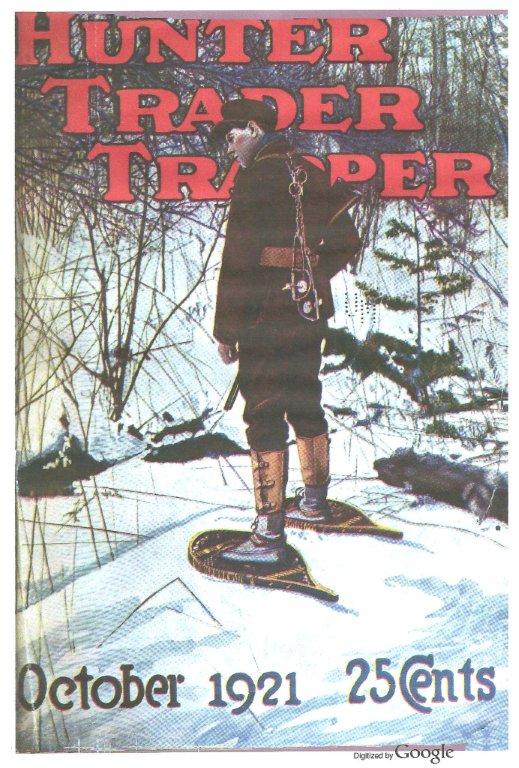 A WILD
TURKEY HUNT By CHAS. HARTMAN A WILD
TURKEY HUNT By CHAS. HARTMANThe hunting in Missouri woods was fine. The whistling of quail was continuous and in my stealthy, slipping along, I would surprise numerous squirrels that would bark their surprise at me but no shots were fired. I was after larger game. Walnut hollow was reached. My bird dog showed increased anxiety on the turkey trail. I knew they were close at hand. A hazel patch in front, I knew would be about the place I would likely find my game. Slowly my dog worked ahead of me. Stopped at times on a set. The bushes were scarcely reached when Sport came to a rigid set. My doublebarrel was ready for them. Looked to my left, out ran a monstrous big gobbler. I cut him down at 40 paces; a dead shot. At the report of my gun, several turkeys flushed up. I selected another nice young gobbler and tumbled him in a tree top, but the largest gobbler flew away. I spotted him down where he lit on the point of a ridge. I picked up my two dead turkeys, I hid them, then lined out for the big one. On reaching the place where I expected to find the trail, I saw an old tree uprooted and small shrubbery grown up about it; an ideal place for him to hide, but he wasn't there, and in passing under a-tree a small piece of bark fell on my hat. I looked up expecting to see a squirrel, but there stood the gobbler just on a spring to fly. My gun flew to my shoulder, but too late. He passed behind a tree, then emerged again. A quick shot and he passed on, but feathers came drifting back. I knew I had hit him. I took the course again, sending Sport on ahead to hunt. Going some distance I heard Sport tree. I hastened to him and coming close up, I spied a turkey's tail sticking out past the opposite side of the tree. Sport began to whine and bark. PutPut came to my ears from the turkey. I said, "alright, I'll put a load to you in a moment," and I did and at the crack of my gun he pitched head first off the limb to the ground. Sport was on him in a jiffy and he sure was picking that turkey mighty fast. It looked like a feather bed in that little plot of woods. I pulled Sport off and held him at arm's length until I picked up the big Old Bird, looking pretty ragged. But Gee! what a fine bird, eleven and one-half inches, beard flowing from his massive breast. Sport wanted to take another turn at him and finish picking him, I guess, the way he acted. But I said, "no old boy, you have done enough already," and he seemed to understand and I let him loose, to caper his delight, to show me he was pleased. I will say here Sport was an uncommonly wise dog and seemed to understand nearly every word spoken to him in the hunting pursuits and was a genuine all-round hunting dog for birds or animals. I shouldered my last bird and proceeded a half mile return trip to the two first turkeys killed. I placed the three together and viewed them over and a finer trio would be hard to find than those three. I had left my horse a mile or more from where I killed the turkeys. I decided to get a few quail and take home with me also, so I put Sport to work and I soon had a fine covey located and for twenty minutes I had some fine wing shooting and bagged a nice bunch that I took back and piled up with the turkeys. Cutting across through the woods, I soon reached my horse, also, the game. A few minutes later my horse was pretty well loaded, when they were tied to the saddle. I was satisfied with my hunt and rode for home, arriving without shooting any more, although the temptation was great. Many bunches of quail were seen on the way home but I said, "No, I have enough," Some other day may do to hunt that flock. Hunter - Trader – Trapper
Volume 43, October 1921 |
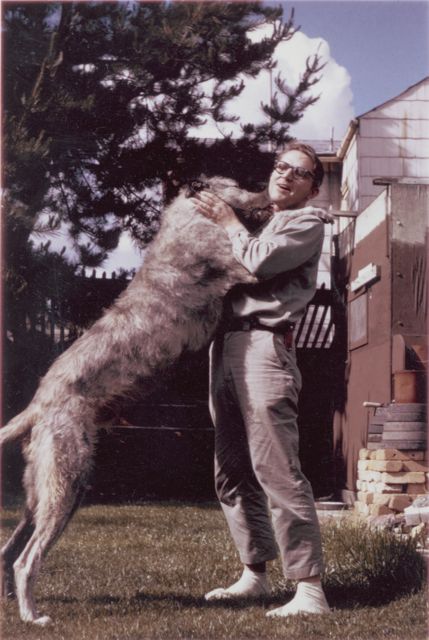 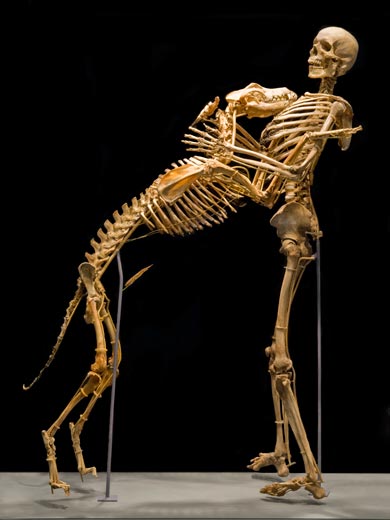 Smithsonian Natural History Museum displays Professor's skeleton with his dog. The last wish of this Anatomy Professor: when Osteologist (the study of bones) Professor Krantz died, he wanted his, and his Irish Wolf Hound's bones donated to the Smithsonian Museum of Natural History. It's now in their 'Written in Bone' exhibit. |
| Problems with this page, call
920-776-1272. Send additions to awthda@turkeydog.org No part of this webpage may be reproduced in any form by any means, electronic or mechanical, including photocopy, recording, or any other information storage or retrieval system without permission in writing from the AWTHDA. |
| Home | About
Us |
Books
| Breeds
| Classifieds | FAQ
|
History
| Kit
Shaffer Legislation | Links | Scratchings | Spring | Stories | Tales | Shop in the Store Members are invited to send pictures of yourself and your dog, with a short story like these: Carson Quarles | Earl Sechrist | Frederick Payne 1 | Frederick Payne 2 | Gary Perlstein | Gratten Hepler | Jon Freis 1 | Jon Freis 2 | Larry Case | Marlin Watkins 1 | Marlin Watkins 2 | Mike Joyner | Mike Morrell | Parker Whedon | Randy Carter | Ron Meek 1 | Ron Meek 2 | Tom McMurray | Tommy Barham 1 | Tommy Barham 2 Members Only: Hall of Fame | Members | Museum | Studies | and the States KY | NC | NY | OH | ON | PA | TN | VA | WI | WV © 2011 - 2026 American Wild Turkey Hunting Dog Association All Rights Reserved Permission to copy without written authorization is expressly denied. |